A dark water mark beneath a window, a loose board that clicks underfoot, or a deep scratch across an entryway can change the way an otherwise beautiful room feels. Searching for the best wood floor repair near me is not simply about covering damage. It is about finding a craftsman who can preserve the character, structure, and finish of a floor that may have taken decades to develop.
For homeowners who have invested in oak, walnut, maple, reclaimed lumber, or historic strip flooring, repair deserves a more thoughtful standard than a quick patch. The right specialist determines what caused the damage, whether the affected boards can be saved, and how a repair will age alongside the surrounding floor.
What the Best Wood Floor Repair Near Me Should Include
A quality repair begins with diagnosis, not sanding. Hardwood responds to moisture, movement, sunlight, foot traffic, and previous refinishing work. Two floors with similar-looking stains may require entirely different solutions. A surface-level finish failure might be corrected with careful screening and recoating, while blackened boards near a refrigerator line may indicate moisture that has reached deep into the wood.
An experienced flooring professional should inspect the floor closely, identify the species and board construction, measure moisture where appropriate, and look beyond the visible damage. In older homes, that may mean checking for seasonal movement, subfloor issues, pet stains that have penetrated the wood, or an earlier repair that was installed without proper acclimation.
The goal is not to make the repair merely less noticeable on the day it is completed. It is to create a sound, carefully matched result that performs well through changing Maryland, Virginia, and D.C. Metro seasons.
Start With the Type of Damage
The phrase “floor repair” covers a wide range of work. Knowing the likely category helps you ask better questions and understand why estimates may differ.
Scratches, worn finish, and dull traffic paths
Light scratches often affect the finish rather than the wood itself. If the protective coating is worn but the stain color and boards remain intact, a professional maintenance coat may restore clarity and protection without removing significant material. This can be an excellent option for floors that are not yet ready for full refinishing.
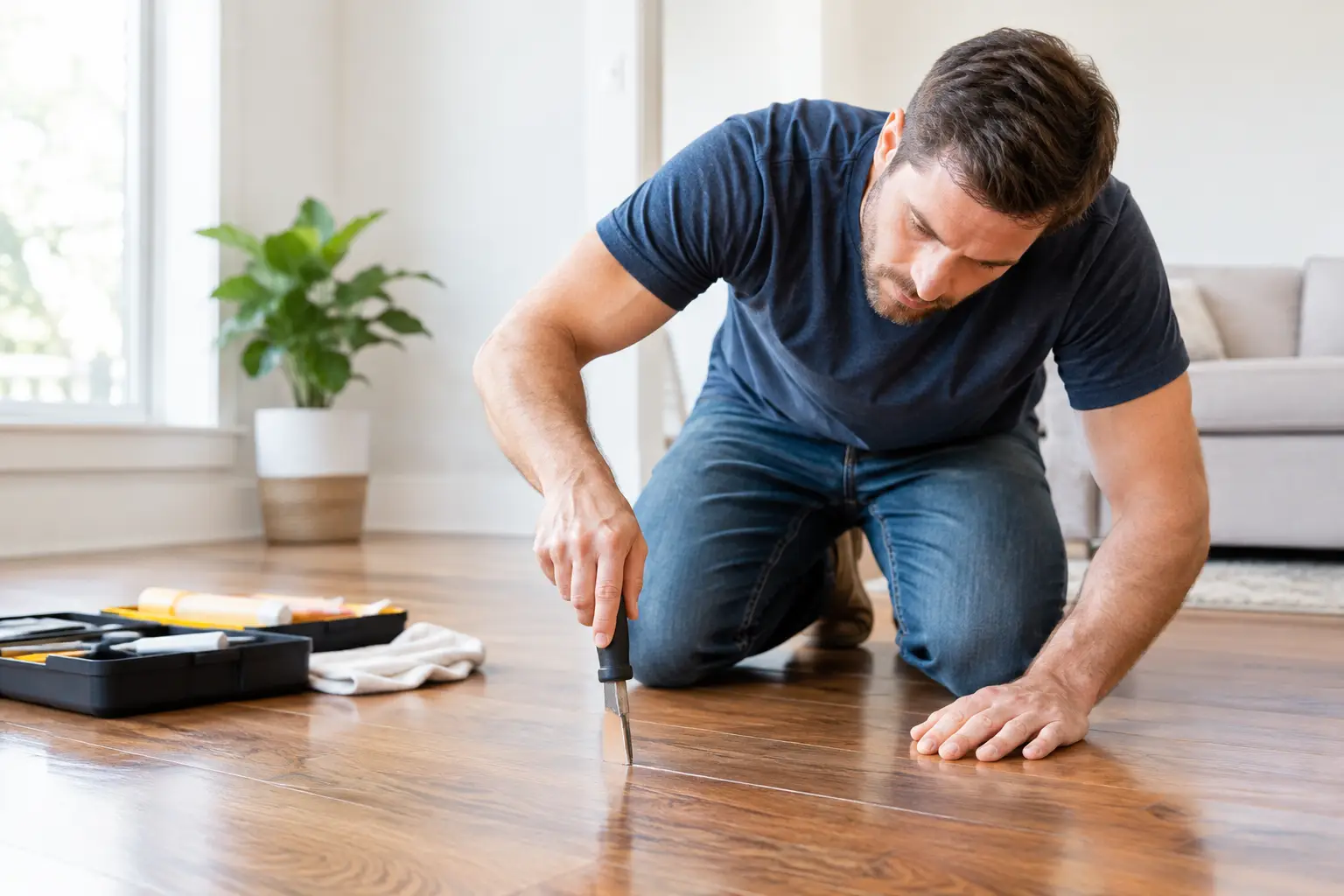
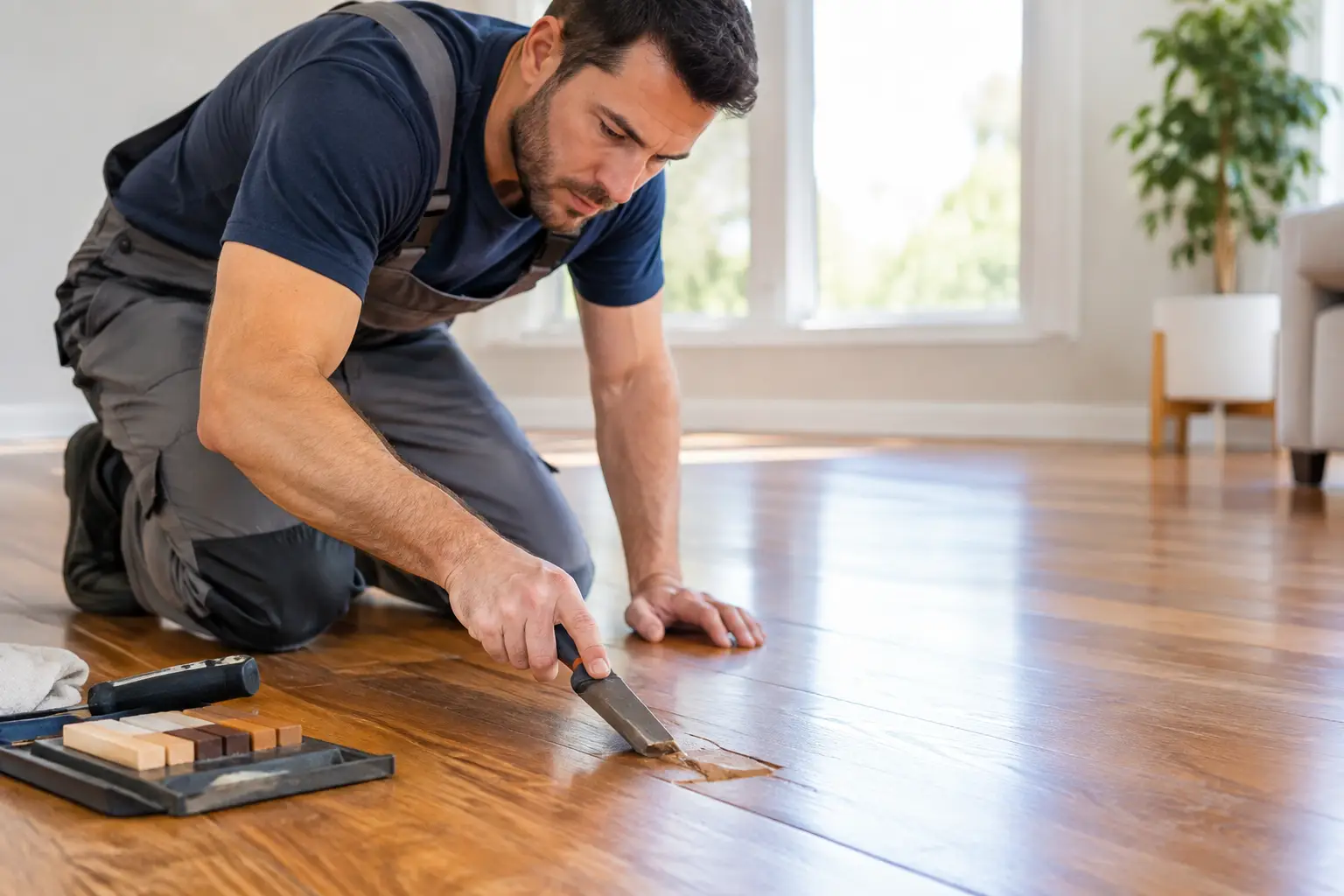
Deep gouges are different. A repair may involve filling, blending color, and applying finish, but the success of that work depends on the board species, stain, sheen, and location. A single repair in the center of a sunlit room calls for more skill than one concealed beneath furniture.
Water damage and cupping
Cupping occurs when board edges rise higher than their centers, often because the underside of the flooring has absorbed more moisture than the top. Crowning is the reverse condition. Neither should be sanded immediately. Sanding a floor before its moisture levels stabilize can leave it too thin or create a surface that changes shape again later.
A knowledgeable contractor will first locate and address the moisture source. Then the floor may be allowed to dry, monitored, repaired selectively, or refinished only when conditions are appropriate. In severe cases, boards and damaged subfloor materials may need replacement.
Gaps, loose boards, and movement
Small seasonal gaps can be normal in solid hardwood, particularly during dry winter months. Large, irregular, or persistent gaps deserve closer attention. They may point to installation issues, excessive humidity swings, or a failure in the fastening system.
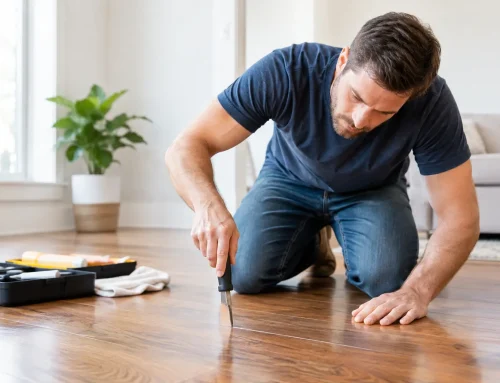
Loose or squeaking boards can sometimes be secured with targeted repairs, but the method matters. Face-nailing in a conspicuous location may solve a movement problem while creating a visual one. An experienced craftsman considers access, board thickness, finish condition, and the direction of the flooring before selecting an approach.
Stains, burns, and damaged boards
Pet stains, burns, and dark water marks can penetrate far below the surface. Sanding may reduce a stain, but it cannot always remove discoloration that has entered the wood fibers. When replacement is necessary, the challenge becomes matching board width, species, grain, grade, milling profile, and color.
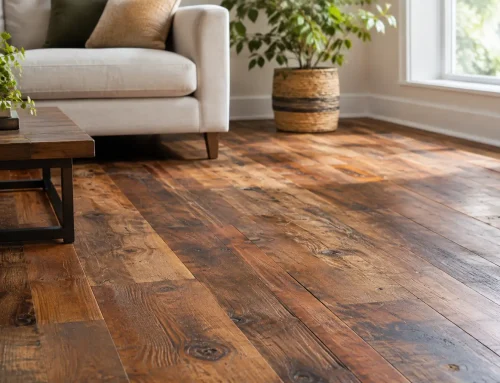
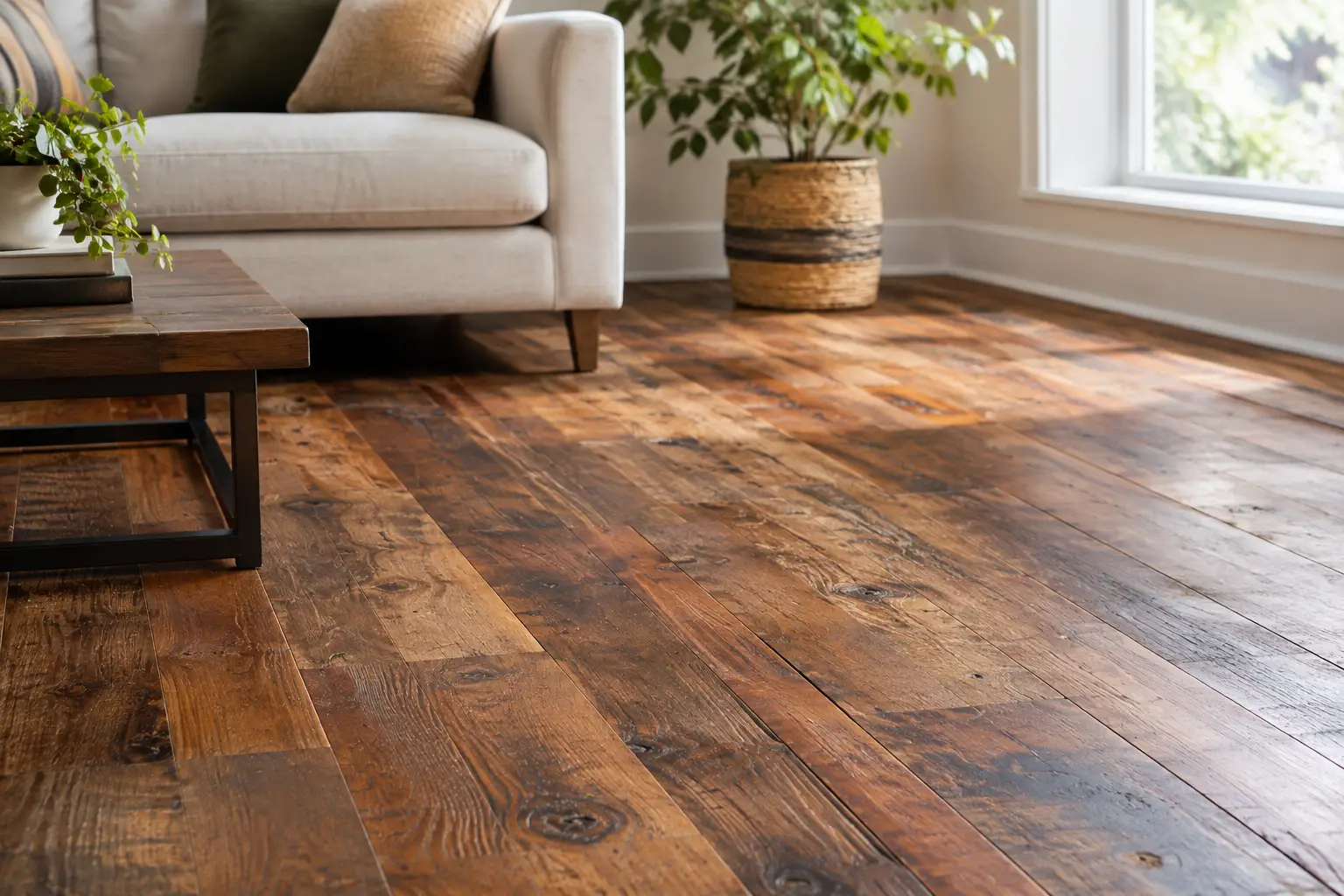
This is especially important with antique or reclaimed floors. A replacement board that is technically similar can still look out of place if its grain is too uniform, its edges are too sharp, or its color is adjusted without considering the natural patina around it.
How to Evaluate a Wood Floor Repair Specialist
The best contractor for a simple scratch repair may not be the best choice for water-damaged wide-plank white oak or a century-old floor with original details. Look for evidence of both technical range and restraint.
Ask how the company determines whether boards should be repaired, replaced, or refinished. A trustworthy answer will include conditions and trade-offs rather than a one-size-fits-all recommendation. For example, replacing several stained boards can be the better long-term choice, but it may require blending the surrounding area so the new material does not appear isolated.
You should also ask about dust control, finish options, drying times, and indoor air quality. Modern low-VOC, Green Guard certified finishes can offer excellent durability while reducing odor and off-gassing. However, finish selection should also reflect how the room is used. A busy family kitchen, a formal dining room, and a historic living room may call for different sheen levels and maintenance expectations.
Photographs of completed repairs are useful, but ask to see work that resembles your situation. If your home has hand-scraped boards, reclaimed oak, parquet, wide planks, or a custom stain, a portfolio of standard prefinished flooring does not tell the whole story.
Why the Lowest Repair Estimate Can Cost More Later
Wood flooring repairs are often priced by visible damage, but the visible area is not always the full scope. A lower estimate may omit moisture testing, subfloor correction, material sourcing, stain samples, finish blending, or protection for adjacent rooms. That does not automatically make it wrong, but it does make comparison difficult.
A detailed proposal should explain what is included and what could change if concealed conditions are discovered. It should distinguish between a localized repair and a repair that requires refinishing a larger section for color consistency. This transparency protects the homeowner from surprises and gives the craftsman a clear standard to meet.
There is also a practical distinction between making a floor functional and making it beautiful again. A repair can stop a board from moving, yet still leave obvious color variation. For a utility area, that may be perfectly acceptable. For a foyer, open-concept living area, or historic home, a more comprehensive restoration is often the wiser investment.
Matching New Wood to an Existing Floor
Matching is where floor repair becomes a craft. Wood changes color with age and exposure to light. Oak can warm over time, cherry deepens, and some walnut floors develop subtle shifts that are difficult to duplicate from a fresh sample. Even boards from the same species vary in grain and mineral streaking.
A skilled repair process may involve sourcing unfinished boards in the correct dimensions, integrating them in a pattern that avoids a conspicuous patch, sanding the repair and surrounding area as needed, and testing stain or toner before final finishing. Sometimes the closest match comes not from forcing new boards to look old, but from refining the transition so the floor reads as a unified surface.
This attention is particularly valuable in the established homes of Annapolis, Potomac, McLean, and the Eastern Shore, where original flooring and carefully chosen renovations often share the same rooms. Royal Oaks Flooring approaches this work with the understanding that every board contributes to the larger composition of the home.
Prepare Your Home for a Better Repair Result
Before work begins, remove fragile items and discuss furniture moving, access routes, pets, and daily household needs. If sanding or refinishing is part of the scope, ask when the space can be walked on, when rugs can return, and how long heavy furniture should remain off the floor.
Maintain stable indoor humidity after the repair whenever possible. Hardwood performs best when it is not subjected to dramatic swings in moisture. Use felt pads beneath furniture, address spills promptly, and avoid harsh cleaning products that can cloud or weaken a finish over time.
Most of all, do not wait until a small issue becomes a widespread one. A lifted board, recurring damp spot, or worn finish near an exterior door is often easier and more economical to correct early. The right repair does more than erase a flaw. It gives a well-made floor the chance to continue telling the story of the home around it.