A fine hardwood floor does not need constant fussing, but it does reward consistent care. This hardwood floor maintenance guide is designed for homeowners who want their floors to retain their warmth, depth, and quiet elegance through busy family life, changing seasons, and years of use. The goal is not to keep wood frozen in time. It is to protect the finish, respect the material, and address wear before it becomes a larger restoration project.
Start With the Finish, Not the Wood
Most day-to-day maintenance is really about protecting the finish that sits above the wood. Modern high-performance finishes create a durable barrier against moisture, soil, and ordinary foot traffic. Yet even an excellent finish can become dulled by fine grit, damaged by standing water, or worn thin in heavily traveled areas.
Before selecting a cleaner or treatment, know whether your floor has a site-applied polyurethane finish, a factory finish, a penetrating oil finish, wax, or a specialty finish on reclaimed or antique wood. These systems do not all respond well to the same products. Wax, for example, can interfere with a future polyurethane recoat. Oil-finished floors often need periodic conditioning rather than a conventional recoat.
If you are uncertain, avoid experimenting with strong cleaners, polishes, or online remedies. A flooring professional can identify the finish and recommend the correct care plan. That small step can prevent a costly compatibility problem later.
The Daily Habits That Protect Hardwood Floors
The most damaging material on a hardwood floor is often not water. It is abrasive grit. Sand, small stones, salt, and tracked-in debris act like sandpaper under shoes, gradually creating micro-scratches that cloud the finish and soften its sheen.
Use a soft-bristle broom, microfiber dust mop, or vacuum designed for hard surfaces several times each week. Turn off the vacuum beater bar or use a setting made specifically for wood floors. A rotating brush intended for carpet can leave visible marks, especially on darker stains and satin finishes.
Entry mats are one of the simplest forms of protection, particularly in the D.C. Metro area, where wet spring days, winter de-icing products, and seasonal pollen all make their way indoors. Place quality mats outside and inside exterior doors, but choose products with breathable, non-staining backings. Rubber and vinyl-backed mats can trap moisture or discolor a finish when left in place for long periods.
In kitchens, pet feeding areas, and near sinks, use a washable rug with a suitable rug pad. Wipe spills promptly with a soft, absorbent cloth. A brief splash is rarely a concern on a properly finished floor. Standing water around appliance leaks, wet boots, or pet bowls is different. Water can work between boards, discolor wood, and cause cupping or edge lifting.
Furniture, Pets, and the Realities of a Lived-In Home
Felt pads beneath chair legs, tables, and movable furniture are essential, not optional. Check them regularly, since embedded grit can turn an old pad into an abrasive disk. Lift furniture instead of sliding it, and use wide protective glides beneath heavier pieces.
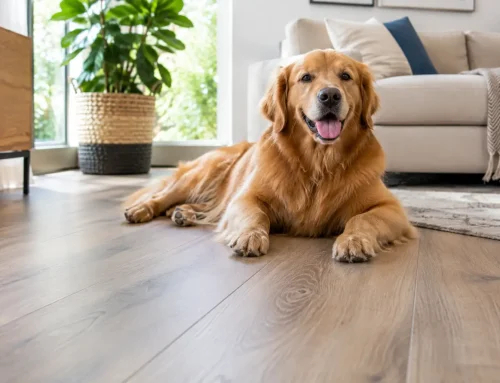
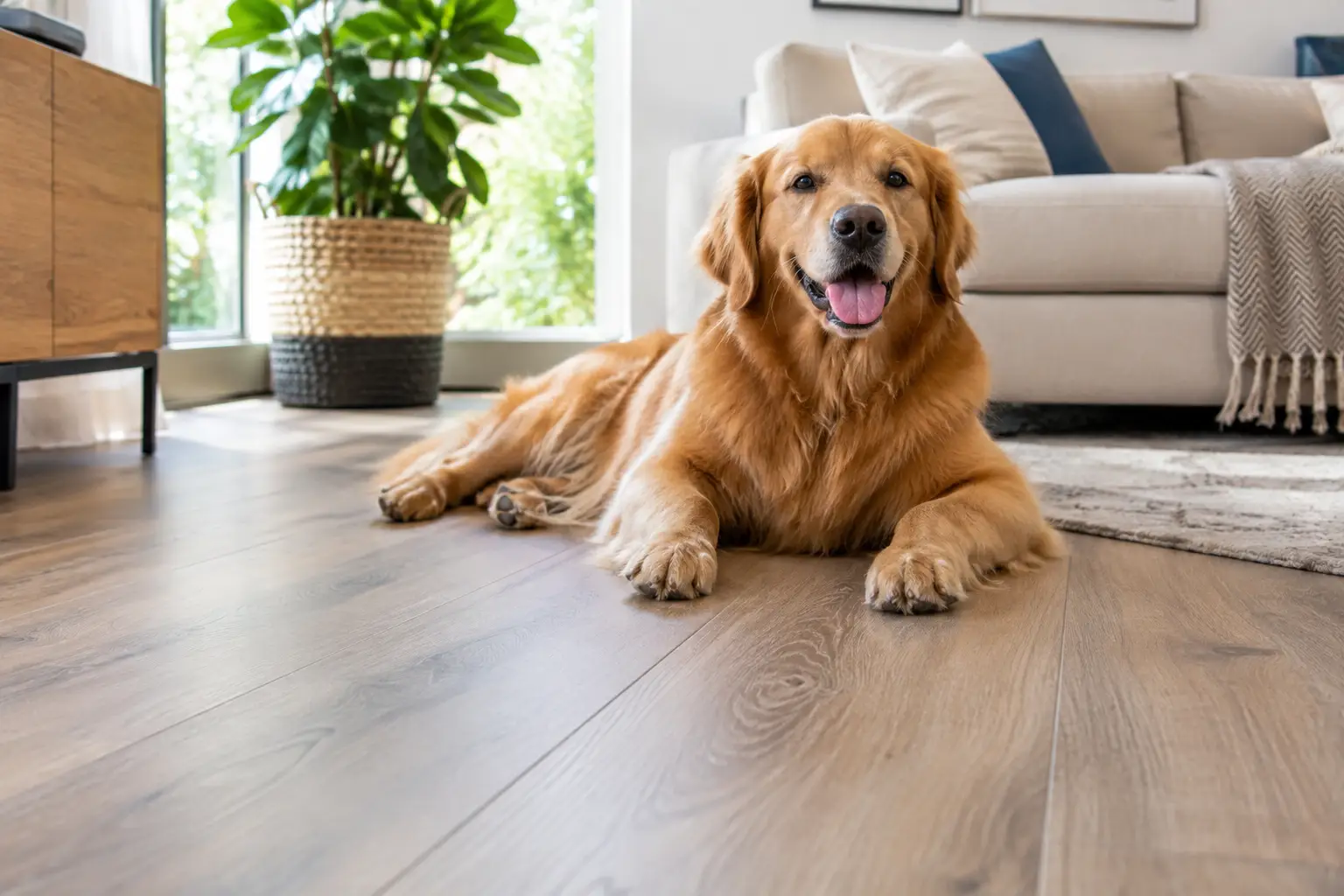
Pets and hardwood can coexist beautifully. Keep nails trimmed, wipe paws after wet walks, and place a runner in the path from the door to the most-used rooms. A few surface scratches are part of an active home, especially on softer species or dark-stained floors. The right maintenance strategy is not about eliminating every mark. It is about preventing broad finish wear that exposes bare wood.
How to Clean Without Leaving a Film
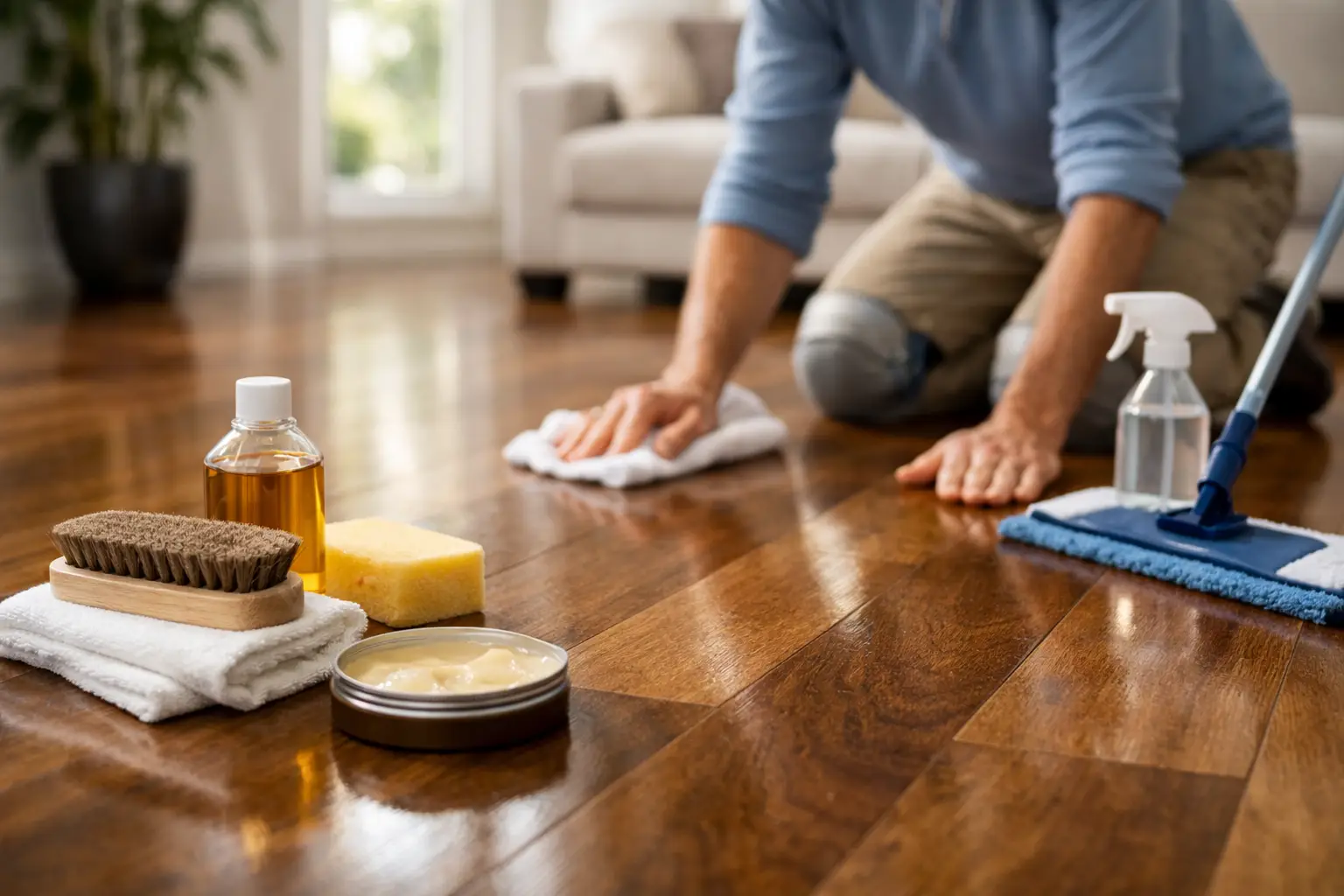
For routine cleaning, dry removal comes first. When the floor needs more than dusting, use a lightly dampened microfiber mop and a cleaner approved for your particular finish. The mop should be damp, never wet enough to leave visible water behind. Work in manageable sections and allow the surface to dry quickly.
Avoid soaking the floor, using a steam mop, or applying cleaner directly in puddles. Steam forces heat and moisture into joints and edges, where it can weaken the finish and affect the wood beneath. It may appear efficient, but it is a poor trade-off for a natural material that expands and contracts with humidity.
Household products can cause trouble as well. Oil soaps may leave a residue that attracts dirt and complicates refinishing. Vinegar is often recommended as a natural solution, but its acidity can dull some finishes over time. Furniture polish, silicone products, and shine-restoring sprays can create a slippery film or leave contaminants that interfere with a professional recoat.
A floor that looks cloudy after cleaning is often not dirty. It may have accumulated residue from products that promised extra shine. In that situation, adding another cleaner rarely solves the problem. Professional evaluation is the more reliable path, particularly for custom-stained, wide-plank, or historic floors.
Manage Humidity Through Every Season
Hardwood is a natural material. It responds to the indoor environment, even after expert installation and finishing. Seasonal gaps in winter and slight expansion during humid summers are normal to a degree. What matters is keeping indoor conditions reasonably stable.
Aim for relative humidity around 35 to 55 percent whenever practical. In winter, a humidifier can help reduce excessive shrinkage and visible gaps. During a humid Maryland or Northern Virginia summer, air conditioning and dehumidification help limit swelling. A hygrometer is an inexpensive, useful way to understand what is happening in the home rather than guessing.
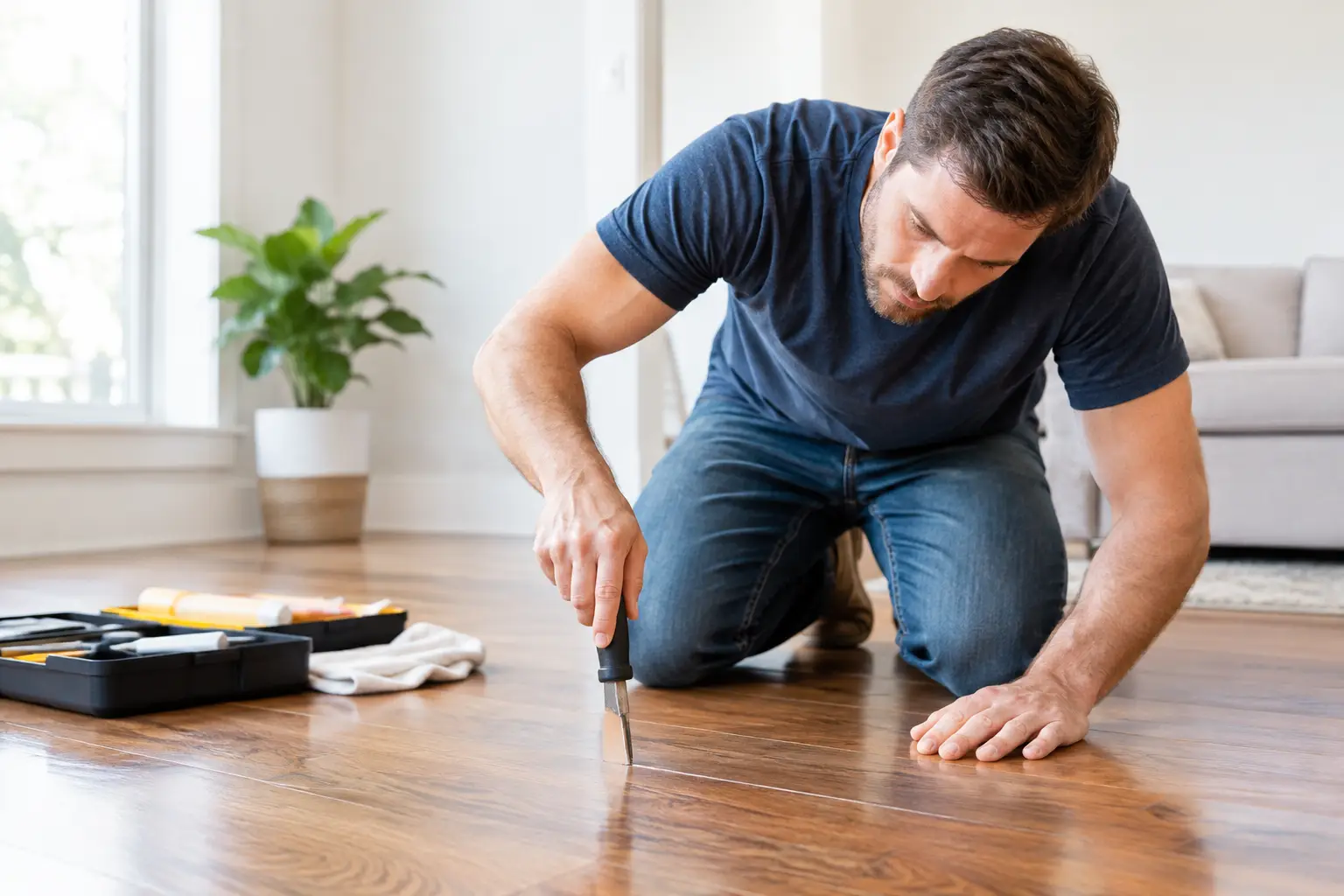
Do not cover a newly noticed gap with caulk or filler without investigating the cause. If it is seasonal, the boards may close again as humidity changes. If the movement is significant, persistent, or accompanied by cupping, crowning, or finish separation, the floor deserves a closer look. Moisture may be coming from below, through an exterior wall, or from a plumbing issue rather than ordinary seasonal change.
Know When Maintenance Should Become Professional Care
Regular cleaning preserves a finish, but every floor eventually reaches a point where it needs more than household maintenance. The best time to act is before the finish wears through to raw wood. Once bare wood is exposed, spills and dirt can create dark staining that may require a full sanding rather than a simpler renewal service.
A professional screen and recoat can often refresh a floor that has light scratches, traffic-path dullness, and minor surface wear while the finish layer remains intact. During this process, the existing finish is lightly abraded and a fresh protective coat is applied. It is less invasive than refinishing and can extend the interval before a complete restoration.
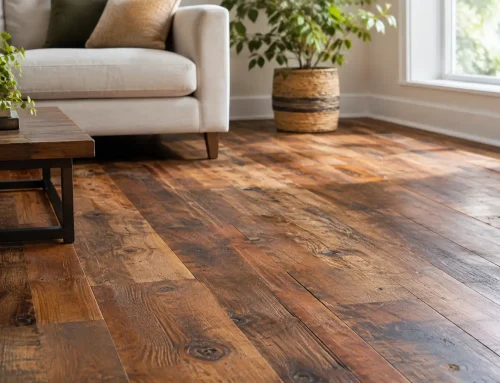
Full sanding and refinishing may be appropriate when there are deep scratches, broad areas of bare wood, severe discoloration, uneven prior coatings, pet damage, or a desired color change. Historic and reclaimed floors require especially careful judgment. Their character is valuable, but aggressive sanding can remove too much original material. An experienced craftsman will assess board thickness, prior repairs, species variation, and the floor’s long-term potential before recommending a method.
Warning Signs Worth Addressing Early
Schedule an assessment when you notice finish loss in traffic lanes, splintering edges, recurring dark spots, boards that remain cupped after conditions stabilize, or a persistent musty odor. These conditions do not always mean the floor must be replaced. They do mean the underlying issue should be identified before cosmetic work begins.
For homes with premium hardwood, custom stains, or antique materials, professional maintenance is an investment in preserving options. Royal Oaks Flooring approaches restoration with the same discipline used in installation: careful preparation, compatible materials, and finishes selected for both beauty and practical performance.
A Sensible Maintenance Rhythm
A practical hardwood floor maintenance routine is built around observation rather than a rigid calendar. Sweep or vacuum as needed to remove grit, clean lightly when the surface calls for it, and inspect high-traffic areas every few months. Reapply furniture pads when they wear down, rotate rugs occasionally to encourage even color aging, and keep an eye on humidity during the most demanding parts of the year.
Direct sunlight deserves attention as well. Wood naturally changes color with exposure, and some species change more dramatically than others. Window treatments, UV-filtering glass, and occasional rug rotation help manage uneven fading. They will not stop the natural mellowing of wood, but they can keep it more even across the room.
A well-maintained hardwood floor gains character without losing refinement. With thoughtful daily care and timely professional attention, the surface beneath your feet can remain one of the most enduring and expressive elements in your home.