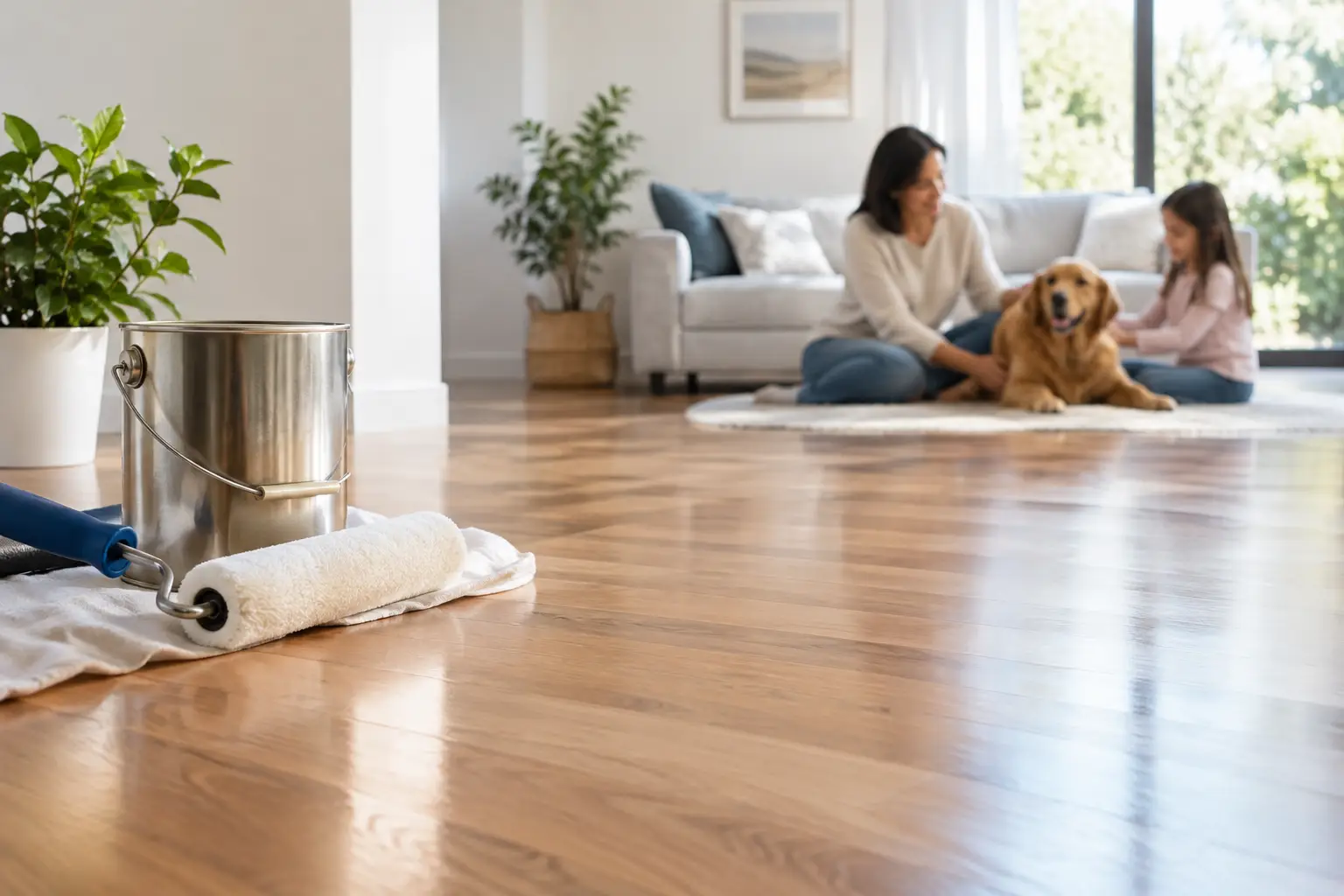
A chair leg dragged across a sunlit dining room can make a beautiful hardwood floor suddenly feel worn. The good news is that can scratched wood floors be repaired is usually not a question of whether repair is possible, but of choosing the right level of repair. A light mark in the finish calls for a very different approach than a deep gouge that reaches bare wood.
Hardwood is one of the few architectural materials that can be renewed rather than discarded. With a careful diagnosis and skilled workmanship, many scratched floors can regain their depth, even color, and finely finished appearance without losing the character that made them worth choosing in the first place.
Can Scratched Wood Floors Be Repaired Without Refinishing?
Often, yes. The deciding factor is how far the scratch extends. Most wood floors have a protective finish layer above the wood itself. When a scratch is confined to that layer, the wood may be entirely intact beneath it. These surface scratches are typically the simplest to address.
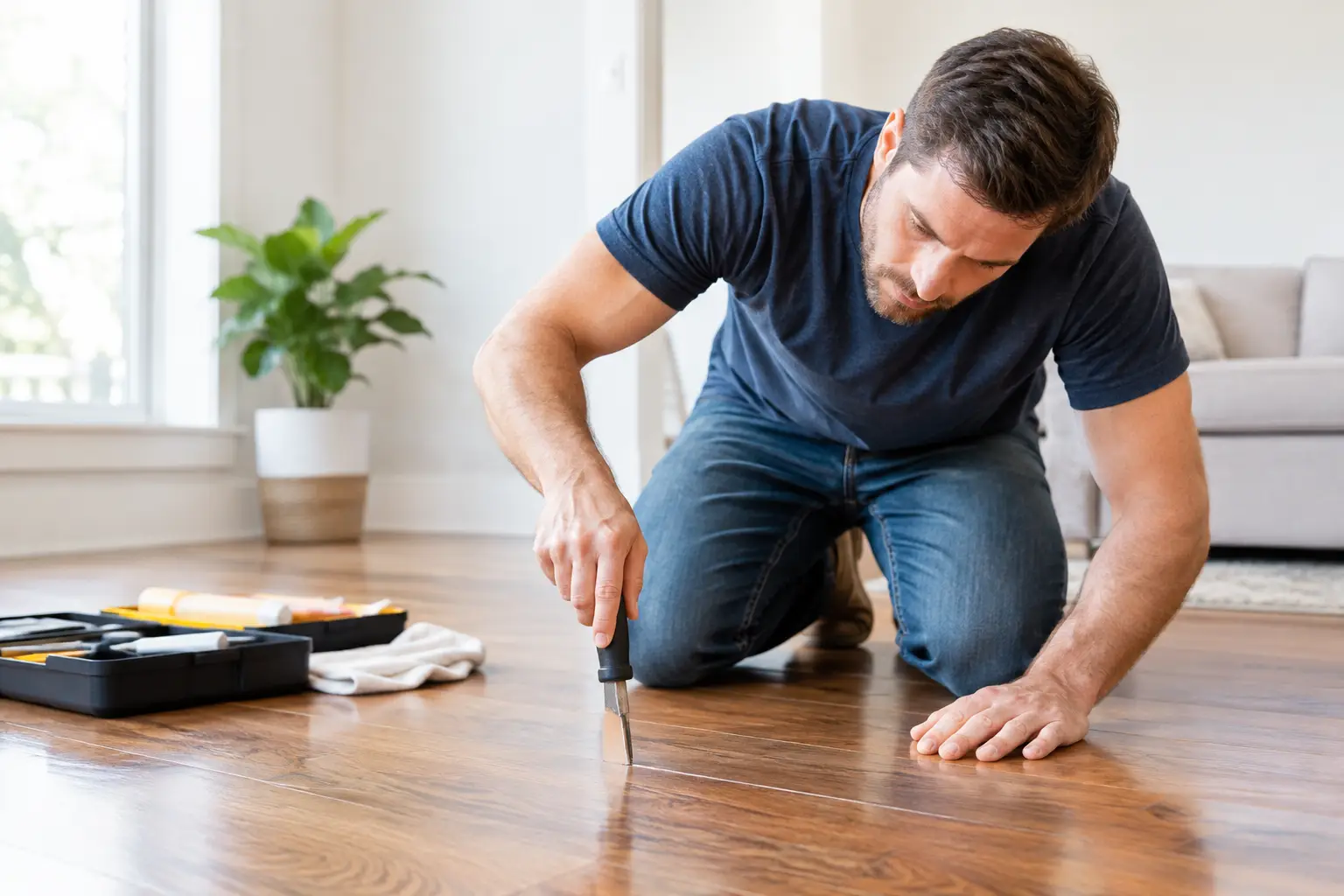
Run a fingertip gently across the mark. If you can see the scratch but barely feel it, it may be in the finish alone. If your fingernail catches in it, or if the line appears pale, dark, or raw compared with the surrounding floor, the damage may have reached the stain or exposed bare wood.
A second clue is location. Fine scratches concentrated near entryways, under dining chairs, or along a pet’s favorite route are usually wear-related. A single deep line near a moved appliance, heavy piece of furniture, or dropped object is more likely to need localized repair. The pattern tells an experienced flooring professional as much as the mark itself.
Start With a Clean, Honest Assessment
Before treating a scratch, clean the area with a floor cleaner approved for the existing finish and a lightly damp microfiber cloth. Dirt caught in a scratch can make it look darker and deeper than it is. Avoid steam cleaners, wet mops, abrasive pads, oil soaps, and all-purpose household cleaners. They can leave residue, dull the finish, or force moisture into exposed wood.
Once the floor is clean and dry, inspect it in both daylight and angled artificial light. A scratch that disappears when viewed straight on may be a superficial scuff. A line that remains visible from every angle usually needs more deliberate work.
It also helps to identify the floor itself. Solid hardwood generally offers the greatest repair potential because it can often be sanded and refinished several times over its life. Engineered hardwood can also be repaired, but its usable top layer varies significantly. A thick, premium wear layer may allow careful refinishing, while a thin veneer may limit the work to screening, recoating, or selective board replacement.
The Right Repair Depends on the Depth of Damage
Scuffs and fine finish scratches
For faint surface marks, a professional cleaning followed by a compatible maintenance product may be enough to improve the appearance. In other cases, a flooring professional can lightly abrade the existing finish and apply a fresh coat. This process is commonly called screening and recoating.
Screening does not remove the wood’s surface or change its stain color. Instead, it refreshes the protective finish, blends many minor scratches, and restores a more uniform sheen. It is an excellent option for floors that are otherwise in good condition but look tired from normal household use.
The word compatible matters. A new finish must adhere properly to the old one. Floors treated with wax, silicone-heavy polish, or certain maintenance products may require additional preparation or a different repair strategy. Applying a new coating without confirming compatibility can create adhesion failure, peeling, or an uneven appearance.
Scratches that reach stain or bare wood
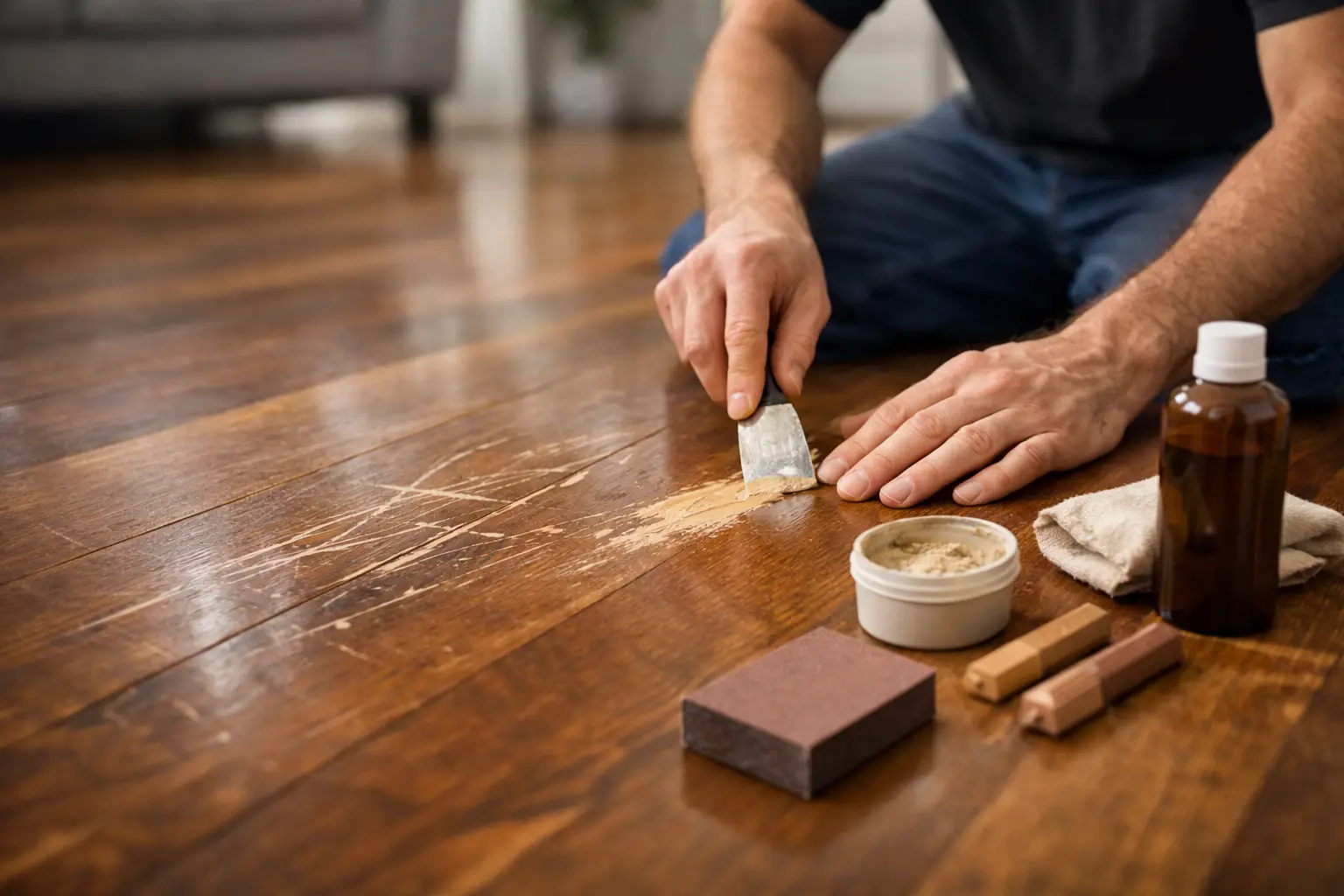
A deeper scratch may require color correction before the protective finish is restored. Small isolated marks can sometimes be carefully blended with a color-matched repair product, followed by a compatible topcoat. The goal is not simply to make the line less visible. It is to recreate the floor’s natural color variation, grain direction, and sheen so the repair does not draw attention to itself.
This is where quick retail fixes can disappoint. A dark filler on a light oak floor, for example, can leave an obvious stripe. A waxy crayon may hide a mark temporarily but interfere with future recoating. Touch-up methods have a place, particularly for a minor scratch in a discreet area, but they should be selected with the long-term finish plan in mind.
Deep gouges, dents, and damaged boards
When wood fibers are torn, crushed, or missing, spot touch-up may not provide the refined result a premium floor deserves. A deep gouge can be filled and colored, but it may still show under angled light. For isolated damage, replacing one or more boards can be the cleaner solution, especially on newer floors where matching material is available.
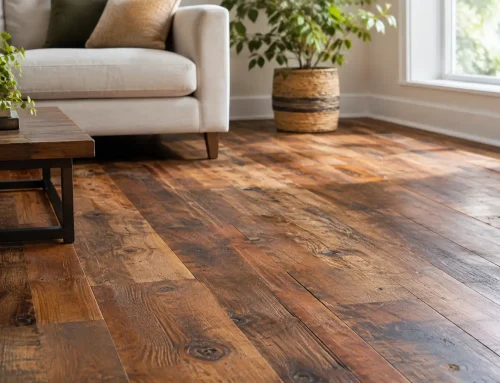
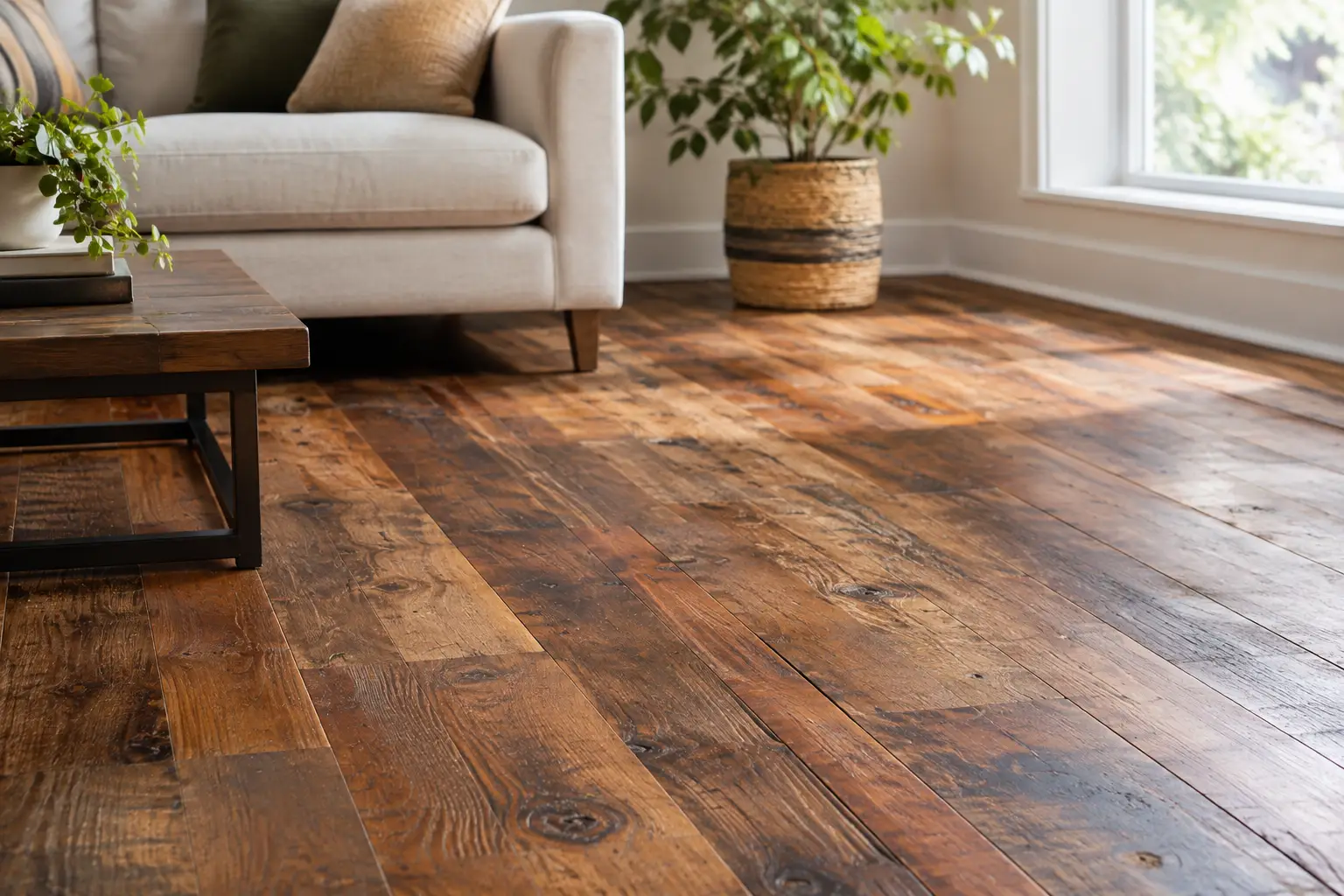
Board replacement becomes more complex on older, reclaimed, or historic floors. Wood changes color over time, and even the same species can vary widely in grain and tone. A craftsman may need to select boards individually, blend stains by hand, and feather the repair into the surrounding floor. The work is precise, but a thoughtful repair can preserve a floor’s age and authenticity far better than replacing an entire room.
When Full Refinishing Is the Better Investment
A few scratches do not automatically mean the floor needs a complete refinish. Yet widespread scratches, worn traffic lanes, fading, water staining, or finish loss across several rooms often point to a larger solution. Refinishing removes the worn surface, corrects damage more comprehensively, and gives the entire floor a consistent appearance.
This is also the right time to consider whether the color and sheen still suit the home. A warm natural oak may deserve to remain exactly as it is. In another space, a refreshed neutral stain or a softer matte finish can bring an older floor into harmony with a renovation while retaining the material’s original substance.
Full refinishing does involve more preparation than a recoat. Furniture must be moved, the condition of the wood must be evaluated, and the home needs a sensible plan for dust control, drying time, and access. Modern low-VOC, quick-drying finishes make the process more practical for occupied homes than it once was, while also supporting healthier indoor air quality.
Why DIY Scratch Repair Can Create Bigger Problems
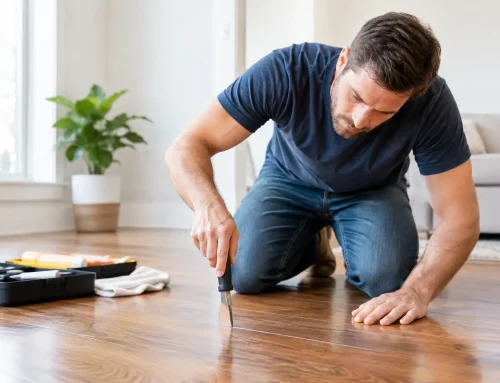
Homeowners are understandably tempted by a small bottle, marker, or wax stick when a scratch first appears. For a tiny, isolated mark, a careful touch-up may be perfectly reasonable. The risk rises when several products are layered over time or when the floor’s original finish is unknown.
Common mistakes include using the wrong color, applying too much filler, sanding through a stained edge, or leaving a glossy patch on a satin or matte floor. Another frequent problem is using wax-based products on a polyurethane-coated floor. The immediate result may look better, but the residue can complicate future professional recoating.
Water deserves particular caution. If a scratch has exposed raw wood near a kitchen, exterior door, or pet water bowl, protect that area promptly. Moisture can darken exposed fibers, lift the finish around the scratch, and eventually cause cupping or separation between boards.
Protect the Repair and the Floor Beneath It
Once scratches have been repaired, prevention is less about treating the floor delicately and more about managing predictable wear. Felt protectors beneath chairs and furniture should be checked regularly, since they collect grit and eventually flatten. Entry mats at exterior doors reduce the fine sand and salt that act like sandpaper under shoes, particularly through Maryland and Virginia winters.
Keep pet nails trimmed, lift rather than drag furniture, and use breathable rugs with floor-safe pads. Maintain stable indoor humidity as well. Wood naturally expands and contracts with seasonal conditions, and a stable environment helps protect both the boards and the finish that seals them.
For homeowners with wide-plank, antique, reclaimed, or custom-stained floors, a professional maintenance plan is especially valuable. These floors have visual nuance that deserves more than a generic repair method. At Royal Oaks Flooring, the approach begins with the wood, the finish, and the way the room is used, then matches the repair to the floor rather than forcing the floor into a standard solution.
A scratched floor is not a failed floor. In many cases, it is simply a well-loved surface asking for informed care. Address the damage while it is still localized, and your hardwood can continue to gather the kind of character that makes a home feel established, welcoming, and unmistakably yours.