A freshly refinished hardwood floor should bring warmth and renewed character to a home, not leave a family wondering what is lingering in the air. So, are low VOC floor finishes safe? For most homes, a properly selected and professionally applied low VOC finish is a significantly healthier choice than older high-solvent alternatives. But low VOC is not a blanket guarantee of zero odor, zero emissions, or the right fit for every household.
The better question is whether the specific finish, the application process, and the curing plan are appropriate for your home. That is where experienced craftsmanship matters. A beautiful finish must protect the wood, suit the way a family lives, and allow the indoor environment to return to normal as responsibly and efficiently as possible.
What Low VOC Actually Means
VOC stands for volatile organic compound. These are chemicals that can evaporate from a liquid product into the air as it dries and cures. In floor finishes, VOCs have traditionally come from solvents that help a coating spread, level, and harden.
A low VOC finish contains fewer of these compounds than a conventional finish. This generally means less off-gassing, less lingering odor, and a lower contribution to indoor air pollution. Waterborne polyurethane systems are among the most common low VOC options for hardwood floors, though the VOC content varies by product and coating system.
The distinction matters: low VOC does not mean VOC-free. It also does not tell the whole safety story. A product may have a low total VOC count while still containing ingredients that require careful handling during application. The finish should be evaluated as a complete system, including its sealer, stain, topcoat, hardener, and cleaning recommendations.
For homeowners, low VOC is best understood as one meaningful part of a healthier flooring decision, not a substitute for sound installation practices and informed product selection.
Are Low VOC Floor Finishes Safe During and After Refinishing?
When a quality low VOC finish is used according to its manufacturer instructions, with proper ventilation and curing time, it is widely considered a safer indoor option than traditional solvent-heavy coatings. The greatest exposure occurs while the finish is being applied and during the early drying period, when emissions are most active.
Once a finish has dried and fully cured, emissions decline substantially. Drying and curing are not the same event. A floor can be dry enough to walk on in a matter of hours or days, depending on the product, yet still need additional time before rugs, furniture, pets, and regular household traffic should return. A finish reaches its intended hardness through curing, and that process deserves patience.
For many waterborne systems, a family may be able to reenter the home relatively soon after application, especially when windows can be opened and the HVAC system is managed thoughtfully. Yet the precise schedule should come from the finish manufacturer and the flooring professional, not from a one-size-fits-all promise. Humidity, temperature, airflow, the number of coats, and the existing condition of the wood all affect the timeline.
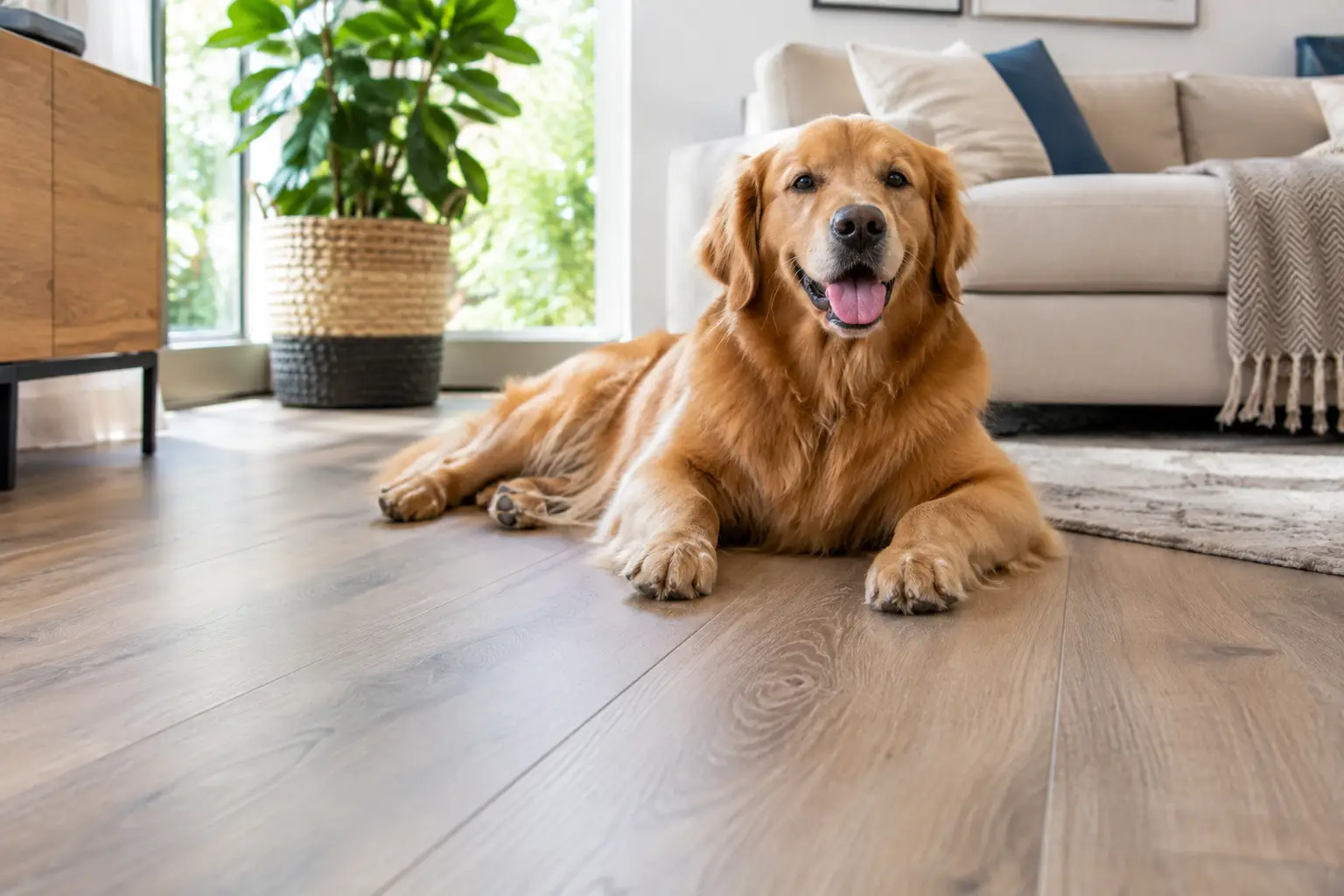
Households with babies, older adults, pets, asthma, chemical sensitivities, or respiratory concerns may want to take additional precautions. It can be sensible to arrange time away from the home during sanding and coating, even when low VOC products are being used. A homeowner with a medical concern should also discuss individual sensitivities with a qualified health professional.
The Finish Is Only Part of the Indoor-Air-Quality Picture
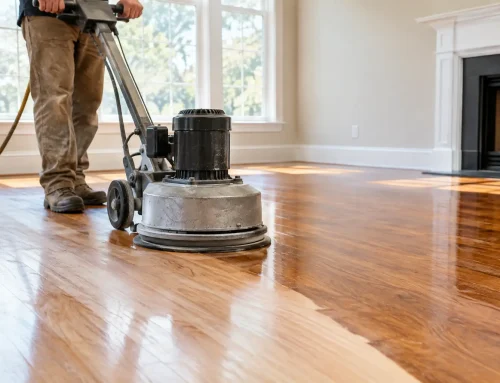
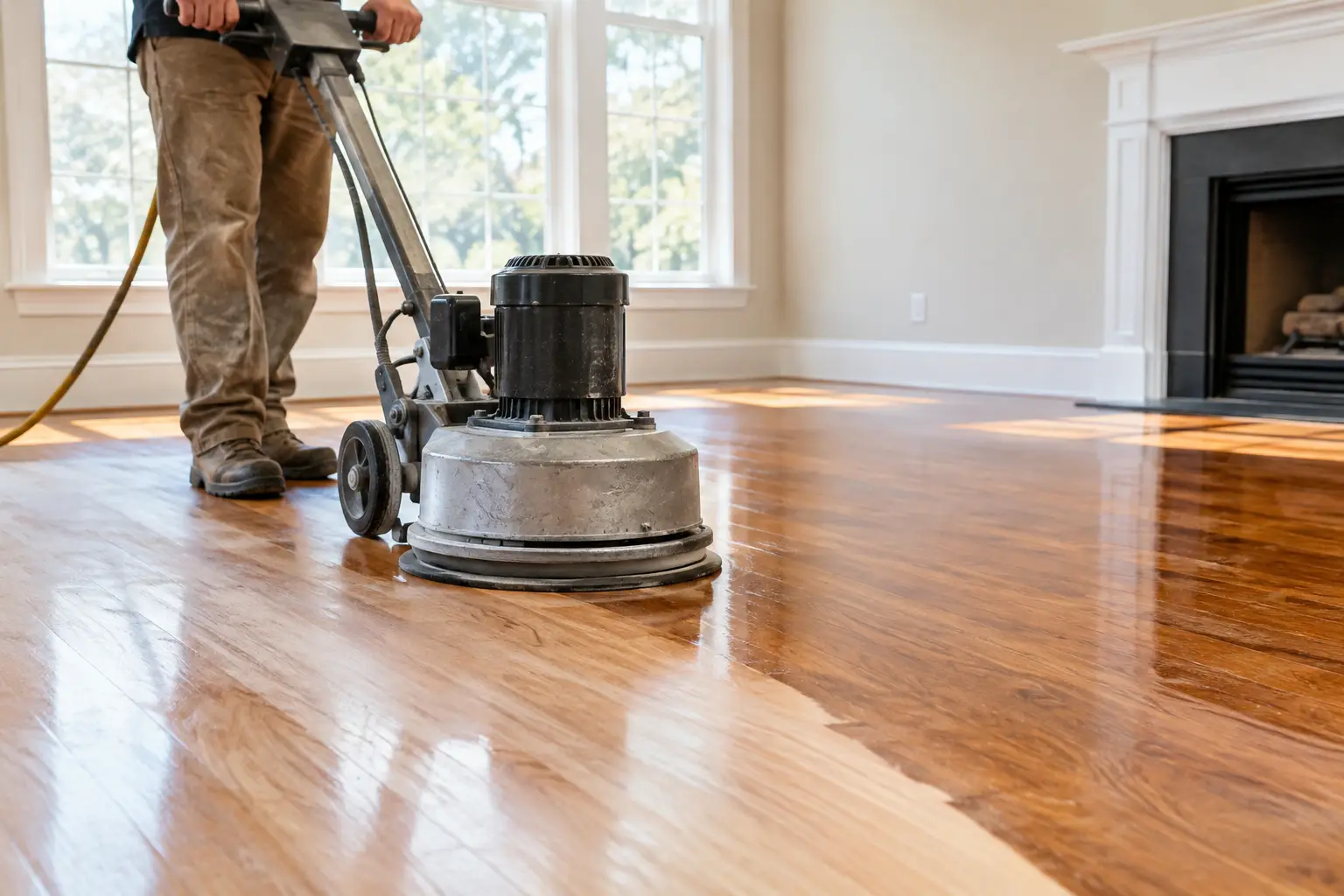
A low VOC topcoat is valuable, but it cannot compensate for careless refinishing practices. Sanding an older floor creates fine wood dust, and historic floors may have prior coatings or contaminants that call for special evaluation. Professional dust containment, thorough site preparation, and careful cleanup are fundamental to a responsible project.
Stains, fillers, adhesives, and repair materials also deserve attention. If a floor requires patching, board replacement, leveling, or a custom color, every product introduced to the space should be considered. The cleanest finish system is one whose components are compatible, well understood, and applied in the correct sequence.
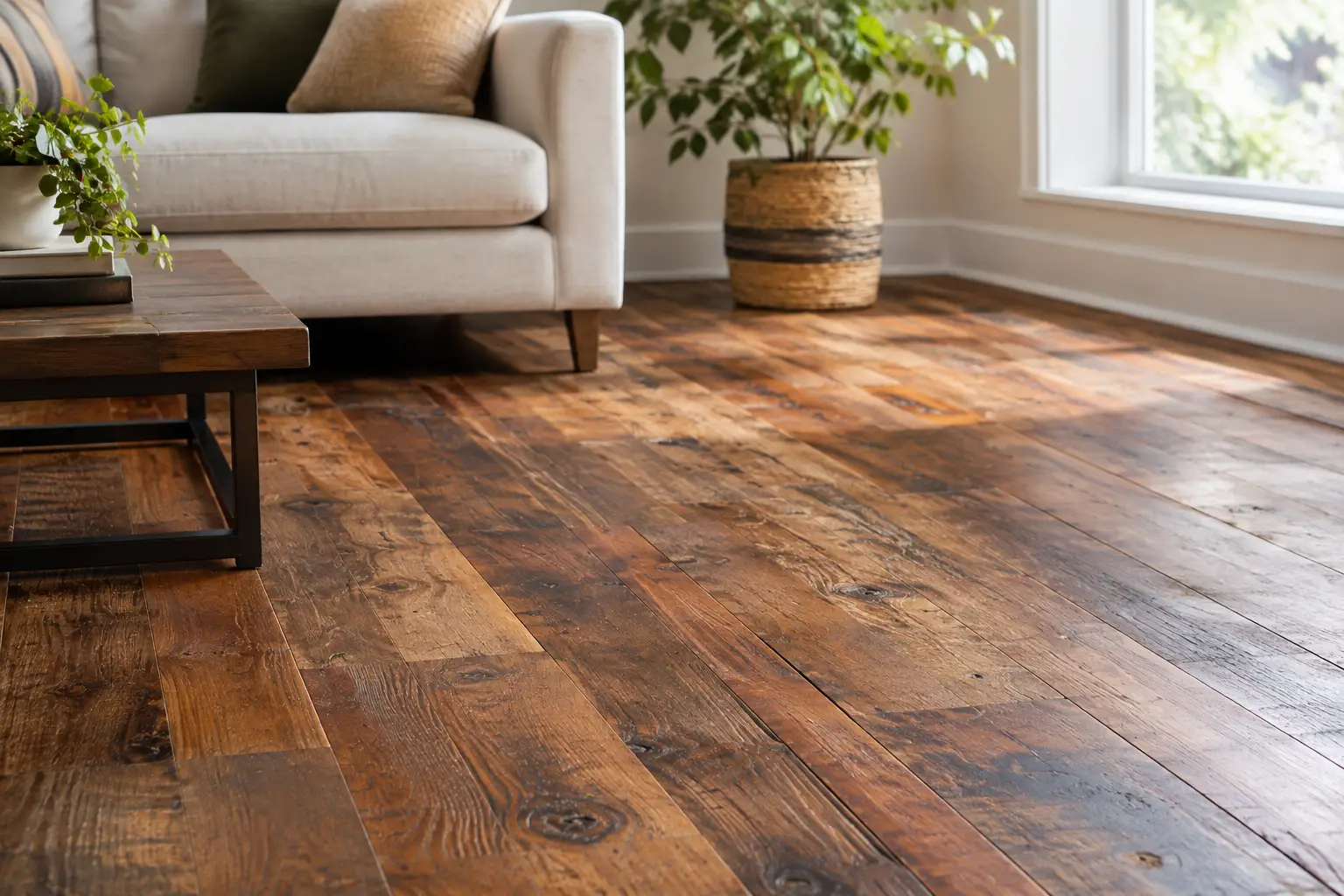
This is particularly relevant in older homes throughout Maryland, Northern Virginia, and the Washington area, where original hardwood can be a defining architectural feature. Restoring an antique oak floor or blending new boards into an existing room requires more than selecting the lowest number on a label. It requires knowing how the wood will accept color, how the finish will bond, and how to preserve the floor without creating avoidable disruption inside the home.
How to Choose a Safer, Durable Finish
A finish should be chosen for both its chemistry and its performance. A low VOC coating that scratches prematurely or fails under daily use is not necessarily the most responsible choice, because an early refinish creates another round of materials, labor, and disruption.
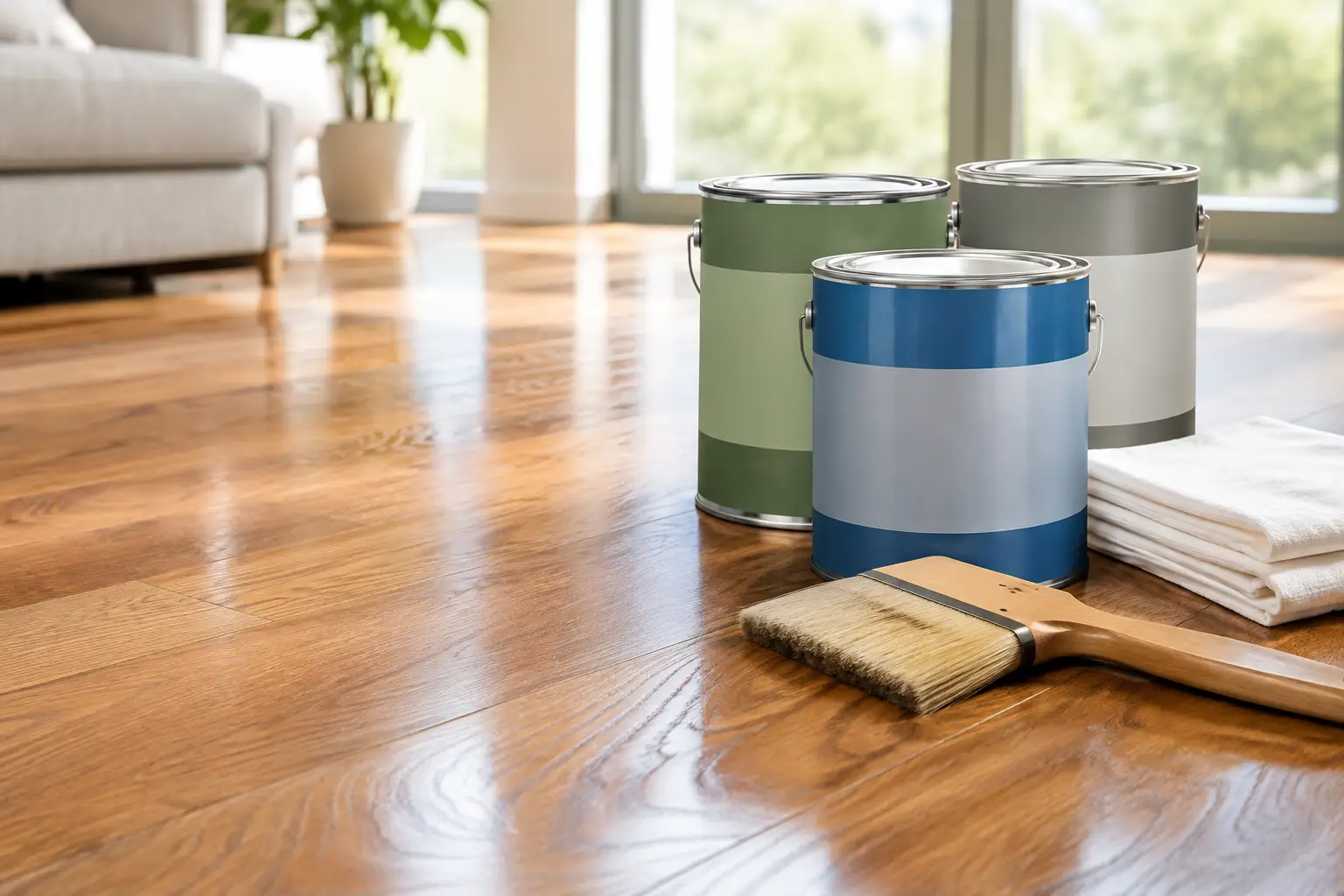
Waterborne finishes are often an excellent choice for occupied homes. They dry quickly, tend to have a milder odor than oil-based finishes, preserve a lighter and more natural wood tone, and are available in highly durable professional-grade formulations. Many are also certified by respected indoor-air-quality programs, including GREENGUARD certification, which can provide added confidence that a product has been tested for chemical emissions.
That said, finish selection still depends on the floor and the household. A busy entryway, a large dog, an active family, a formal dining room, and a restored historic floor do not all call for the same sheen or coating build. Matte finishes can offer a refined, contemporary appearance and conceal minor surface marks well, while satin remains a timeless, practical choice for many hardwood interiors. Higher-gloss finishes reflect more light but can reveal scratches and dust more readily.
Ask your flooring professional to explain the full finish system rather than simply naming a brand or calling a product green. The conversation should cover VOC content, certifications, expected odor, dry time, cure time, maintenance needs, and the finish’s suitability for the room.
Practical Steps That Make a Real Difference
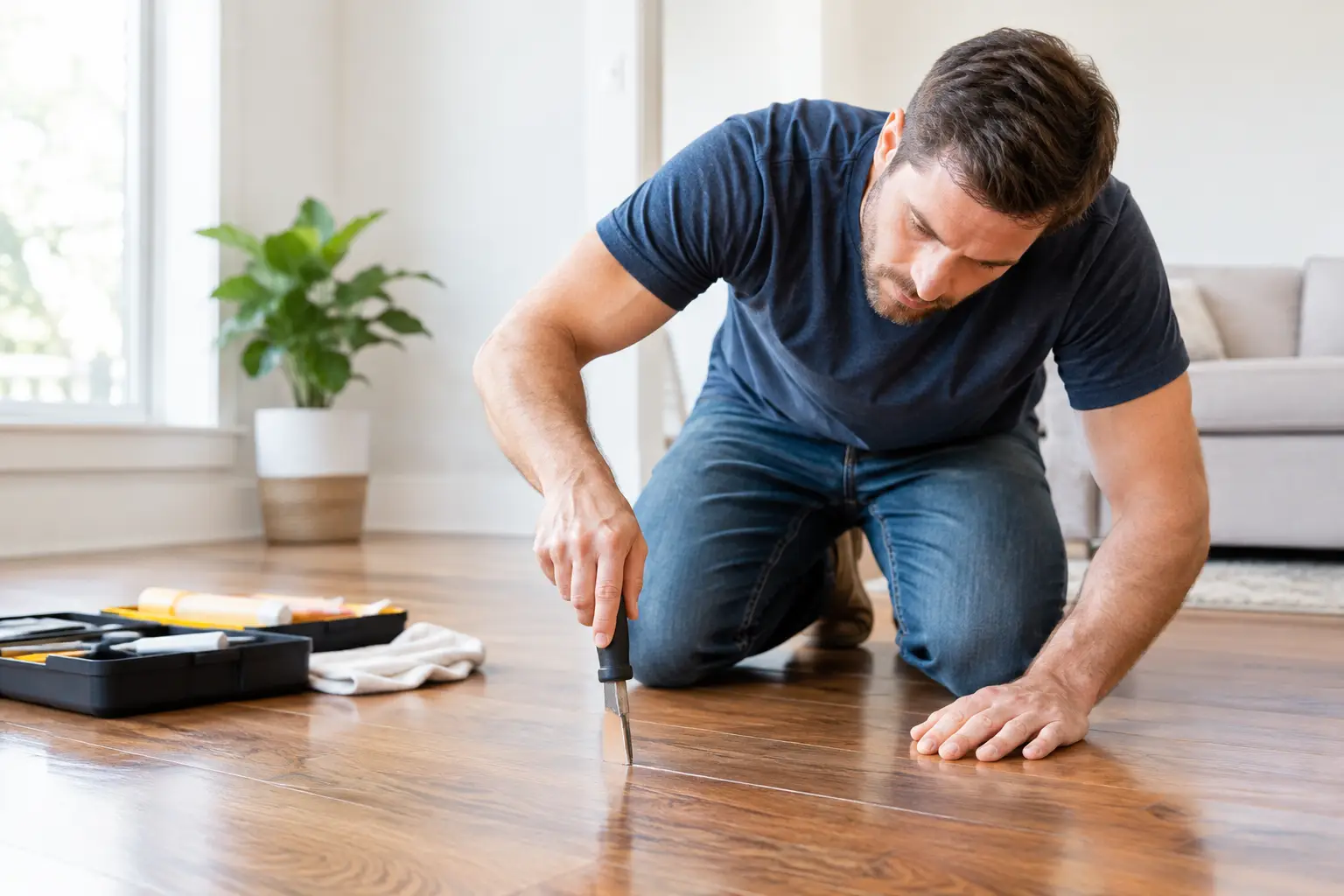
Even the finest low VOC floor finish benefits from a disciplined application plan. Before work begins, remove or protect soft furnishings, confirm where people and pets will stay during the project, and discuss ventilation with the contractor. If the home has a forced-air HVAC system, ask how return vents and dust control will be managed during sanding.
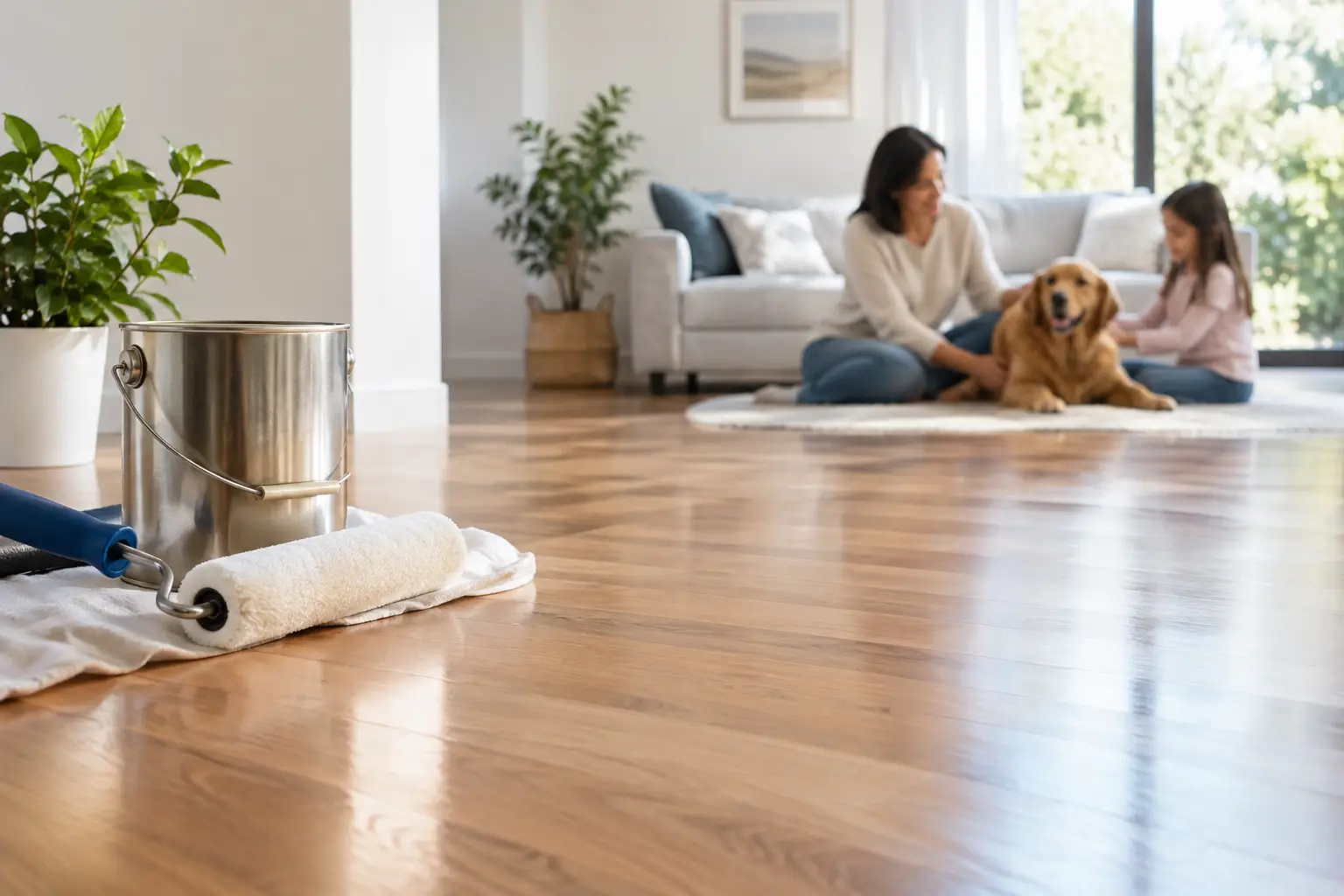
After the final coat is applied, follow the recommended reentry and cure schedule. Open windows when outdoor conditions permit, use ventilation as advised, and avoid placing area rugs or heavy furniture on the floor too soon. Rugs can trap moisture or interfere with curing, while furniture can leave impressions in a finish that has not reached full hardness.
Four questions are especially useful before approving a finish:
- What is the VOC content of every product used, including stain and sealer?
- Does the finish carry an indoor-air-quality certification?
- How long should the home be ventilated, and when is it safe to resume normal occupancy?
- When can furniture, rugs, pets, and regular cleaning return to the space?
Clear answers reflect professional preparation. Vague assurances are not enough when the work is taking place in the center of a family’s home.
A Safer Finish Should Still Look Exceptional
The best modern finishes have changed what homeowners can expect from a low-emission flooring system. A well-applied waterborne finish can bring out the grain of white oak, walnut, maple, or reclaimed boards with remarkable clarity while building the protection needed for everyday living. It can also help preserve the clean, natural appearance many design-conscious homeowners prefer.
Application quality remains decisive. Uneven sheen, lap marks, contamination, poor adhesion, and premature wear are usually not questions of VOC content. They are questions of surface preparation, environmental conditions, product compatibility, and the steady hand of the craftsperson applying each coat.
At Royal Oaks Flooring, finish decisions are approached as part of the floor’s long-term design and performance, not as an afterthought. The right system should honor the wood beneath it, support healthier indoor air, and give the homeowner confidence long after the final coat has cured.
A refinished floor becomes part of daily life: the surface beneath bare feet in the morning, the backdrop for gatherings, and an investment meant to age gracefully. Choose a finish with careful attention to its emissions, but also to the expertise behind its application. That combination is what allows a floor to look enduringly beautiful while feeling right for the home around it.