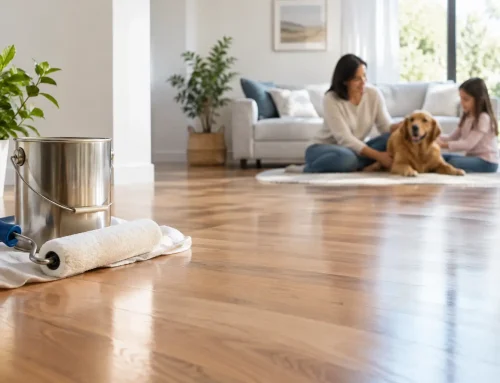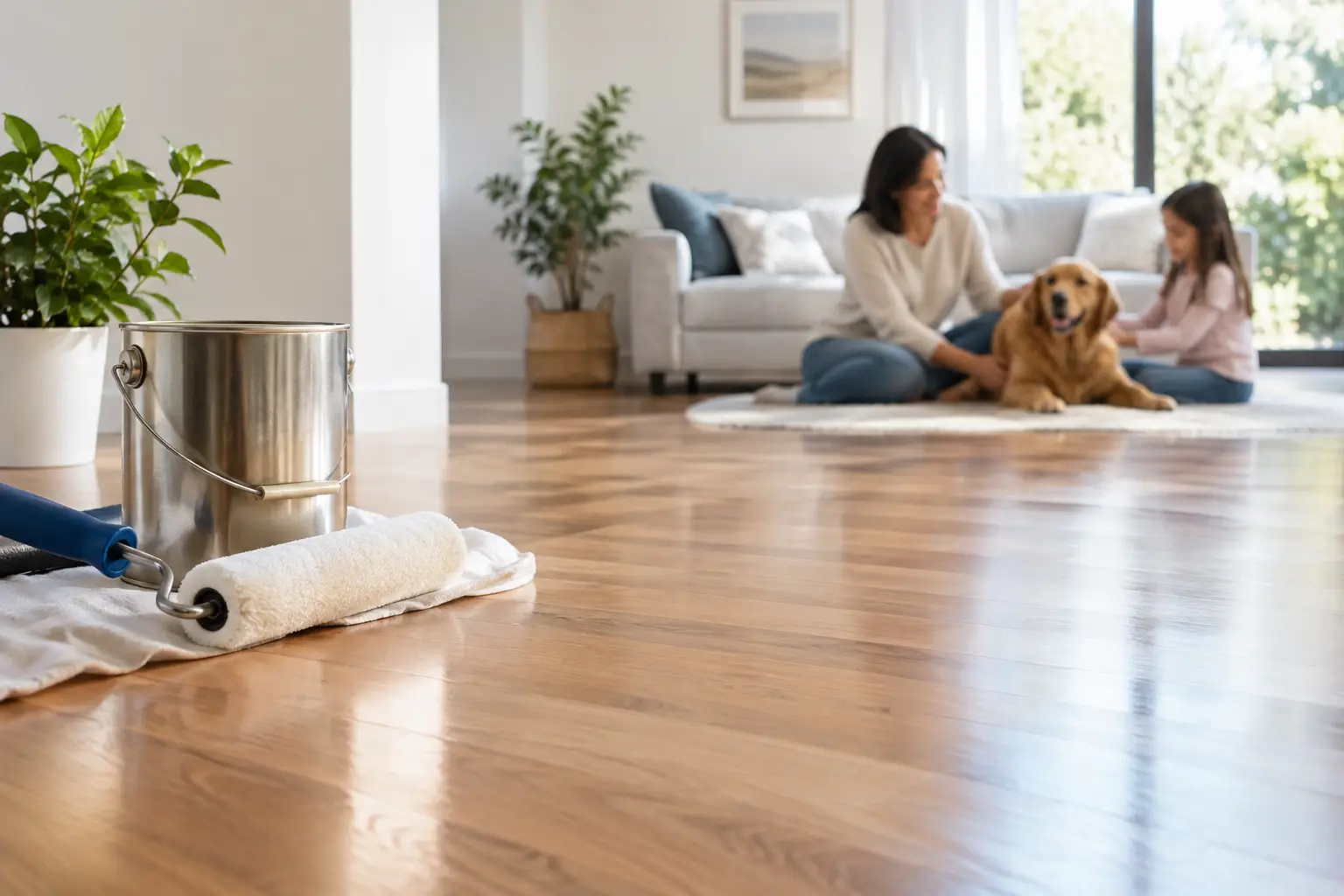
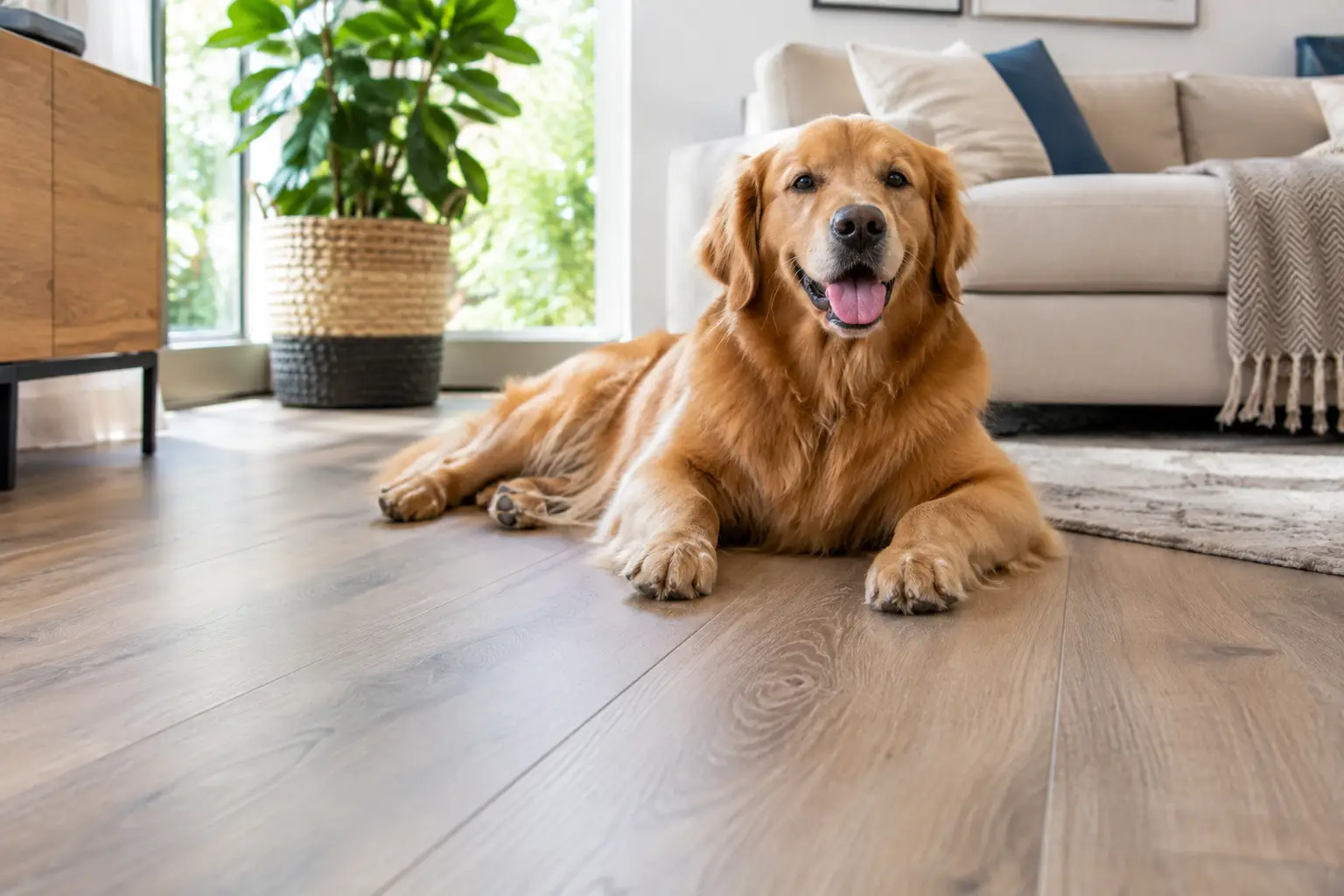
A beautiful floor should not make you nervous every time the dog races in from the yard, skids around a corner, or pauses at the door with wet paws. The best flooring for dogs is not simply the hardest material available. It is the floor that suits how your household actually lives while preserving the warmth, proportion, and finish quality that make a home feel considered.
For many Maryland, D.C., and Northern Virginia homeowners, that means looking beyond a showroom sample. Dog size, activity level, nail maintenance, sunlight, subfloor conditions, and the room itself all influence the right decision. A well-selected floor can take daily life in stride. A poorly selected one can look tired long before it should.
What the Best Flooring for Dogs Must Handle
Dogs bring three main challenges to a floor: abrasion from nails, moisture from water bowls and wet paws, and impact from running, toys, or the occasional dropped leash. Texture and traction matter, too. A glossy floor may look elegant under showroom lighting, but a surface that sends an older dog sliding across the room is not a practical luxury.
No flooring is entirely scratch-proof. Even tile and premium vinyl can show wear over time. The goal is to choose a material and finish that either resists marks well or allows them to blend into the character of the floor. This distinction is especially important in homes where flooring is a long-term investment rather than a short-term cosmetic update.
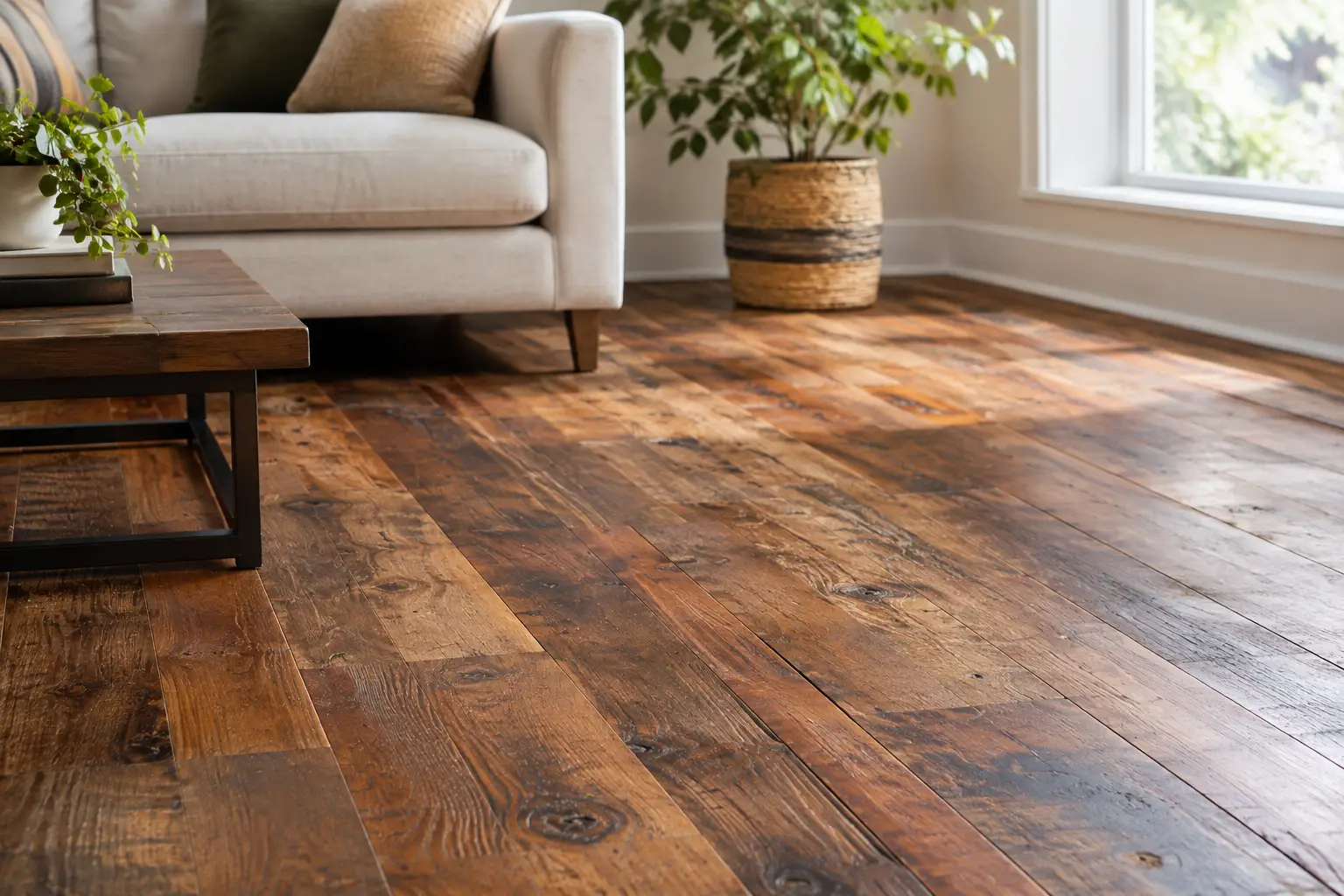
A lower-gloss finish is often a wise choice. Matte and satin sheens soften the visibility of fine scratches, dust, and paw prints far better than high-gloss surfaces. Natural variation in grain, subtle texture, and mid-tone colors also make a lived-in floor look intentional rather than worn.
Engineered Hardwood: The Best Balance for Many Homes
For homeowners who want authentic wood underfoot, engineered hardwood is often the most balanced answer. It has a genuine hardwood wear layer over a stable, layered core, giving it the character of real oak, maple, walnut, or other wood species while providing better dimensional stability than many solid hardwood installations.
That stability is valuable in kitchens, family rooms, and spaces where humidity changes through the seasons. It is also useful over concrete slabs or radiant heat systems when the product and installation method are properly specified. For dog owners, a quality engineered floor with a durable factory finish can offer excellent daily performance without giving up the depth and natural beauty only real wood provides.
Species still matters. Oak, particularly white oak, is a reliable choice because its grain naturally disguises minor marks and it accepts a broad range of colors and finishes. Maple is harder but has a smoother, more uniform grain that can make scratches easier to notice. Hickory is exceptionally hard and visually expressive, although its pronounced variation is not right for every interior.
The trade-off is repairability. Engineered hardwood can be refinished only as many times as its wear layer allows. A premium product with a sufficiently thick wear layer gives a homeowner more options over its life. That specification deserves careful attention before purchase.
Solid Hardwood Can Still Be an Excellent Choice
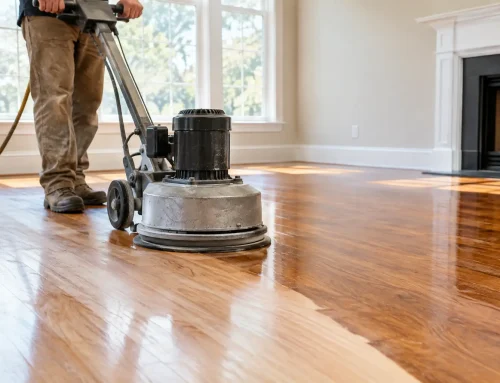
A dog does not automatically rule out solid hardwood. In fact, solid wood remains one of the most enduring floors available because it can be professionally sanded and refinished multiple times. A floor that gathers surface scratches through years of family life can be renewed rather than replaced.
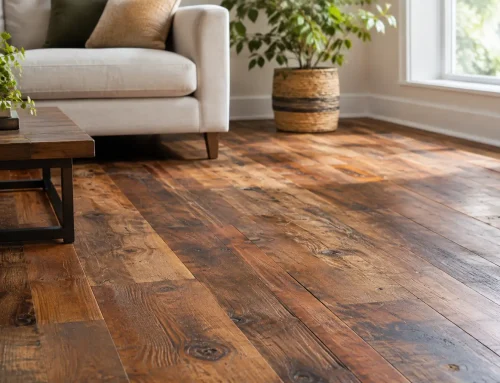
The best approach is to select a forgiving species, a practical sheen, and a high-performance finish. Wire-brushed oak, lightly textured plank, and character-grade wood all have visual movement that makes everyday wear less conspicuous. Wider planks can be striking in a refined home, though each project should be evaluated for moisture conditions, board selection, and installation layout.
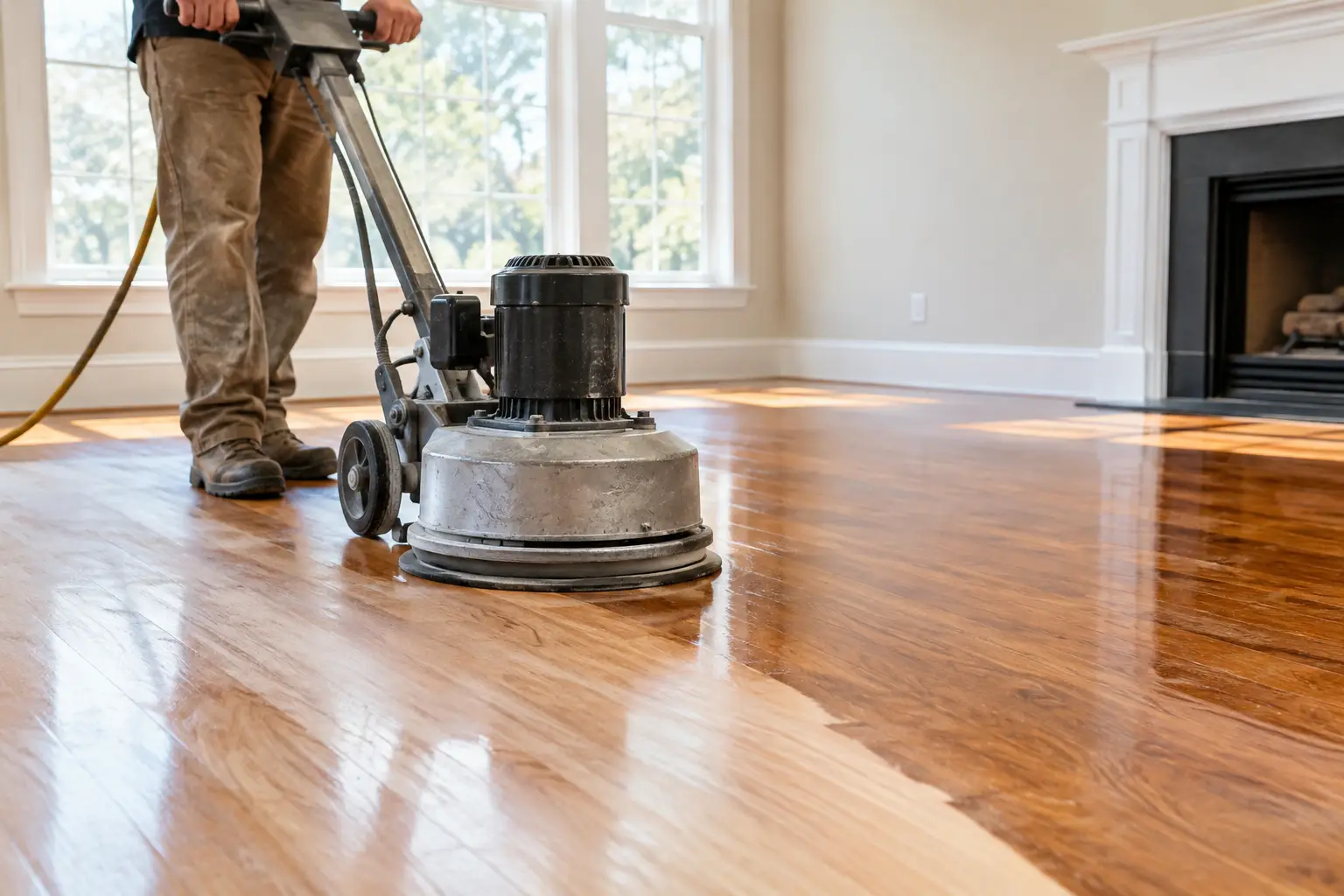
A site-applied finish also allows more design control. Modern low-VOC, quick-drying finishes provide exceptional protection while supporting healthier indoor air quality. The right finish system can make the difference between a floor that feels precious and one that is ready for real life.
Solid hardwood is less suitable for consistently damp areas, below-grade rooms with moisture concerns, or homes where standing water is likely to be ignored. Water should always be wiped promptly, even on a well-finished wood floor. Wood is a natural material, and its beauty comes with the responsibility of sensible care.
Luxury Vinyl Plank: Practical Protection in High-Moisture Spaces
Luxury vinyl plank, often called LVP, is a strong contender for mudrooms, finished basements, laundry areas, and busy kitchens. Its waterproof construction makes it far more forgiving of water bowls, muddy paws, and occasional accidents than hardwood. Quality products also offer convincing wood visuals and textured surfaces that provide better traction than a highly polished floor.
For dog owners, the appeal is clear: easy cleaning, strong resistance to moisture, and a softer feel than tile. It can be particularly sensible in a lower level where a hardwood installation would require more moisture management or carry greater risk.
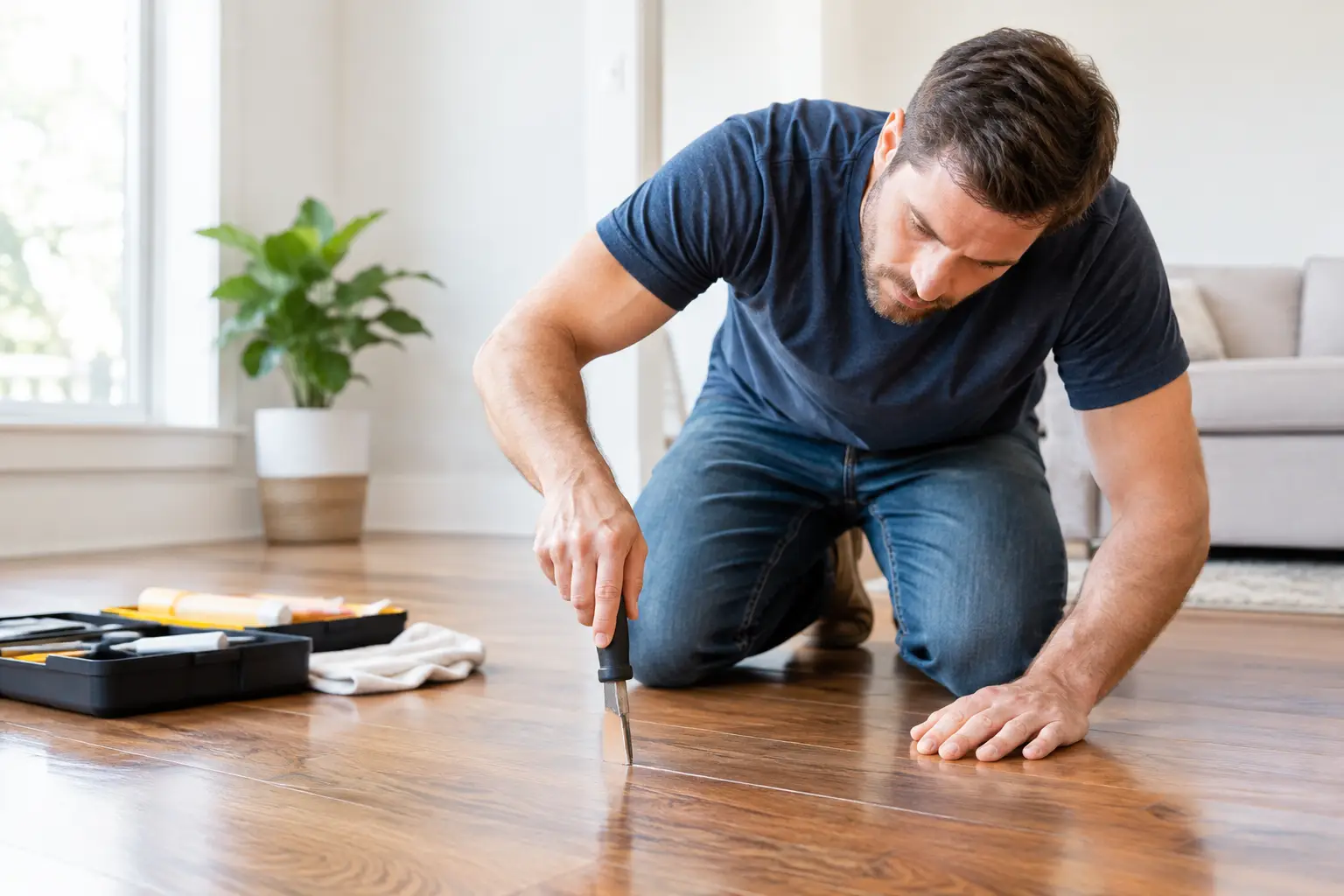
Still, not all LVP is equal. Lower-grade products can look artificial, dent under heavy furniture, or feel less substantial beneath the foot. The embossed texture, thickness, wear layer, locking system, and subfloor preparation all affect the finished result. A durable material cannot compensate for an uneven substrate or careless installation.
LVP also does not offer the same restoration path as hardwood. When its appearance eventually wears or a plank is damaged beyond a simple replacement, the material is not sanded and renewed. It is a practical finish material, not a generational wood floor.
Tile and Porcelain: Durable, but Not Always Comfortable
Porcelain tile is among the most scratch-resistant and water-resistant flooring choices available. It is an excellent option near exterior entries, in sunrooms, bathrooms, and other areas where moisture is part of daily life. For large dogs that frequently come indoors wet or muddy, tile can be exceptionally easy to maintain.
Its limitations are comfort and traction. Tile is hard, cool, and potentially slick, especially when wet. These qualities can be challenging for senior dogs or breeds prone to joint discomfort. Choosing a textured porcelain tile with a slip-resistant rating can improve footing, while strategically placed washable runners can make the space more comfortable without concealing the floor.
Grout should also be considered. Light, porous grout can show dirt quickly, so a properly sealed grout in a practical color is often the better decision for an active household.
The Details That Matter More Than Most People Expect
The right material is only part of the answer. Finish sheen, color, surface texture, and installation quality often determine whether a floor continues to look polished after years with pets.
Very dark floors tend to reveal dust, light-colored hair, and scratches. Very pale floors can highlight mud and dark paw prints. Mid-tone browns, warm naturals, and nuanced greiges are usually more forgiving. A floor with color variation and visible grain handles visual evidence of daily life with greater grace than a perfectly uniform surface.
Nail care is equally practical. Keeping nails trimmed reduces repeated abrasion, particularly near doorways, hallways, and the paths dogs use to launch into a favorite room. Entry mats placed inside and outside exterior doors capture grit before it becomes an abrasive underfoot. Felt pads under furniture and a quick wipe of spills protect every floor, not just wood.
For homeowners investing in hardwood, professional installation is not a detail to postpone. Proper acclimation, moisture testing, subfloor preparation, expansion planning, and finish application protect the floor from problems that have nothing to do with the dog. Royal Oaks Flooring approaches these details as part of the craft, because a beautiful material deserves a foundation that lets it perform as intended.
A Floor That Welcomes the Whole Household
If you want authentic wood and lasting design value, engineered or solid oak hardwood with a matte, high-performance finish is often the most satisfying choice. If moisture exposure is frequent or a lower-level space needs added protection, a carefully selected luxury vinyl plank may be the wiser fit. Porcelain tile earns its place where water and dirt are unavoidable, provided traction and comfort are addressed.
The best choice is the one that lets your dog feel at home without asking you to lower your standards for the home itself. With the right material, finish, and craftsmanship, the marks of daily life become part of a floor’s story, not a reason to regret it.