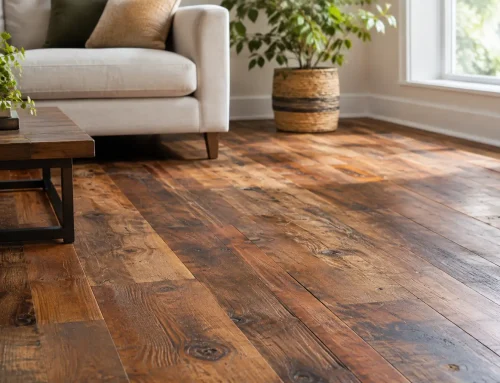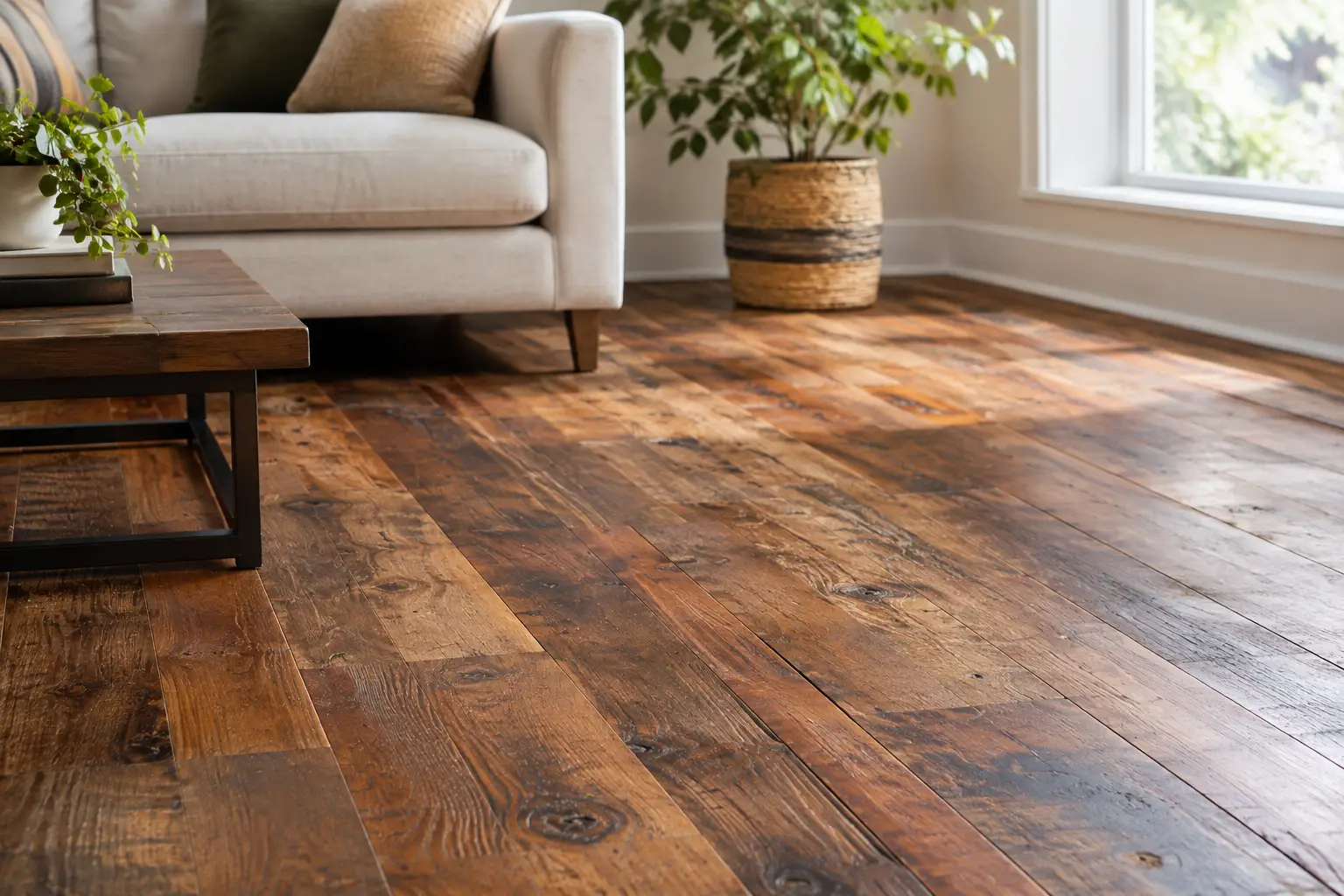
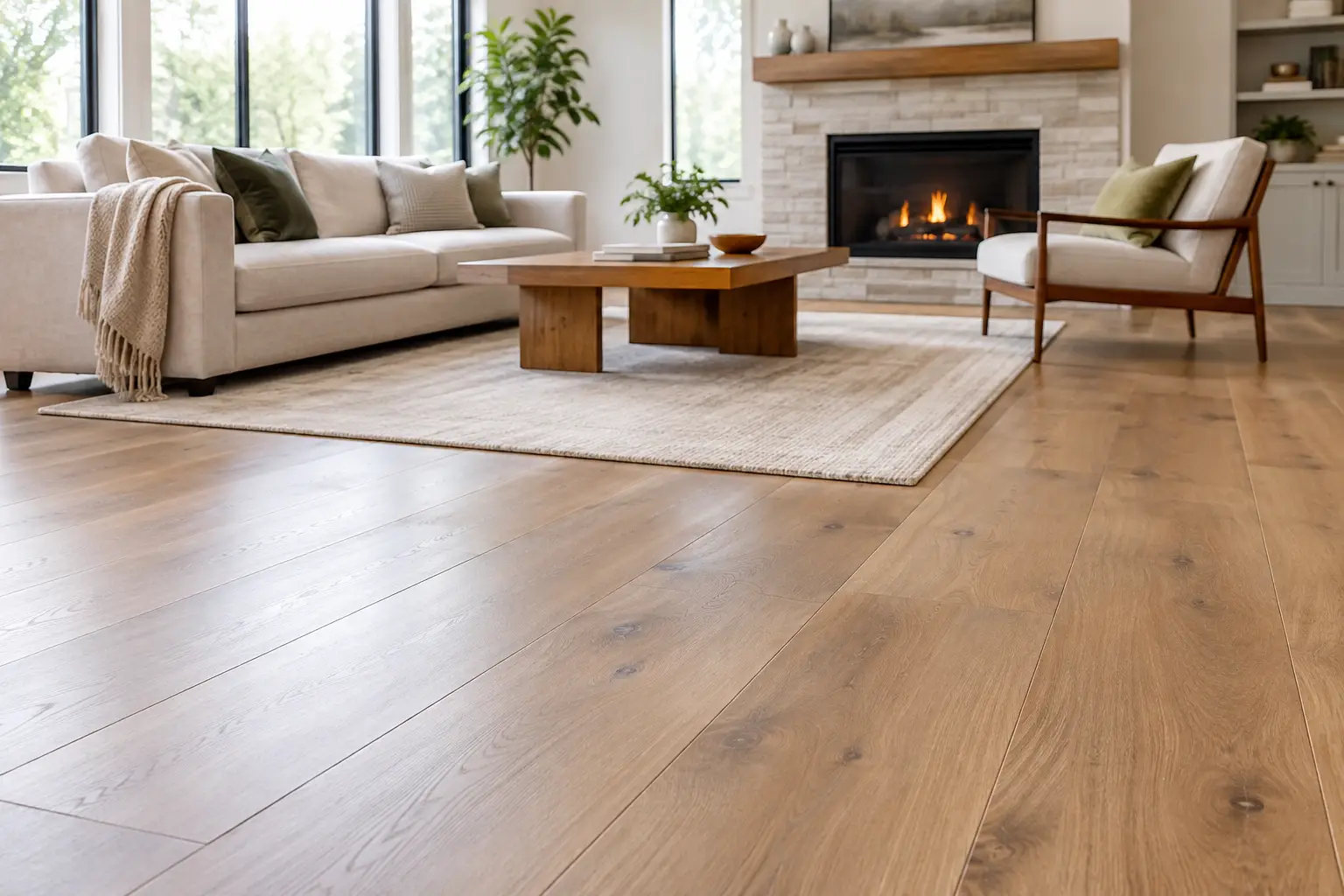
A wide-plank hardwood floor changes the scale of a room before a single piece of furniture is moved back in. Fewer seams allow the grain to read as a continuous surface, bringing out the natural movement, knots, and color variation that narrower boards can divide into smaller visual fragments. This wide plank flooring guide explains how to choose a floor that feels generous and refined while performing well through years of seasonal change.
Wide planks are not simply a larger version of conventional strip flooring. They ask more of the material, the subfloor, and the installation. When those details are handled with care, the result can become the visual anchor of a historic restoration, a tailored traditional home, or a clean-lined contemporary renovation.
What Counts as Wide Plank Flooring?
While there is no universal cutoff, hardwood boards around 5 inches wide and above are generally considered wide plank. Boards in the 7- to 10-inch range create a particularly expansive look, while custom and reclaimed floors may be even wider. Board lengths also matter. Longer boards reduce end joints and give the installation a calmer, more intentional rhythm.
The right width depends on the room, the wood species, and the character you want to bring forward. A 5- or 6-inch oak floor can add substance without overpowering a smaller home office or formal dining room. Planks measuring 8 inches or more make a strong architectural statement in open living areas, kitchens, and entry halls. In older homes, widths that echo the period can make new flooring feel as though it has always belonged there.
Wide boards reveal more of each tree’s individual character. Cathedral grain, mineral streaks, saw marks, and subtle shifts in tone become part of the design rather than background detail. That is an advantage for homeowners who appreciate authentic wood, but it also means material selection deserves close attention.
Choose the Wood Before the Width
Width should never be selected in isolation. Species, cut, grade, and board construction determine how a floor will look and respond to the home around it.
Oak remains a versatile standard
White oak is a favorite for wide planks because its grain is elegant without being overly busy, and it accepts a broad range of stains and natural finishes. It works equally well with warm traditional interiors and modern, neutral palettes. White oak also has a reputation for dependable performance when properly acclimated and installed.
Red oak offers a more pronounced grain and warmer underlying color. It can be beautiful in a home where existing millwork, stair parts, or antique furnishings call for a classic American hardwood presence. Its color is less neutral than white oak, so sample boards are especially valuable when coordinating with cabinetry and paint.
Maple, walnut, cherry, and ash create distinct moods
Maple has a fine, subtle grain and a clean appearance, though its density can make staining less predictable. It is often strongest in a clear or lightly toned finish. Walnut brings natural depth and richness, giving a room a more formal, intimate feel. Cherry develops a deeper patina over time, while ash offers a lively grain with a lighter, open character.
Reclaimed wood is another compelling option for homeowners who want visible history underfoot. Old growth material often carries tighter grain, original nail holes, weathering, and variation that cannot be manufactured convincingly. It demands experienced sorting, preparation, and installation, but its character is unmistakable.
For wide boards, rift- and quarter-sawn cuts deserve consideration. They tend to move less across their width than plain-sawn boards and produce a straighter, more linear grain. Plain-sawn wood offers the familiar cathedral pattern many homeowners love, but it generally shows greater seasonal expansion and contraction. Neither choice is automatically better. The best choice is the one that balances the desired look with the home’s conditions.
Solid or Engineered Wide Planks?
This is one of the most consequential decisions in any wide plank flooring guide. Solid hardwood is milled from a single piece of wood and can be sanded and refinished multiple times over its lifespan. It has unmatched authenticity and is an excellent choice for above-grade rooms with stable indoor conditions.
Engineered hardwood has a real hardwood wear layer over a layered core designed for added dimensional stability. That construction makes it especially useful for wider planks, radiant-heated floors, concrete subfloors, and locations where humidity changes are harder to control. A high-quality engineered product can be refinished, depending on the thickness of its wear layer, and it should not be confused with a printed wood-look surface.
For homes around the Chesapeake Bay and throughout the D.C. Metro region, humidity is a practical consideration rather than a technical footnote. Summers can be humid, winters can be dry, and older homes may have uneven conditions from one level to another. Solid hardwood can perform beautifully in these settings, but engineered construction may offer a wiser margin of stability for certain spaces. An experienced flooring professional should evaluate the site before the material is ordered.
The Subfloor Determines the Result
A fine floor cannot compensate for a subfloor that is uneven, damp, or structurally unsound. Wide boards are less forgiving than narrow strips because they span more surface area. Any variation beneath them can lead to movement, gaps, squeaks, or an uneven feel underfoot.
Before installation, the subfloor should be tested for moisture, checked for flatness, and prepared according to the flooring manufacturer’s requirements. Concrete requires particular care, including appropriate moisture testing and mitigation where needed. Wood subfloors may need repairs, additional fastening, leveling, or underlayment work before the first plank is laid.
Acclimation is equally important. Hardwood must reach an appropriate moisture balance with the home’s normal living environment, not simply sit unopened in a garage or vacant room. Heating and air conditioning should be operating as they will after move-in. Skipping this stage may save a few days at the beginning of a project and create visible problems months later.
Installation method matters as well. Depending on the product and subfloor, wide planks may be nailed, glued, floated, or installed using a combination of adhesive and mechanical fastening. The correct method is determined by the material, plank width, site conditions, and manufacturer specifications. Precision here protects both appearance and warranty coverage.
Finish Is Where Beauty Meets Daily Life
The finish determines more than sheen. It affects how a floor wears, how easily it can be maintained, and how visible daily activity will be. Matte and satin finishes are popular because they soften reflected light and tend to disguise minor scratches, dust, and pet hair better than high gloss. They also suit the natural, understated character of wide boards.
A site-finished floor provides flexibility in color and allows the surface to be tailored to the home. It can also create a more continuous appearance because the finished floor is sanded after installation. Factory-finished planks offer controlled finish application and may shorten the overall project timeline, though bevels between boards can remain more visible.
Modern very low-VOC, Green Guard certified finishes offer strong protection with less off-gassing and quicker return to the home. The best finish is not always the hardest-looking one on a sample. Consider how the room is used. A busy family kitchen benefits from a finish that can be refreshed and lived on gracefully. A formal sitting room may allow for a more delicate, custom appearance.
Expect Natural Movement, Not Perfection
Wood is hygroscopic, meaning it takes on and releases moisture from the air. As humidity rises, boards expand. As it falls, boards contract. Small seasonal changes are normal, particularly with solid wide-plank flooring. The goal is not to eliminate movement, but to manage it through appropriate material choices, professional installation, and stable indoor humidity.
Maintaining indoor relative humidity in a moderate range, commonly around 35 to 55 percent, helps protect hardwood floors as well as furniture, trim, and musical instruments. Use mats at exterior doors, wipe spills promptly, and avoid soaking the floor with water or harsh cleaners. Felt pads beneath furniture and regular dry dusting prevent unnecessary surface wear.
A few dents and fine marks will eventually appear on a real wood floor. Many homeowners find that this gentle aging adds warmth, especially in wide-plank oak or reclaimed material. If the surface becomes dull or scratched over time, professional maintenance can renew its depth and protection without replacing the floor.
A Floor Worth Planning Carefully
Wide plank flooring rewards restraint and careful judgment. The most beautiful installation is not necessarily the widest board or the darkest stain. It is the floor whose species, cut, finish, and construction belong naturally in the house and are installed with respect for the wood itself.
For custom homes, restorations, and thoughtful renovations, Royal Oaks Flooring approaches that work as a craft: evaluating the site, preparing the foundation, and giving each board the attention it requires. Choose samples in the actual room, view them in morning and evening light, and make the final decision with the full life of the home in mind. A well-chosen wide-plank floor does more than fill a room. It gives the room permanence.