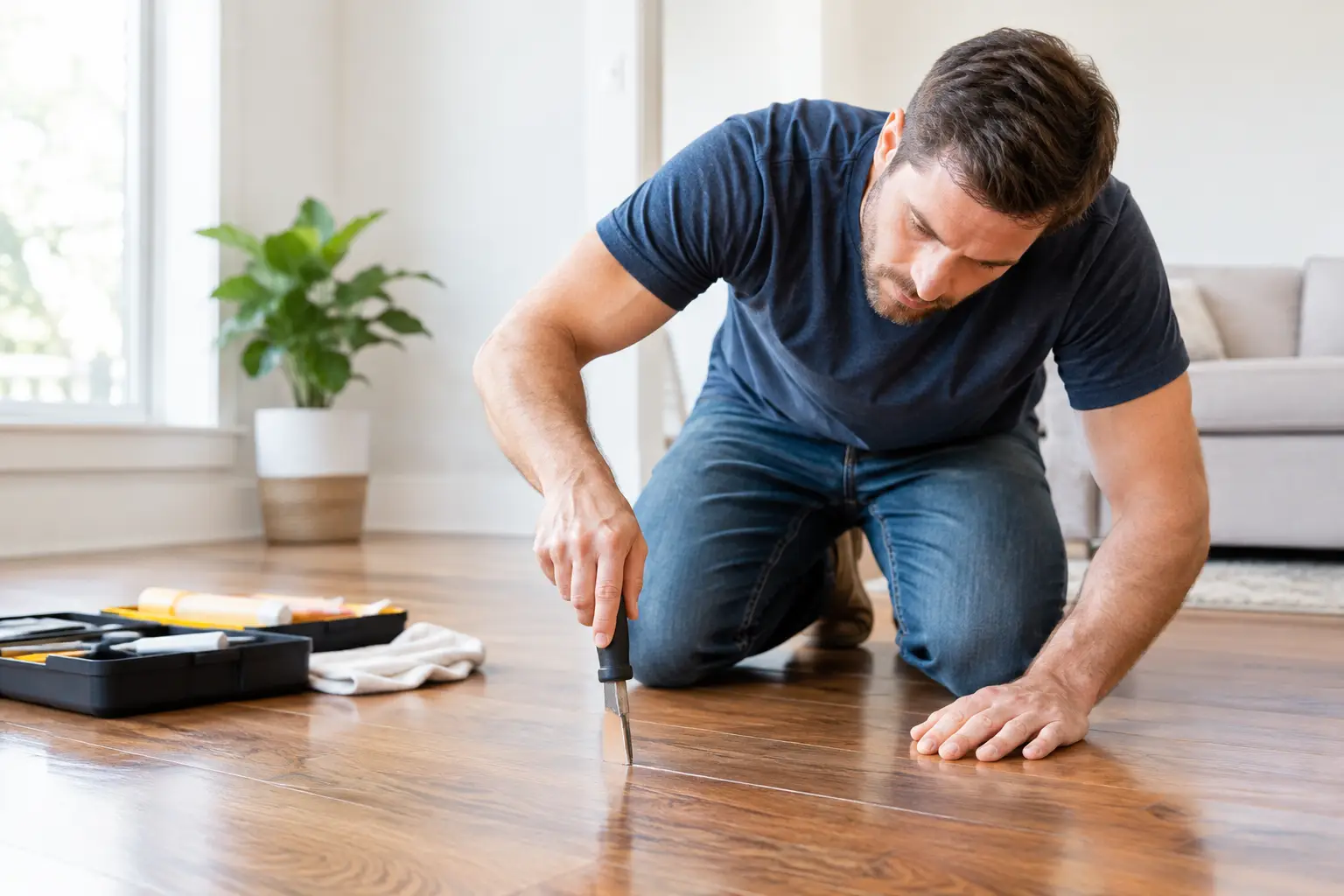
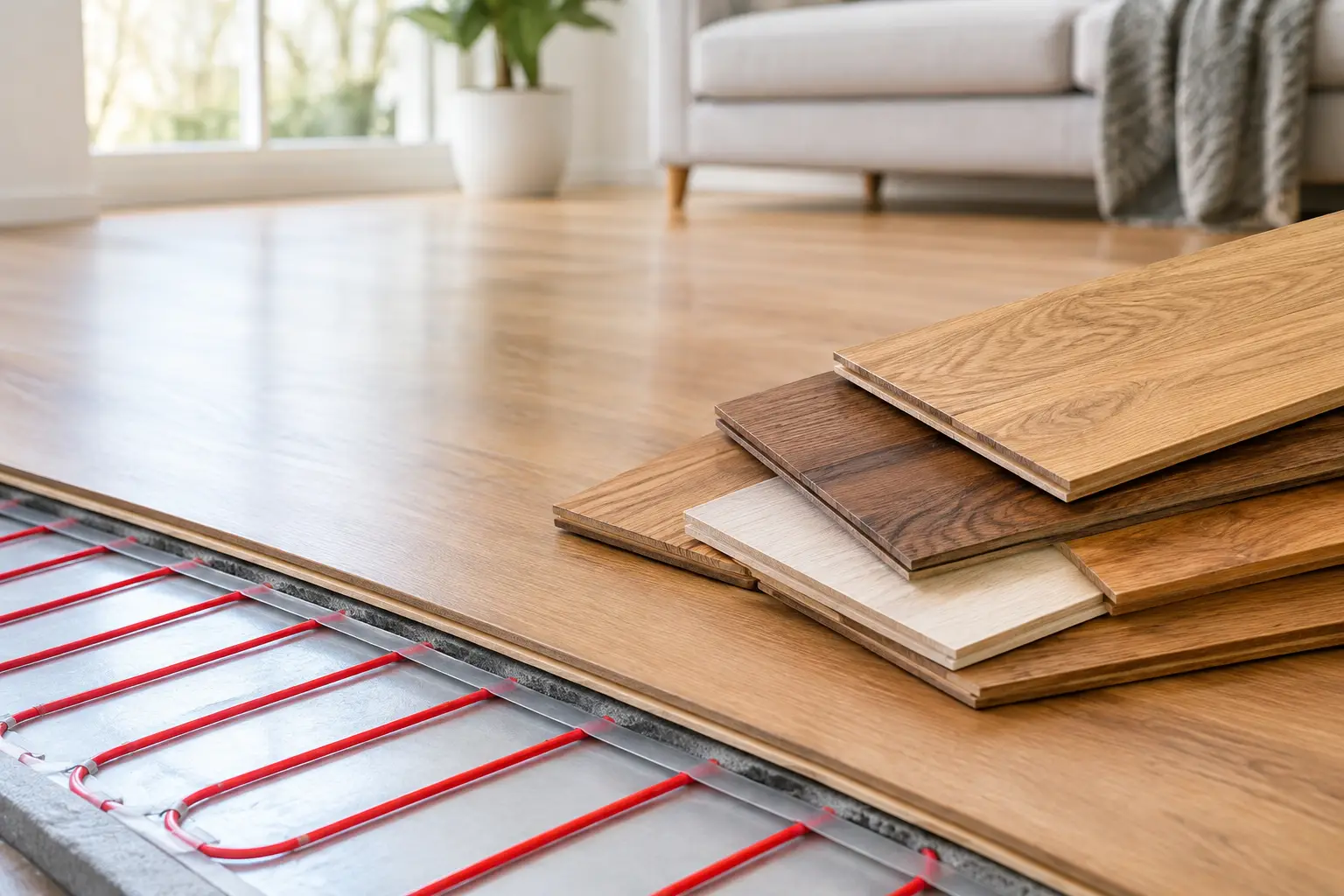
A radiant-heated floor changes the way wood behaves. The warmth is remarkably comfortable underfoot, especially in a Maryland or Virginia winter, but it also creates a drier, more active environment beneath the boards. For homeowners asking which wood suits radiant heat, the answer is not simply a species name. It is a careful combination of species, construction, board cut, moisture control, and installation method.
A beautiful hardwood floor can perform exceptionally well over radiant heat for decades. It must, however, be selected and installed with the same precision as the heating system itself. The goal is to choose flooring that moves predictably, accepts gradual temperature changes, and retains its character through every season.
Which Wood Suits Radiant Heat Best?
For most homes, engineered white oak is the strongest all-around choice for radiant heat. Its layered construction provides greater dimensional stability than a traditional solid plank, while white oak offers an appealing balance of hardness, grain character, and natural resistance to moisture movement.
That does not mean solid hardwood is automatically off the table. Properly specified solid flooring can work over certain radiant systems, particularly when using narrower boards and stable cuts. Yet engineered hardwood gives homeowners more flexibility with wider planks, contemporary layouts, and the seasonal conditions common throughout the D.C. Metro area and Eastern Shore.
The best result comes from treating the floor as a complete assembly, not a collection of individual boards. The subfloor, heating system, adhesive or fastening method, indoor humidity, and finish all contribute to long-term performance.
White oak: The dependable choice
White oak has earned its reputation in fine flooring for good reason. It is durable enough for active households, richly grained, and adaptable to nearly every design direction, from a quiet natural finish to a deeper custom stain. More importantly for radiant heat, white oak is relatively stable compared with more movement-prone domestic species.
Engineered white oak is especially well suited to wide-plank floors over radiant heat. A quality engineered board has a real hardwood wear layer over a multi-ply or balanced core. This construction helps the plank resist excessive expansion, contraction, cupping, and gaps as the heat cycles on and off.
For a home where the floor is meant to be a lasting architectural feature, rift- or quarter-sawn white oak offers another level of stability and refinement. These cuts produce a straighter grain pattern and generally move less across the width of the board than plain-sawn material.
Walnut: Beautiful, warm, and worthy of careful planning
Walnut brings a depth of color and natural elegance few species can match. It is softer than oak, so it may show dents more readily in high-traffic family spaces, but its dimensional stability makes it a thoughtful option for radiant-heated rooms.
Walnut is particularly compelling in studies, dining rooms, bedrooms, and homes seeking a more tailored, classic atmosphere. As with any wood floor over radiant heat, a premium engineered construction is often the safest way to preserve broad, graceful planks without asking the material to endure unnecessary stress.
Maple, ash, cherry, and hickory: Possible, but not interchangeable
Several other domestic woods can be used over radiant heat, although each deserves an honest discussion before selection. Maple is hard and clean-lined, but it can be more sensitive to moisture changes than oak. Its tight grain also makes staining less predictable, which matters when the design calls for a custom color.
Ash is resilient, expressive, and similar in appearance to oak, though availability can be more limited. Cherry is stable and refined, with a warm tone that deepens naturally over time. Hickory is exceptionally hard and visually dramatic, but its pronounced movement and varied grain make it less forgiving when indoor conditions fluctuate.
None of these species is inherently poor flooring. The question is whether the material fits the home, the plank width, the radiant system, and the homeowner’s expectations. A floor that looks extraordinary on a sample board must also perform gracefully across thousands of square feet.
Why Engineered Hardwood Often Performs Better
Solid hardwood is one piece of wood from top to bottom. When it gains or loses moisture, it expands and contracts primarily across its width. Radiant heat can intensify that movement by drying the wood from below during the heating season.
Engineered hardwood is built differently. Its cross-layered core is designed to counter much of that natural movement, allowing the flooring to remain more stable under changing temperatures and humidity levels. This is why engineered flooring is often the preferred choice for radiant heat, especially for wide-plank designs.
Construction quality matters greatly. Not every engineered floor is equal. Look for a substantial hardwood wear layer, a stable multi-ply core, precise milling, and a manufacturer-approved installation method for radiant applications. A finely made engineered floor can be refinished in the future and should feel every bit as authentic as solid hardwood underfoot.
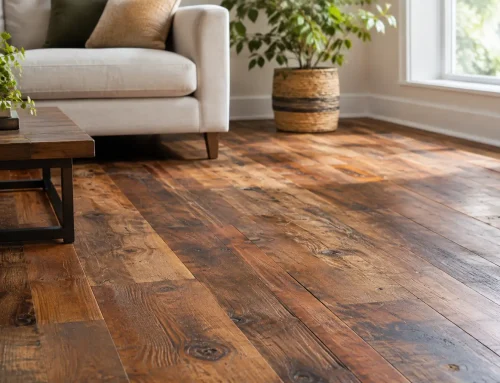
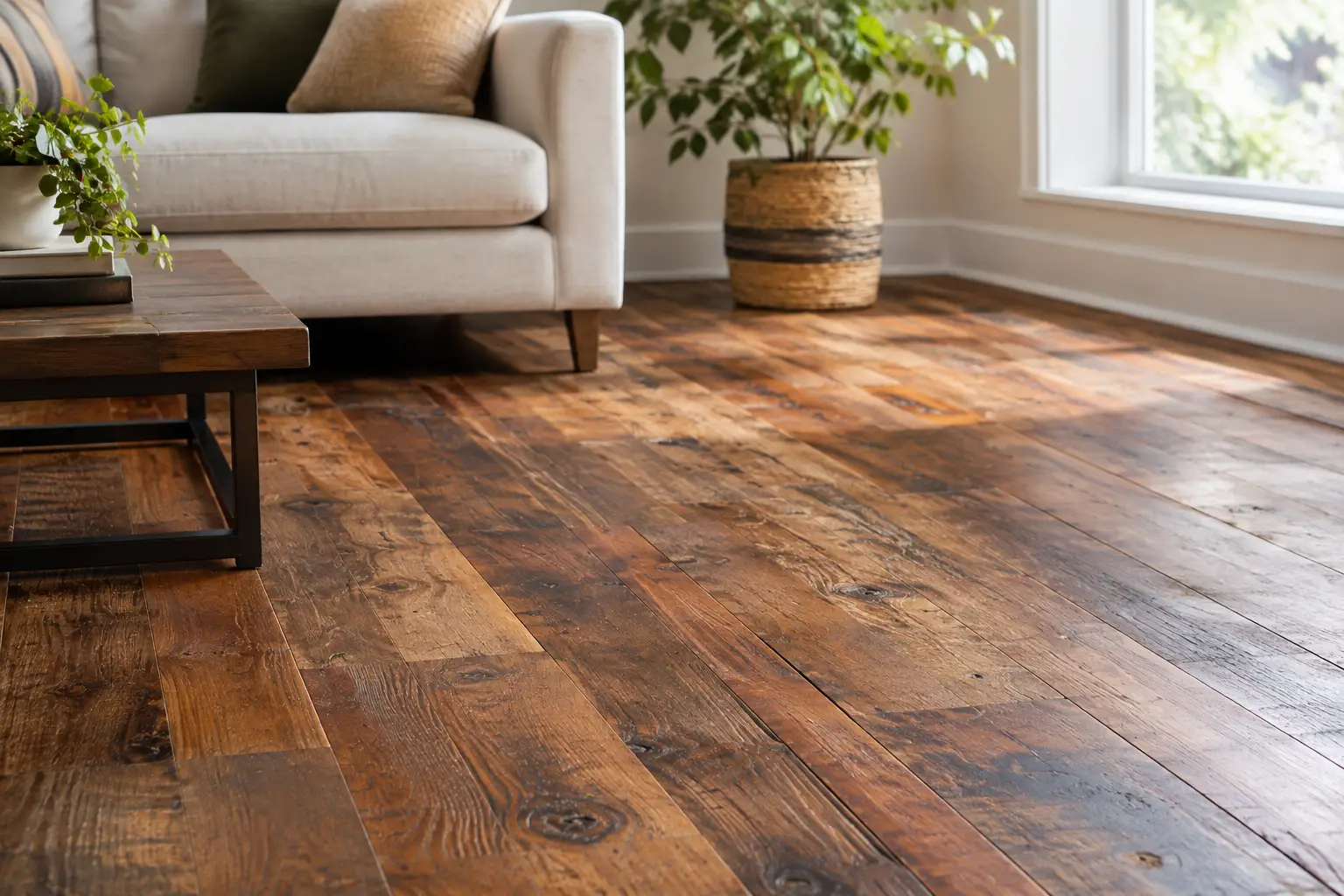
For homeowners restoring a historic property or pursuing a reclaimed-wood look, the same principle applies. Reclaimed material can be spectacular, but it requires careful moisture testing, grading, milling, and acclimation planning. Its age and character are not substitutes for technical preparation.
Board Width, Cut, and Thickness Matter
The wider the board, the more visible its seasonal movement can become. This is not a reason to avoid wide planks altogether. It is a reason to pair them with the right construction and a controlled indoor environment.
Wide engineered planks are an excellent option over radiant heat because their core helps manage the natural stresses created by temperature changes. If a homeowner prefers solid hardwood, narrower boards tend to be a more conservative choice than very wide solid planks.
Wood cut matters as well. Plain-sawn boards reveal the familiar cathedral grain prized in many traditional floors, but they typically move more across their width. Rift-sawn and quarter-sawn boards offer straighter grain, greater consistency, and improved stability. They often cost more, yet their performance and visual restraint can be well worth it in a high-investment project.
Thickness should be considered in relation to heat transfer. Flooring that is excessively thick can slow the response of the radiant system. The ideal specification follows both the flooring manufacturer’s requirements and the heating system’s design, rather than relying on a one-size-fits-all rule.
The Installation Details That Protect the Floor
Even the right wood can fail when site conditions are ignored. Before installation, the subfloor must be properly prepared and tested for moisture. With concrete slabs, this process is especially important because moisture vapor can affect wood flooring long after the initial installation.
The radiant system should be operating and brought to normal conditions before flooring arrives, then adjusted gradually according to the product manufacturer’s instructions. Sudden temperature swings place unnecessary stress on the boards. The flooring itself must be stored, measured, and acclimated according to its construction and the conditions inside the home.
A skilled installer also considers how the flooring will be secured. Some engineered products are designed for glue-down installation, while others may be floated or mechanically fastened over an approved subfloor. The proper adhesive must be compatible with radiant heat and any required moisture-control system. These choices affect not only stability, but also sound, feel, and heat transfer.
At Royal Oaks Flooring, this is where craftsmanship becomes more than a finish detail. Accurate moisture readings, deliberate layout, clean transitions, and respect for manufacturer specifications protect the beauty of the floor long after installation day.
Keep Temperature and Humidity in Balance
Radiant heat should warm the floor gently, not turn it into a hot surface. Most hardwood manufacturers set a maximum finished-floor temperature, commonly around 80 to 85 degrees Fahrenheit. The exact limit depends on the product, so the flooring documentation should always guide the system settings.
Indoor humidity is equally important. A home that becomes extremely dry in winter can cause gaps between boards, while excess humidity in summer can encourage expansion or cupping. Maintaining relative humidity in a moderate, consistent range, often around 35 to 55 percent, gives hardwood the best chance to remain stable.
Area rugs deserve a brief mention. Dense rugs with heavy pads can trap heat, creating warmer zones beneath them than in the surrounding floor. This does not mean rugs are forbidden, but they should be selected thoughtfully and moved occasionally when practical.
Choose for the Whole Home, Not Just the Heat System
The right radiant-compatible floor should also fit the way the home is lived in. White oak may be the practical favorite, but a quieter walnut floor may better suit a formal renovation. A rift-sawn floor may justify its investment in a light-filled contemporary home, while a carefully engineered reclaimed floor may be exactly right for a historic property seeking authentic character.
The finest choice is one that respects both the material and the setting. With the proper species, construction, and installation plan, radiant heat and real wood flooring can work together beautifully, bringing enduring warmth to the room in every sense.