A well-designed hardwood floor does more than cover a room. It establishes proportion, guides the eye, and gives an interior its sense of permanence. The best custom floor inlay ideas use that foundation thoughtfully, adding a detail that feels native to the home rather than applied as an afterthought. A narrow border around a formal dining room, a quiet walnut accent in a white oak entry, or a tailored medallion beneath a stair landing can make the entire floor feel considered.
For homeowners investing in premium hardwood, an inlay is an opportunity to bring architectural character into the room at floor level. It can honor the formal geometry of a historic home, add contrast to a clean-lined renovation, or solve the visual challenge of connecting several adjoining spaces. The difference lies in design discipline and exact execution. An inlay must be beautiful from across the room and precise enough to reward a closer look.
What Makes a Floor Inlay Feel Timeless
Floor inlays have a long history in fine homes, but a successful design does not need to look ornate or traditional. Timelessness comes from proportion, material selection, and a pattern that belongs to the architecture. In a Federal-style home, a dark perimeter border or restrained Greek key may suit the existing millwork. In a contemporary Potomac home, a simple linear band in a contrasting species may carry more impact than a complex pattern.
Scale matters as much as style. A large medallion can anchor a generous foyer, while the same feature may crowd a compact entry. Likewise, a border that is too narrow can disappear, but one that is too wide may make a room feel smaller. Experienced flooring craftsmen evaluate room dimensions, doorways, furniture placement, and sightlines before finalizing the layout.
The wood itself also shapes the result. Walnut offers rich contrast against white oak or maple. Cherry brings warmth and a traditional note. Wenge or ebonized oak can create crisp definition, though very dark species tend to show dust and fine scratches more readily in active households. For a softer effect, an inlay can use the same species in a different cut, grain direction, or stain tone rather than relying on dramatic color contrast.
Custom Floor Inlay Ideas That Add Purposeful Detail
Perimeter borders for formal rooms
A perimeter border is among the most versatile choices for hardwood flooring. It frames a dining room, library, sitting room, or primary bedroom much as casing frames a fine window. Borders may follow the walls, sit several inches inward from the baseboard, or create a tailored “rug” shape beneath a table.
This approach works especially well when a home has an open but still clearly defined floor plan. A border gives a room its own identity without interrupting the continuity of the surrounding hardwood. For a refined look, many homeowners choose a slim walnut or ebonized oak line paired with a wider field of white oak. The effect is elegant without becoming overly decorative.
Feature medallions in entries and transitions
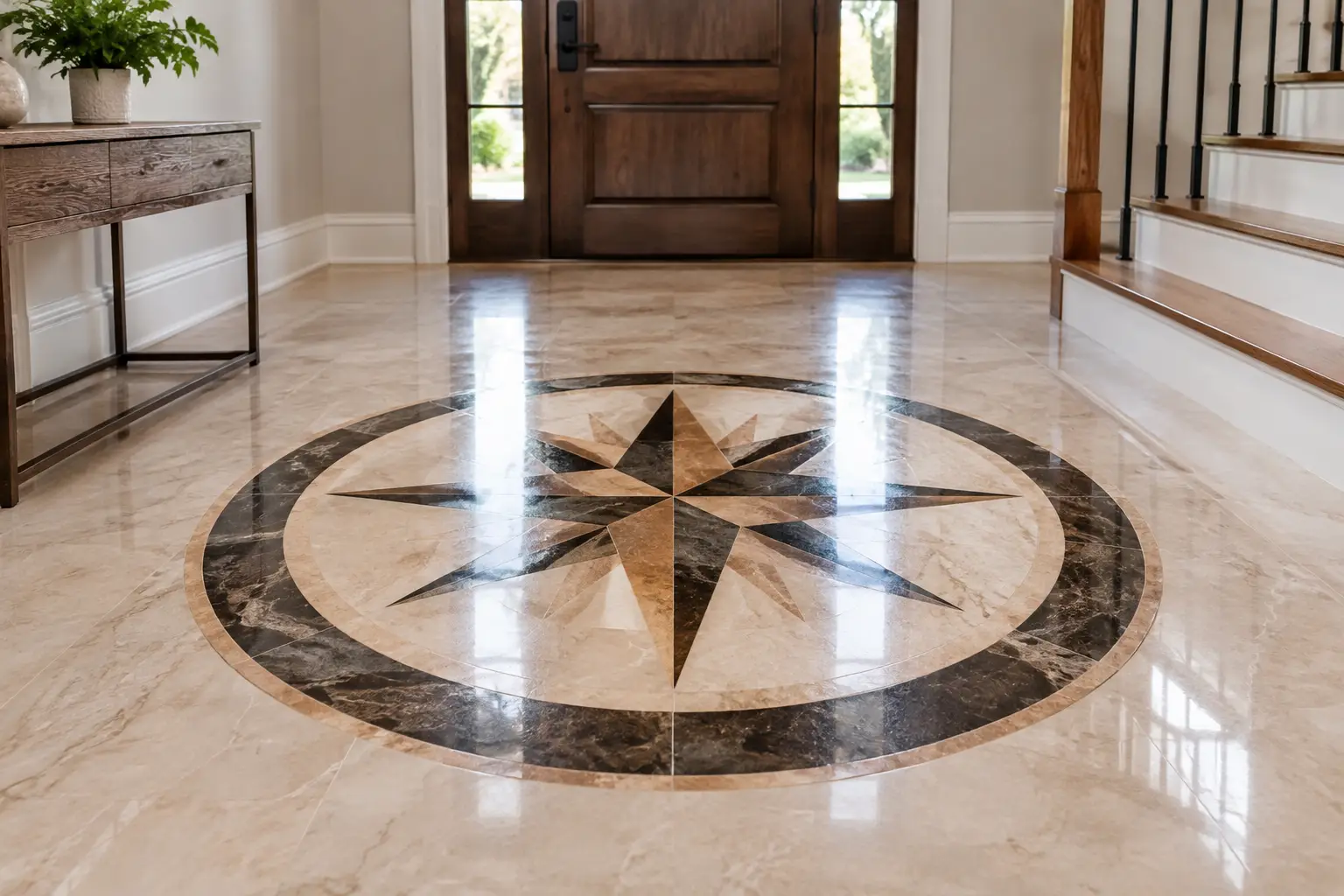
A medallion belongs where the home naturally asks visitors to pause: an entry foyer, the base of a staircase, a gallery hall, or the threshold between a main hall and formal room. Round, oval, square, and compass-inspired designs all have a place, but the strongest choice is usually the one that echoes nearby architecture.
A circular inlay can soften a rectilinear foyer and create a natural focal point beneath a lantern. A square geometric design can reinforce the symmetry of paneled doors or coffered ceilings. The key is restraint. A medallion should not compete with a dramatic chandelier, patterned tile, or heavily figured furniture. When several statement elements occupy the same space, the floor benefits from a quieter design.
Geometric panels that define an open plan
In an open kitchen, dining, and living area, custom panels can create visual boundaries without changing flooring materials. A herringbone or chevron field framed by a border can distinguish the dining zone, while straight-laid planks continue through the rest of the space. This offers definition while preserving the expansive quality homeowners often want from a renovation.
Panels can also change the direction of the wood. For example, a field of long planks may run the length of a room while a central square panel turns at 45 degrees. Directional changes should be planned carefully, because they alter how a room reads from each doorway. The objective is to guide the eye, not create visual confusion.
Stair and hearth accents
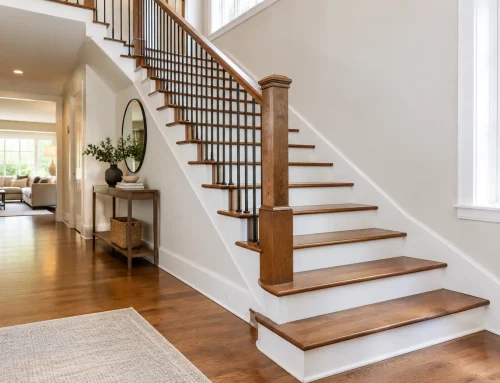
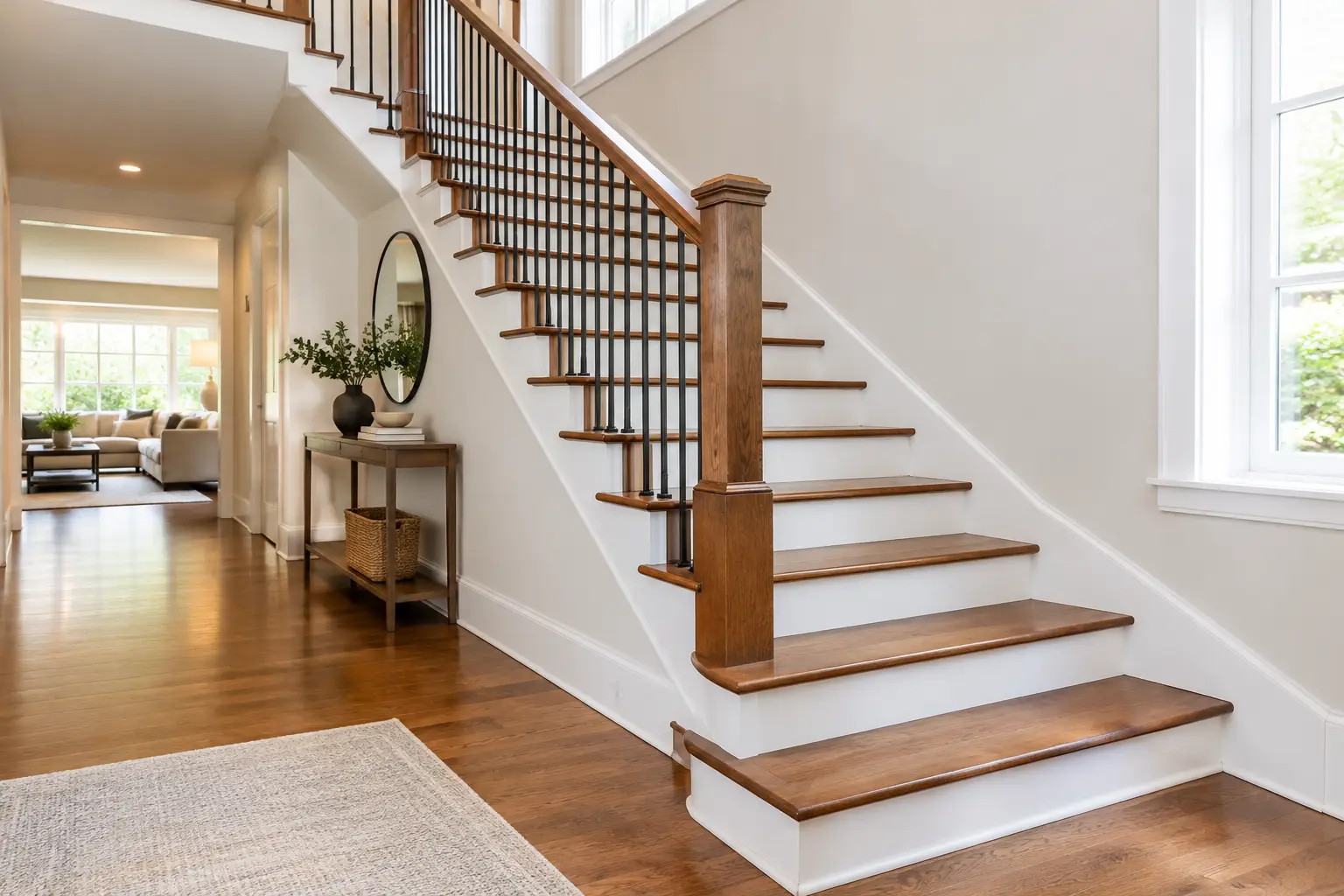
Inlays do not need to occupy the center of a room to make an impression. A carefully detailed band at the edge of a hearth, a border around a stair landing, or a contrasting nosing detail can connect the floor to the home’s other finishes. These smaller applications are often ideal for homeowners who appreciate craftsmanship but prefer a more understated interior.
Around fireplaces, the design must account for hearth dimensions, clearances, and the transition between wood and stone or tile. At stairs, every riser, tread, and landing must align cleanly. These are not details to leave to improvisation on installation day.
Choosing Species, Color, and Finish
An inlay is only as successful as its relationship to the field floor. High contrast makes the design immediately visible, while low contrast rewards closer attention. Neither approach is inherently better. It depends on the age of the home, the amount of natural light, and how much visual activity is already present in the room.
White oak remains a particularly adaptable field wood because it accepts a broad range of colors and pairs gracefully with walnut, maple, and darker oak accents. Reclaimed wood can bring depth and history, though its variation must be managed carefully so the inlay remains legible. In some cases, a reclaimed floor calls for a quieter border rather than an elaborate pattern.
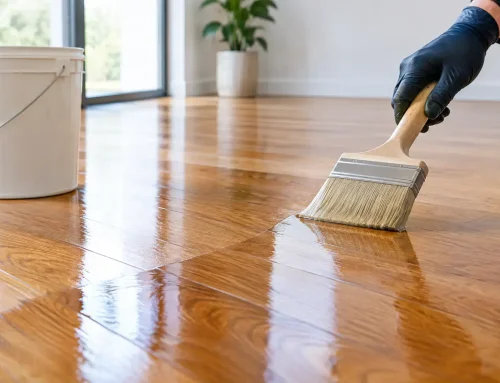
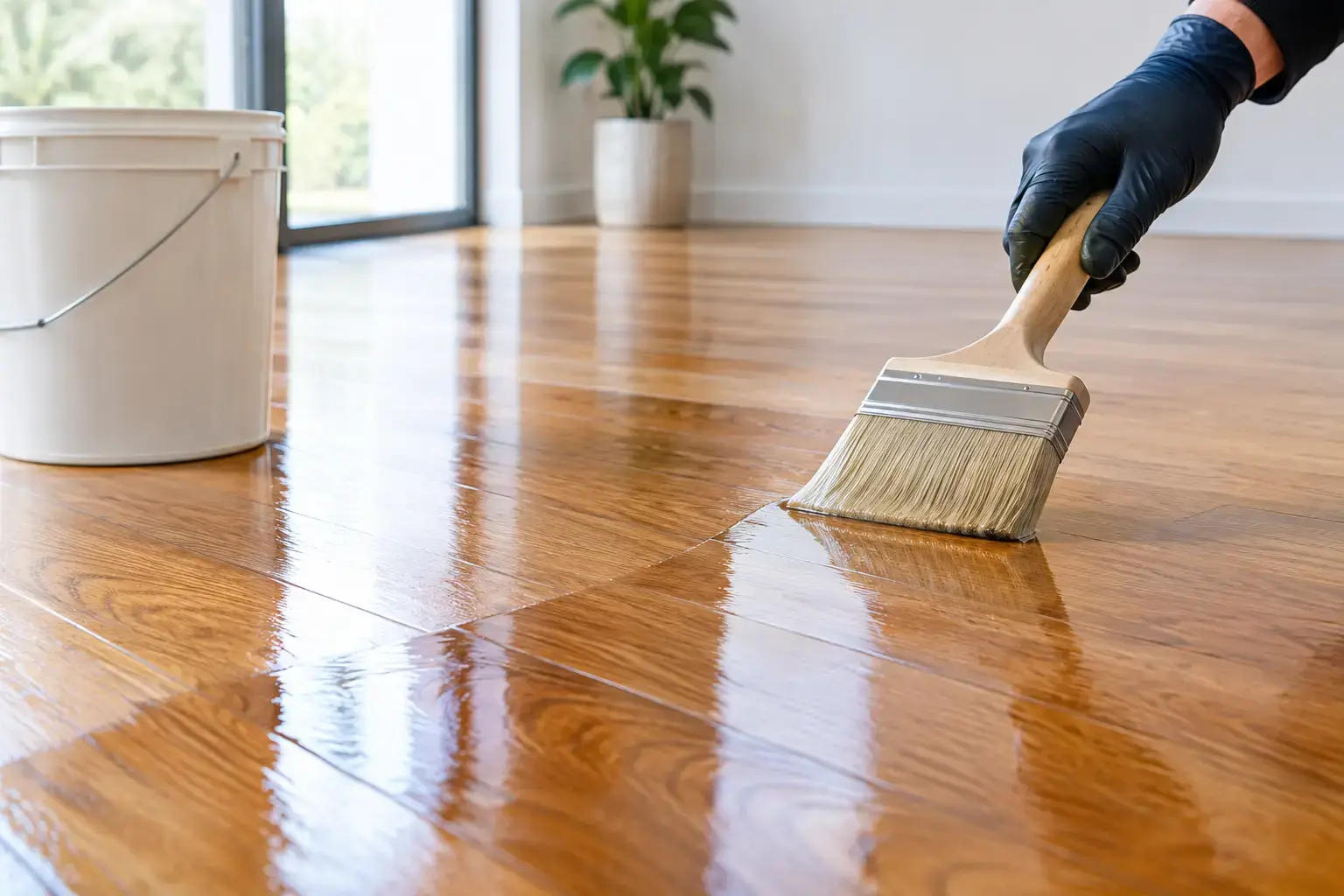
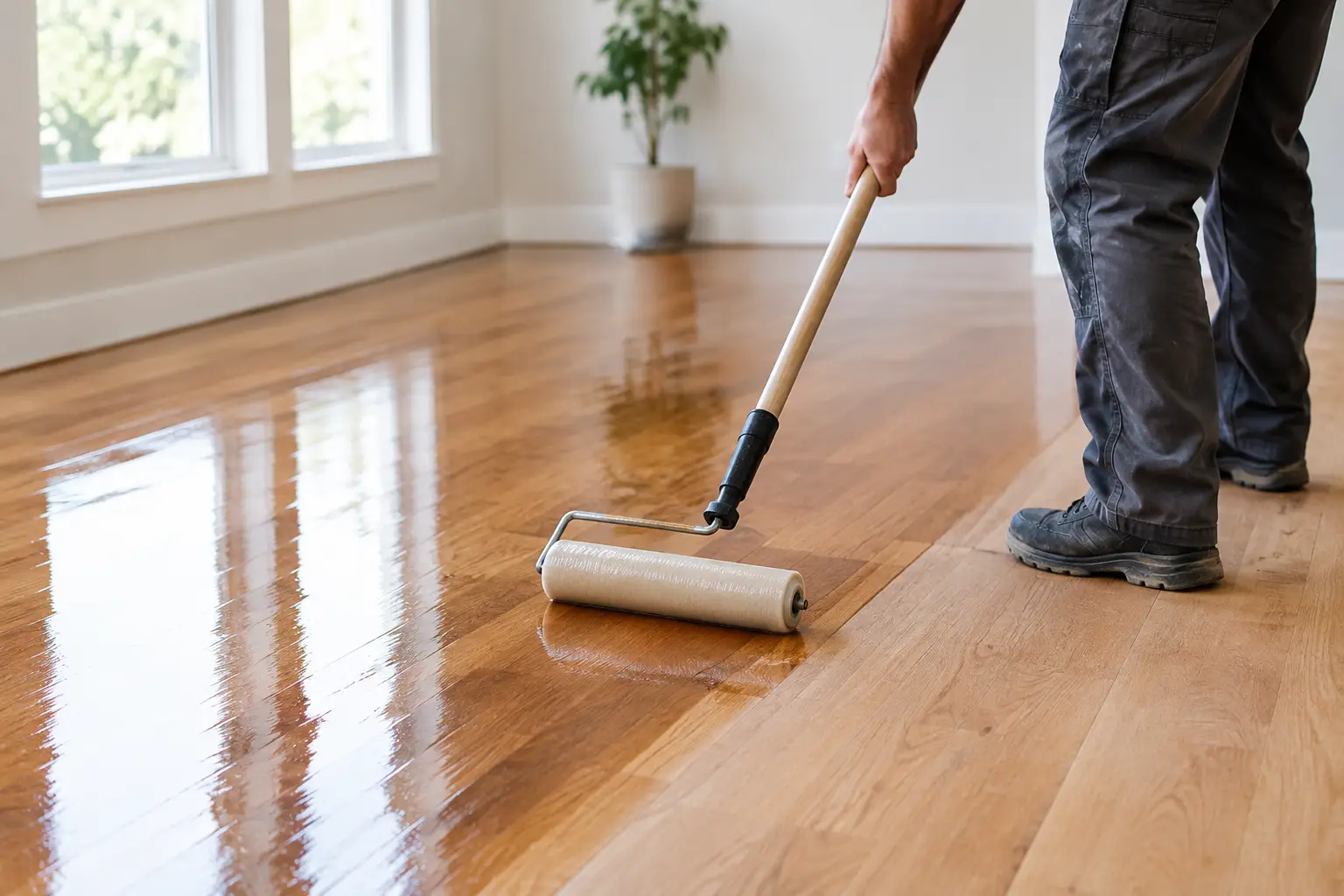
Finish selection deserves equal attention. Modern, very low-VOC finishes can provide strong wear resistance and help protect both the field and inlay from daily use. A matte or satin sheen often gives custom work a more natural, architectural appearance than high gloss, which can emphasize every reflection and scratch. The right finish also allows the grain and joinery to remain the focus.
The Planning Details That Protect the Investment
Custom inlay work demands precise coordination before boards are cut. Flooring direction, room measurements, heating vents, floor registers, cabinetry, thresholds, and the final location of built-ins all affect the design. A border interrupted by an unexpected register or a medallion partially hidden beneath a future island will never look intentional.
It is also wise to discuss movement in the wood. Hardwood expands and contracts with seasonal changes in humidity, particularly in the D.C. Metro area and along Maryland’s Eastern Shore, where climate conditions can shift considerably through the year. A qualified installer plans proper acclimation, subfloor preparation, expansion allowances, and installation methods so the floor can perform as beautifully as it looks.
Cost is another practical consideration. Intricate patterns require additional layout time, careful cutting, and skilled handwork. A simple single-species border may deliver a meaningful architectural upgrade with less labor than a large multi-species medallion. The best value is not always the most elaborate design. It is the detail that strengthens the room for decades rather than following a short-lived trend.
When to Keep the Design Simple
Not every floor needs an inlay. Exceptionally wide planks, distinctive reclaimed material, or a room with strong original architectural features may already have enough presence. In those settings, a discreet threshold detail or a carefully selected transition may be more appropriate than a large decorative element.
Simplicity is also wise in rooms with busy rugs, heavily veined stone, patterned wallpaper, or ornate cabinetry. A floor should support the full composition of the home. The most accomplished work often feels inevitable: the materials, pattern, and proportions appear as though they were always meant to be there.
At Royal Oaks Flooring, custom work begins with that larger view of the room and the way it will be lived in. A thoughtfully designed inlay can become a signature detail, but its real success is measured years later, when it still gives the home a sense of craftsmanship, order, and enduring welcome.