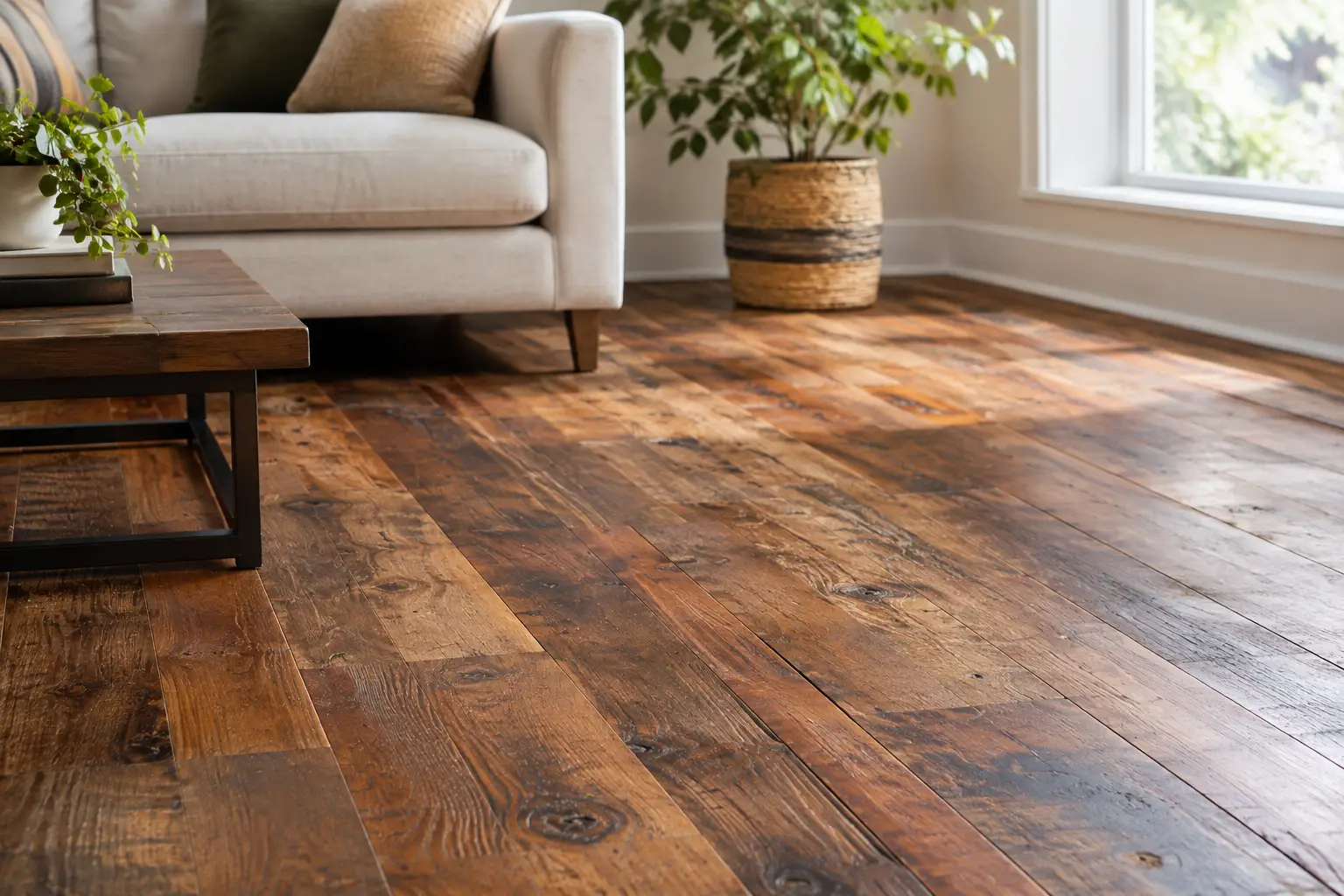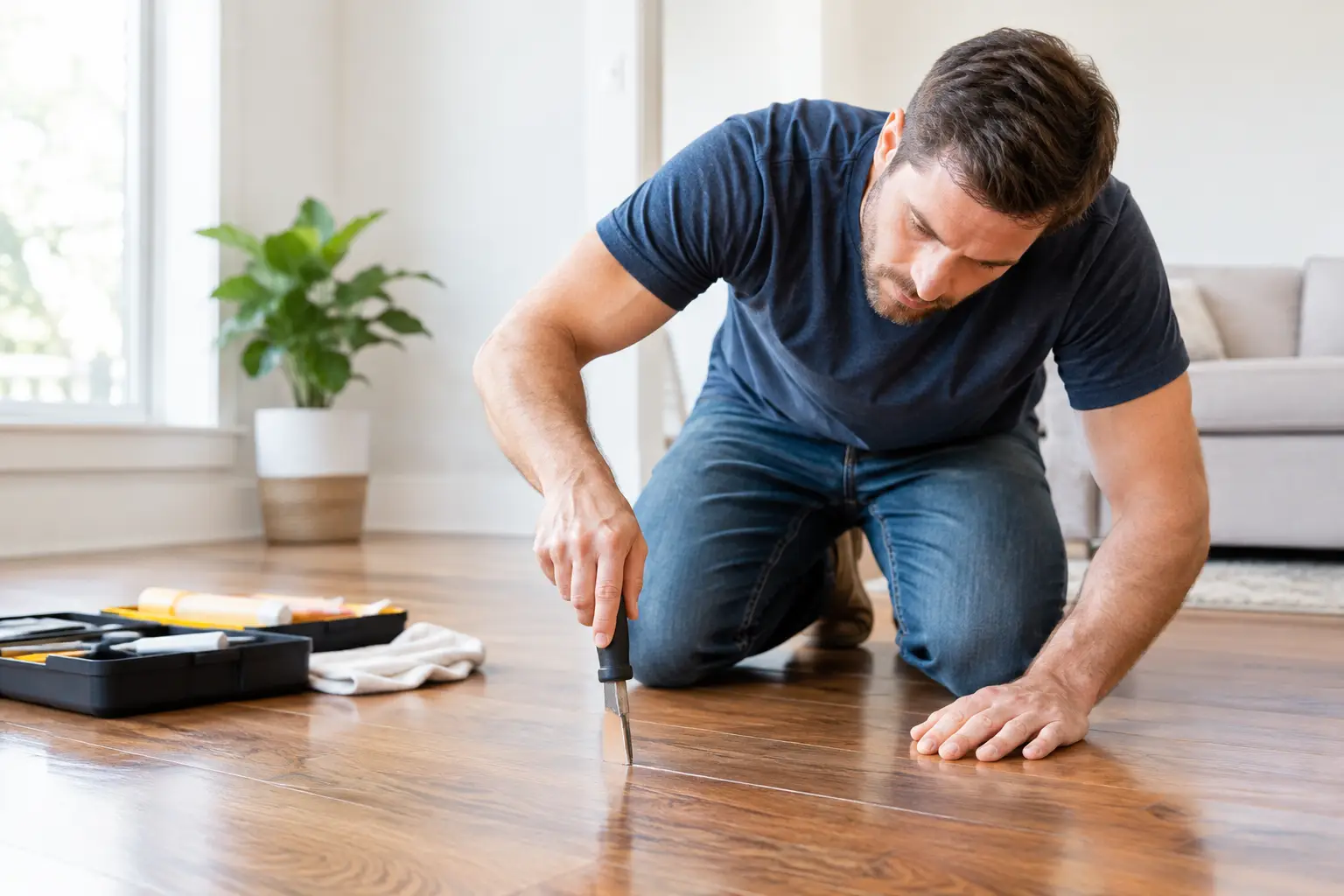
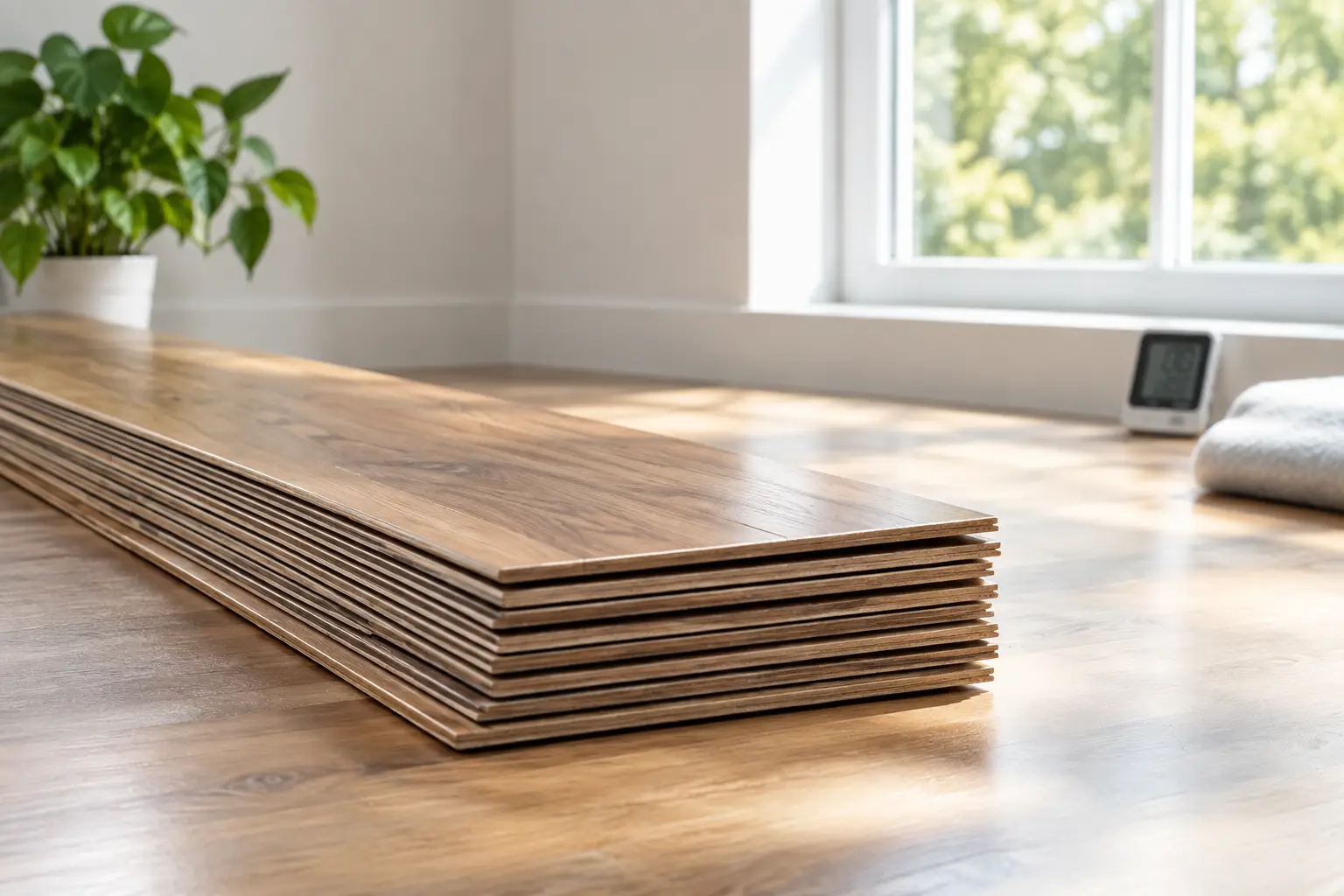
A fine hardwood floor can be milled with precision, selected for beautiful grain, and installed by skilled hands – then compromised by a rushed first step. This flooring acclimation time guide explains how flooring materials adjust to the actual conditions of your home before installation, protecting the fit, finish, and long-term character of the floor.
For homeowners investing in hardwood, wide-plank oak, reclaimed lumber, or engineered flooring, acclimation is not a box to check on a calendar. It is moisture management. Wood responds to its surroundings long after it leaves the mill, and the goal is to install it when the material and the home are in balance.
What Flooring Acclimation Actually Means
Acclimation is the process of allowing flooring to reach an appropriate moisture content and temperature for the space where it will live. Solid wood absorbs and releases moisture as indoor humidity changes. It expands when it takes on moisture and contracts when it loses it. If boards are installed before they have adjusted to the home, that movement can show up later as gaps, cupping, crowning, buckling, or a floor that feels unsettled beneath foot.
The key distinction is that acclimation is not simply leaving unopened cartons in a room for a certain number of days. Proper acclimation requires stable site conditions, measured moisture levels, and a material-specific installation plan. A board may sit in a house for a week and still be unready if the HVAC system is off, drywall work is adding moisture to the air, or the subfloor is too wet.
Flooring Acclimation Time Guide: How Long Is Enough?
There is no responsible one-size-fits-all answer. Many solid hardwood products require several days to two weeks or more, depending on species, board width, initial moisture content, season, and interior conditions. Wide planks and dense species can require additional attention because moisture moves through them more slowly and dimensional movement is more noticeable across a wider board.
Engineered hardwood is more dimensionally stable than solid hardwood because of its layered construction, but it still must be conditioned to the home and installed according to the manufacturer’s requirements. Some engineered products are designed for shorter acclimation periods, while others require the same careful verification as solid wood. Luxury vinyl plank and laminate may need 24 to 72 hours in the room, particularly when delivered during very hot or cold weather, but their instructions should always govern.
For premium flooring, the better question is not, “How many days has it been here?” It is, “Has the flooring reached the appropriate moisture range for this house and this installation?” A professional installer answers that question with calibrated moisture meters, not guesswork.
A practical timing framework
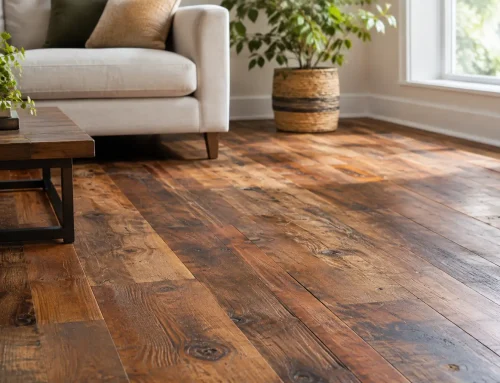
As a general planning allowance, homeowners should expect to have the home climate-controlled before flooring arrives and to reserve at least several days for the material to settle. Solid hardwood often deserves a longer window, especially for site-finished, wide-plank, reclaimed, or specialty lumber. Reclaimed wood can be particularly variable; its history, storage conditions, and species may require a more deliberate assessment before installation begins.
That does not mean longer is always better. Flooring should not be left exposed indefinitely in an unfinished or poorly controlled renovation site. The correct duration is the one that brings the material into equilibrium under stable indoor conditions.
The Conditions That Matter More Than the Calendar
A successful acclimation period begins after the wet work is complete. Concrete, plaster, paint, grout, and drywall compound can release substantial moisture. Installing wood flooring while that moisture is still moving through the home creates an avoidable risk.
The building should be enclosed, windows and exterior doors installed, and the heating or cooling system operating at normal living conditions. For many homes, that means maintaining a consistent temperature and relative humidity comparable to what the family will maintain after move-in. Dramatic swings are the enemy of a stable floor.
Subfloor moisture matters just as much as room humidity. A wood subfloor must be tested before installation, and a concrete slab requires appropriate moisture testing under the flooring and adhesive system being used. A beautiful floor cannot overcome a damp subfloor. If readings are high, the right response may be additional drying time, a moisture-control system, or a different installation approach.
How Flooring Should Be Stored During Acclimation
Flooring should be brought into the rooms where it will be installed, not left in a garage, on a covered porch, or in a basement that has entirely different conditions. Cartons or bundles should be kept off concrete and protected from direct weather exposure. The installer will determine whether materials should remain boxed, be opened, or be racked with spacers based on the product and manufacturer instructions.
This is especially relevant for hardwood. Opening bundles too early or spreading boards carelessly can expose them to rapid humidity changes and jobsite damage. Conversely, tightly stacked lumber may not adjust evenly when a product calls for airflow. The method matters as much as the waiting period.
Homeowners can help by avoiding abrupt changes to the HVAC settings during acclimation. If a house is held at 62 degrees for construction and then raised to 75 the day before installation, the flooring has not experienced the environment it is expected to match.
Why Washington-Area Homes Need Extra Attention
Homes across Maryland, Northern Virginia, and the greater Washington area experience humid summers, dry heated winters, and quick seasonal shifts. Older homes can add another layer of complexity through crawl spaces, historic framing, variable insulation, or additions with different climate behavior than the original structure.
A floor installed in Potomac, Annapolis, or an Eastern Shore property may face very different moisture pressures depending on its foundation, HVAC system, proximity to water, and the way the home is occupied. A vacation property that sits with limited climate control for part of the year deserves a different conversation than a continuously occupied residence.
That is why an experienced flooring professional evaluates the entire assembly: the flooring itself, subfloor, room conditions, layout, transitions, and expansion requirements. Acclimation is one part of a larger discipline of installation.
Common Mistakes That Lead to Floor Problems
The most expensive mistake is treating manufacturer guidance as optional. Flooring products, adhesives, underlayments, and finishes are designed as systems, and their requirements protect both performance and warranty coverage.
Another common problem is scheduling installation before the renovation is ready. Cabinet work, painting, tile installation, and final HVAC commissioning can put pressure on the calendar. Yet rushing wood into an unstable home may create repairs that cost far more than a short delay.
Homeowners also sometimes assume all movement means poor workmanship. Seasonal movement is natural in real wood. A properly installed hardwood floor still responds subtly to changing humidity, particularly in winter. The objective is not to eliminate wood’s living character. It is to control conditions and installation details so that movement remains within a normal, attractive range.
What a Professional Installer Checks Before Starting
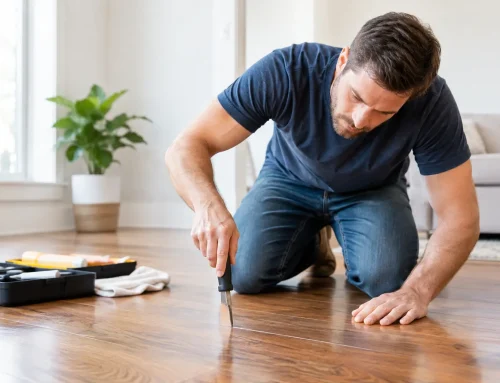
Before installation, a careful flooring team reviews the product specifications and measures moisture in both flooring and subfloor. They confirm that the space is enclosed and climate-controlled, inspect the subfloor for flatness and soundness, and identify any moisture concerns before boards are fastened or glued down.
They also plan for expansion at walls, fixed objects, and transitions. This detail is often invisible once a room is complete, but it allows the floor to respond appropriately through the seasons. For a refined result, craftsmanship means respecting what the material needs before the first board is laid.
At Royal Oaks Flooring, that measured approach is especially valuable for custom hardwood, restored floors, and distinctive materials where there is no substitute for experience. The beauty of wood is inseparable from its nature, and skilled installation works with that nature rather than fighting it.
If your project schedule feels tight, protect the floor first. A few additional days spent creating stable conditions can preserve decades of warmth, beauty, and quiet confidence underfoot.