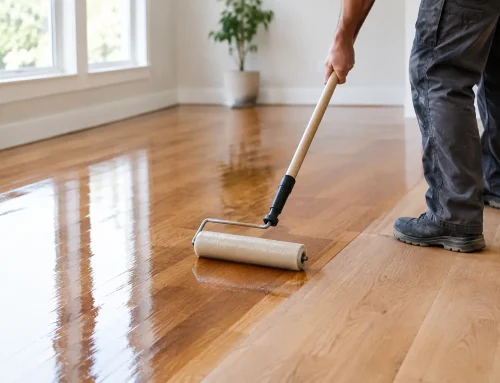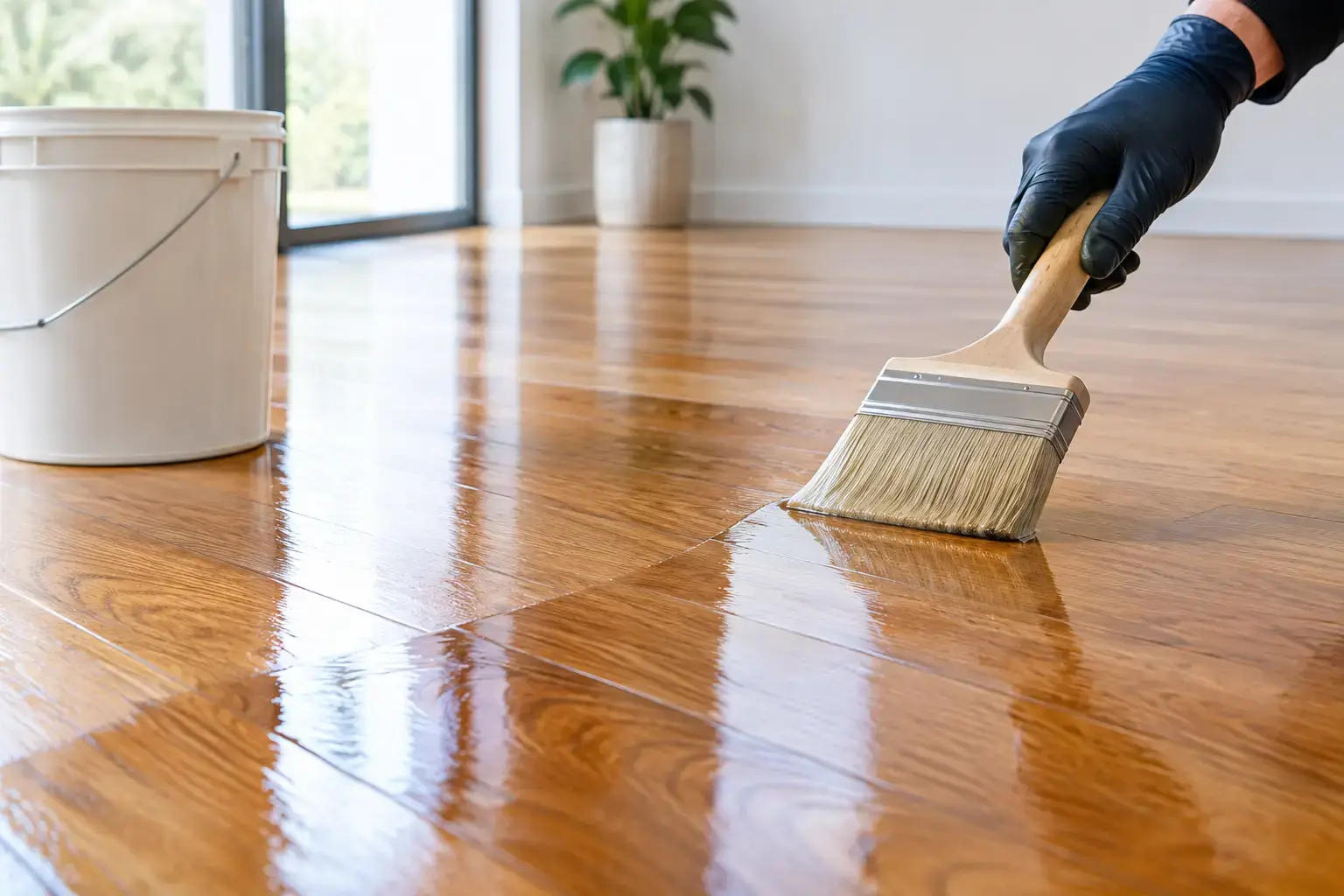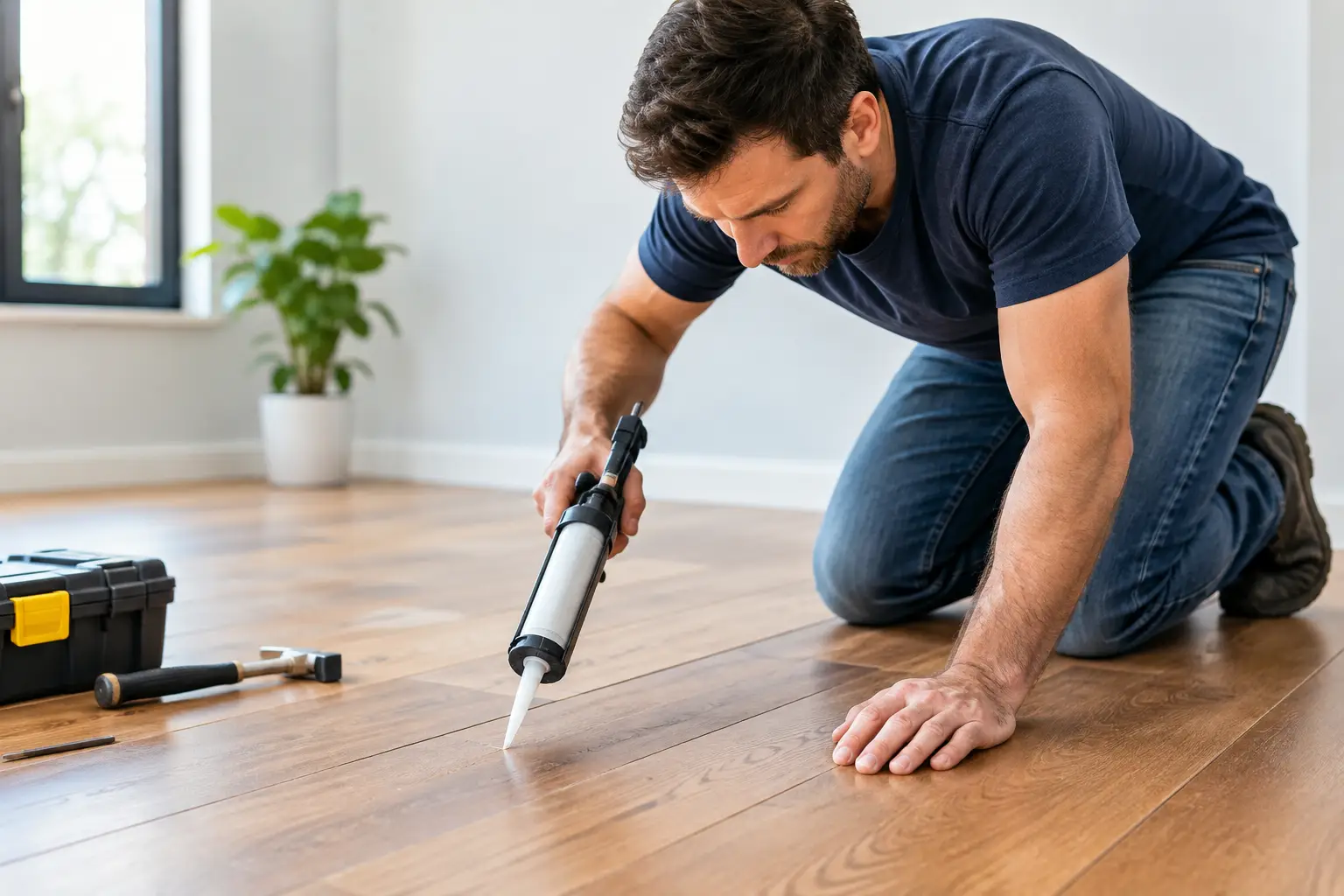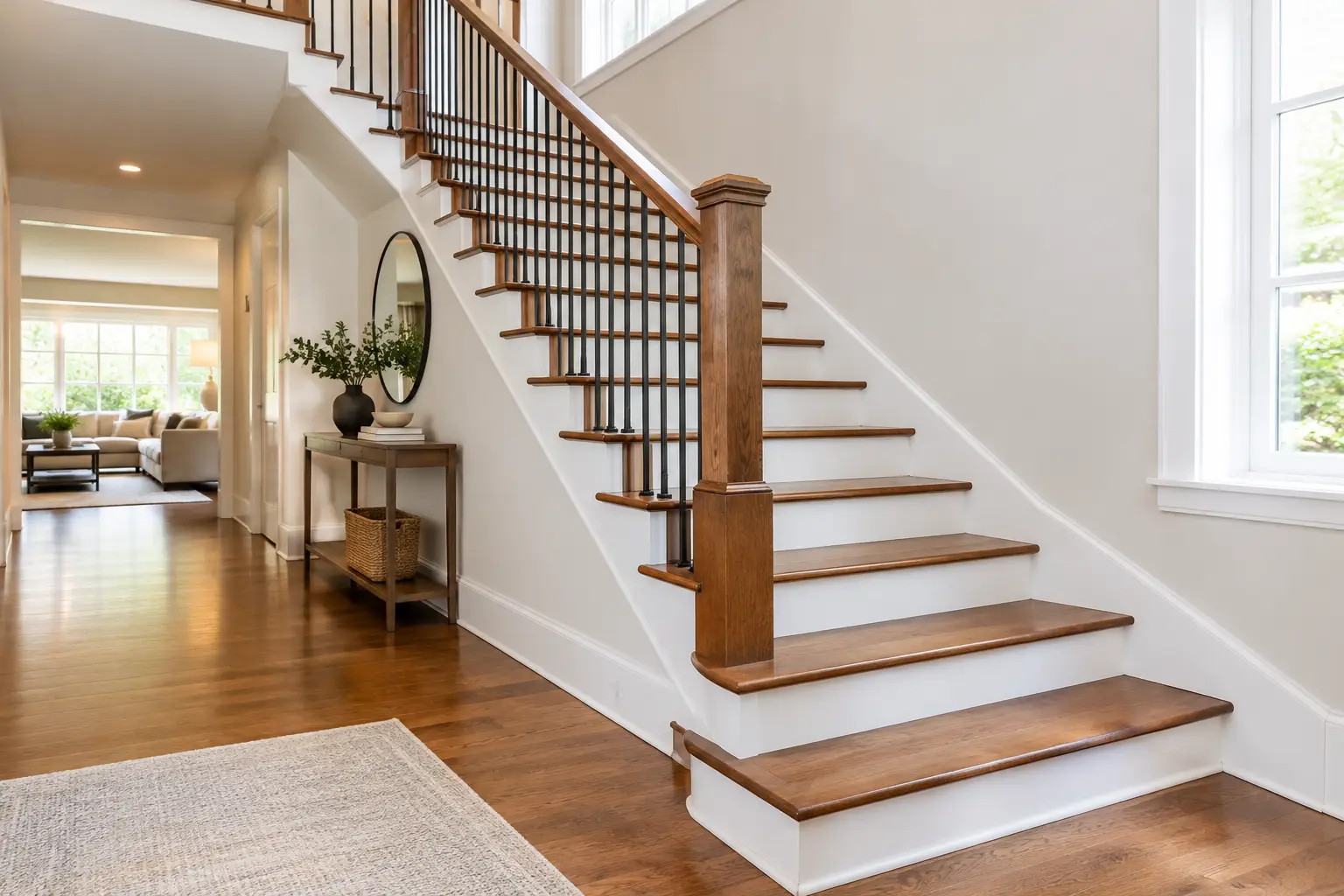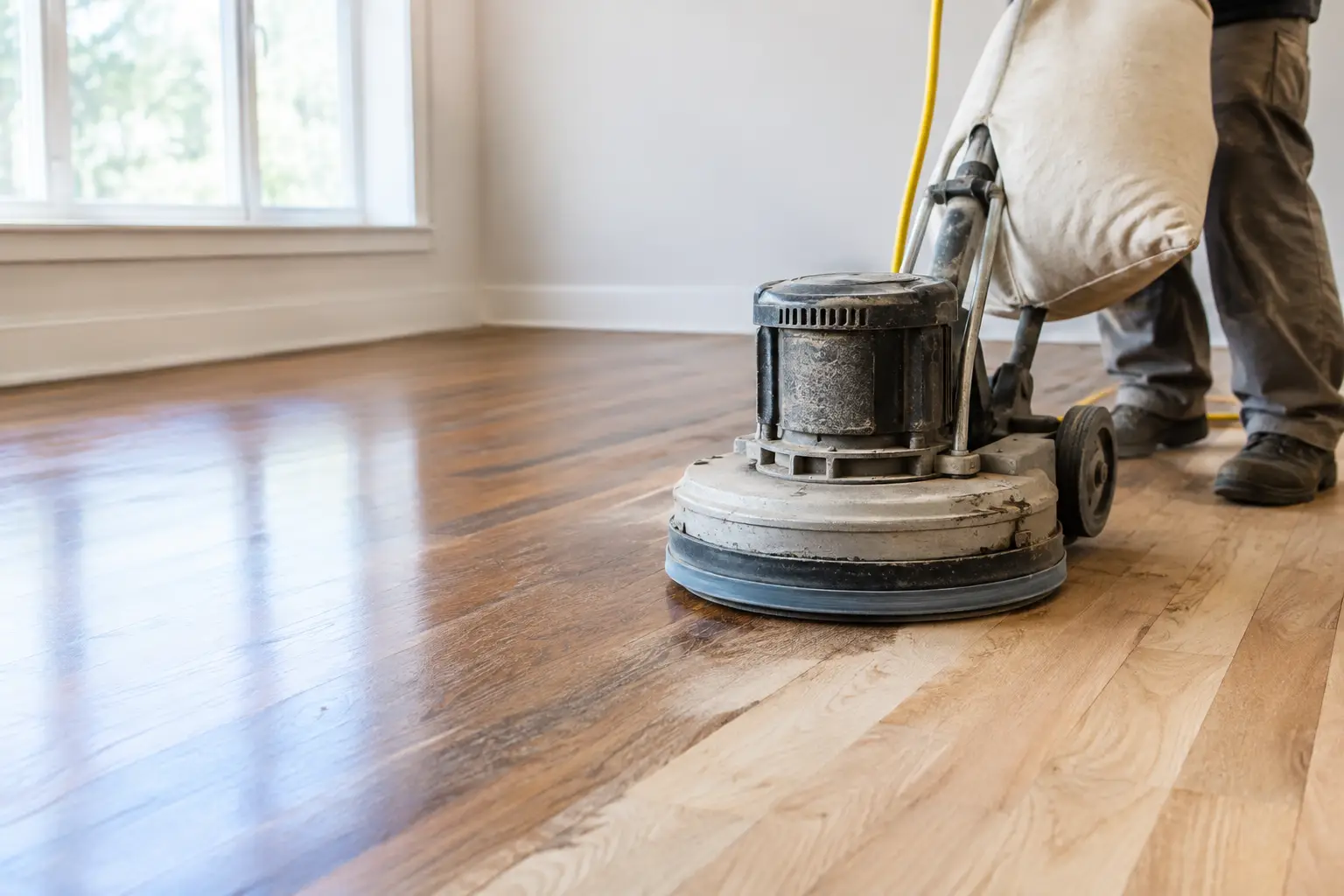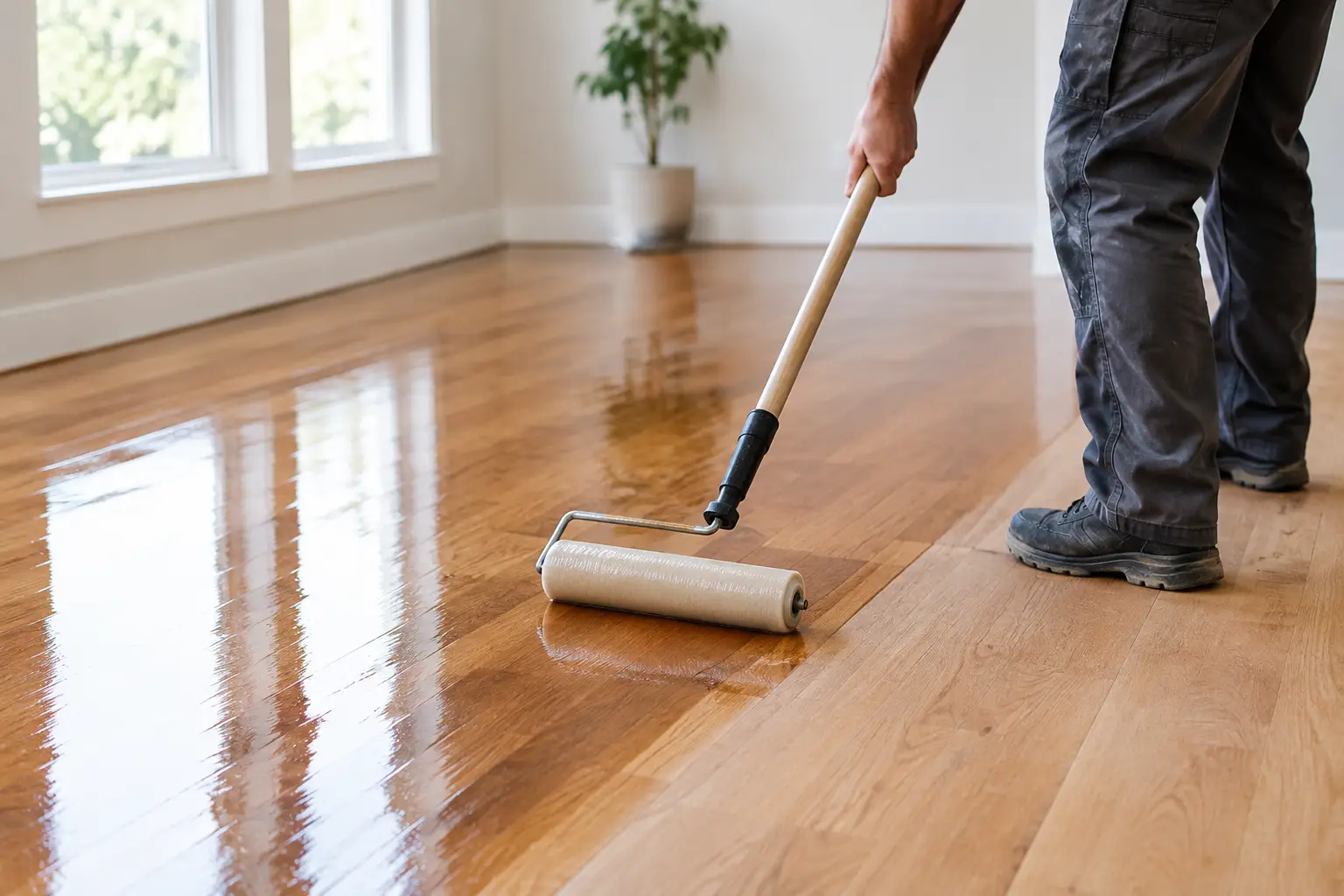
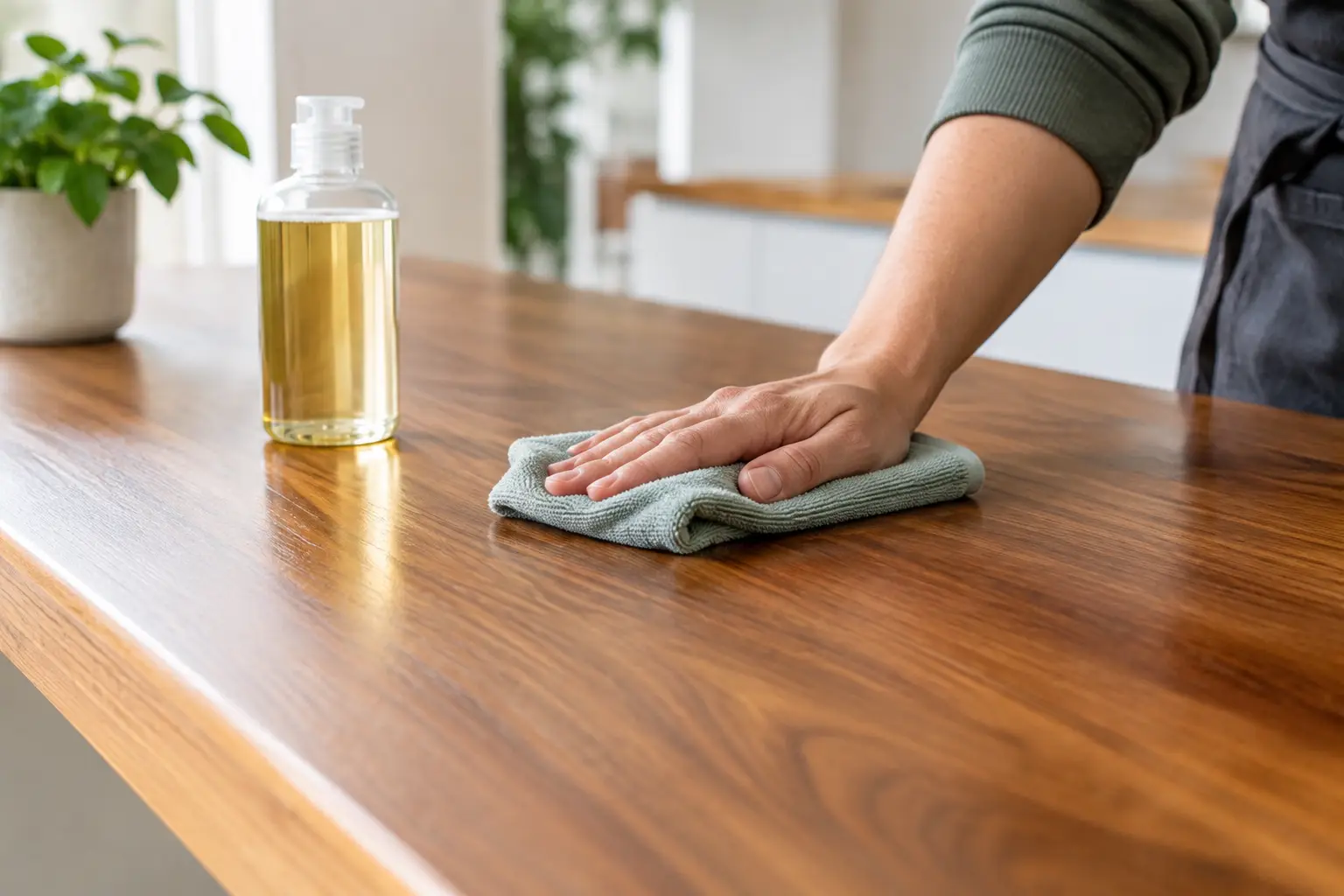
Rubio Monocoat gives hardwood a remarkably natural appearance – one that lets the grain, texture, and character of the wood remain the centerpiece. Learning how to clean Rubio Monocoat properly is what keeps that finish looking refined rather than dry, streaked, or prematurely worn. The goal is not aggressive cleaning. It is thoughtful, consistent care that removes grit and residue without interfering with the hardwax oil protection.
Unlike a thick film finish, Rubio Monocoat bonds with the wood fibers and leaves a low-build, matte surface. That is part of its appeal, especially on white oak, wide-plank floors, reclaimed boards, and floors chosen for an understated, architectural look. It also means the floor should be cleaned with products and methods suited to an oil-finished surface, not treated like polyurethane.
Start With Dry Cleaning, Not Water
Most of the maintenance your floor needs is dry. Fine sand, pet hair, crumbs, and tracked-in debris are more damaging than homeowners often realize. Underfoot, grit behaves like sandpaper, gradually dulling high-traffic paths in front of exterior doors, kitchens, and hallways.
Sweep with a soft broom, use a clean microfiber dust mop, or vacuum with a hardwood-floor setting and a soft-bristle attachment. Avoid vacuums with a rotating beater bar, which can scratch the surface or catch on board edges. In active family homes, dry cleaning two or three times a week is sensible; in quieter rooms, once a week may be enough.
Entry mats are part of a proper maintenance plan, particularly in the D.C. Metro area, where wet winters, pollen, and summer humidity can all make their way indoors. Use mats that allow moisture to pass through rather than rubber-backed mats that can trap water against the floor. Felt pads beneath furniture legs and a no-shoes policy near entrances also do more for finish longevity than frequent wet mopping ever will.
How to Clean Rubio Monocoat With a Damp Mop
When dry cleaning no longer restores the floor’s clarity, use a lightly damp microfiber mop and a cleaner approved for Rubio Monocoat or another hardwax oil finish. Follow the cleaner’s dilution instructions precisely. More soap does not make a floor cleaner; it can leave a haze that attracts soil and softens the crisp, matte appearance homeowners value.
The mop should be damp, not wet enough to release water when pressed. Work in manageable sections, moving with the grain where possible, and allow the floor to dry naturally. There should never be standing water, puddling along board seams, or a wet sheen left behind after you mop.
How often you damp-clean depends on how the room is used. A formal dining room may only need occasional cleaning, while a kitchen, mudroom, or home with dogs may need attention every one to two weeks. Clean based on visible soil and foot traffic rather than following a rigid calendar. Overcleaning with unnecessary products can be as harmful as neglect.
Treat Spills Promptly and Gently
Water-resistant does not mean waterproof. Rubio Monocoat helps protect wood from everyday moisture, but prolonged exposure can still affect the finish and the wood beneath it. Wipe spills quickly with a soft, absorbent cloth, then clean the area with a barely damp cloth if needed and dry it immediately.
For food, grease, or a sticky spot, avoid scrubbing hard with a rough sponge. First lift the material with a damp microfiber cloth. If residue remains, use a small amount of approved cleaner on the cloth rather than applying it directly to the floor. Gentle, repeated passes are safer than one aggressive attempt.
Pet accidents deserve immediate attention. Blot first, clean with a compatible product, and dry the area completely. If a pet stain sits long enough to discolor the wood, surface cleaning may not solve it. An experienced flooring professional can assess whether a localized repair or maintenance treatment will blend the area back into the surrounding floor.
Products and Methods to Keep Off the Floor
A beautiful oil-finished floor can be damaged by well-intended household cleaners. Many products designed for tile, vinyl, or conventional sealed wood leave residues or strip oils from a hardwax finish.
Avoid these common shortcuts:
- Steam mops, which force heat and moisture into the joints and can stress the wood.
- Vinegar, ammonia, bleach, and acidic or alkaline all-purpose cleaners.
- Oil soaps, waxes, polish, and silicone-based shine products that create buildup or interfere with future maintenance.
- Abrasive pads, stiff brushes, and concentrated detergents.
Do not use a soaking wet string mop or pour cleaner directly onto the floor. Even a high-quality finish cannot prevent problems caused by moisture repeatedly entering seams, especially on older floors, wide planks, or boards with seasonal movement.
If you are unsure about a product already in your cleaning cabinet, do not test it in the center of the room. Check the finish manufacturer’s current care guidance or test a small, inconspicuous area only after confirming that the product is suitable for hardwax oil. Product formulas change, and the safest choice is not always the most heavily advertised one.
Recognize When Cleaning Is Not Enough
A floor that looks dull is not always dirty. In many cases, the surface needs maintenance oil or a professional refresh rather than stronger cleaner. This distinction matters. Repeatedly washing a worn traffic path will not restore its protection, and harsh cleaning can make the contrast between worn and unworn areas more obvious.
Look closely at the floor in natural side light. If high-traffic areas appear dry, uneven, or more absorbent than adjacent boards, it may be time for a maintenance treatment. A simple test is to place a small drop of water in an inconspicuous area. If it sits on the surface briefly, the protection is likely still performing. If it darkens the wood or absorbs quickly, have the finish evaluated.
Maintenance oil can renew protection and restore a more even appearance, but it is not a casual coating to apply over dirt, wax, or incompatible cleaners. Proper preparation is what makes the renewed area blend gracefully. On larger rooms, open-plan homes, or floors with a custom color, professional service is often the wiser investment. A trained flooring craftsperson can clean, prepare, and refresh the floor without leaving lap marks, shiny patches, or visible transitions.
Small Scratches and Isolated Marks
One advantage of Rubio Monocoat is that localized repairs are often possible. Light surface scuffs may disappear with careful cleaning, while deeper scratches may need a touch-up process using a compatible Rubio product. The exact method depends on the color, wood species, grain direction, and whether the scratch has exposed bare wood.
Do not sand a spot aggressively or apply a random wood stain. A repair that is technically covered but visually mismatched can be more distracting than the original scratch. This is especially true on fumed oak, white-pigmented finishes, reclaimed wood, and floors with strong natural variation. When a mark is prominent, professional color matching protects both the floor and the investment behind it.
A Care Routine That Protects the Finish
For most homes, the best rhythm is simple: remove grit regularly, clean spills immediately, damp-clean only when needed with an approved product, and assess traffic areas before they look severely worn. Keep indoor humidity reasonably stable as well. Wood responds to dramatic swings in moisture, and no finish can fully compensate for a home that becomes excessively dry in winter or overly humid in summer.
Reserve stronger intervention for a genuine problem. When the floor needs renewal, address it before bare or deeply stained wood develops. This approach preserves the quiet beauty that made Rubio Monocoat the right choice in the first place: a finish that feels close to the wood, not layered on top of it.
For homeowners who want a floor to remain a lasting feature of the home, careful maintenance is an extension of craftsmanship. Royal Oaks Flooring approaches Rubio-finished floors with that same respect – protecting the natural material, the tailored finish, and the years of living that will give the floor its own character.