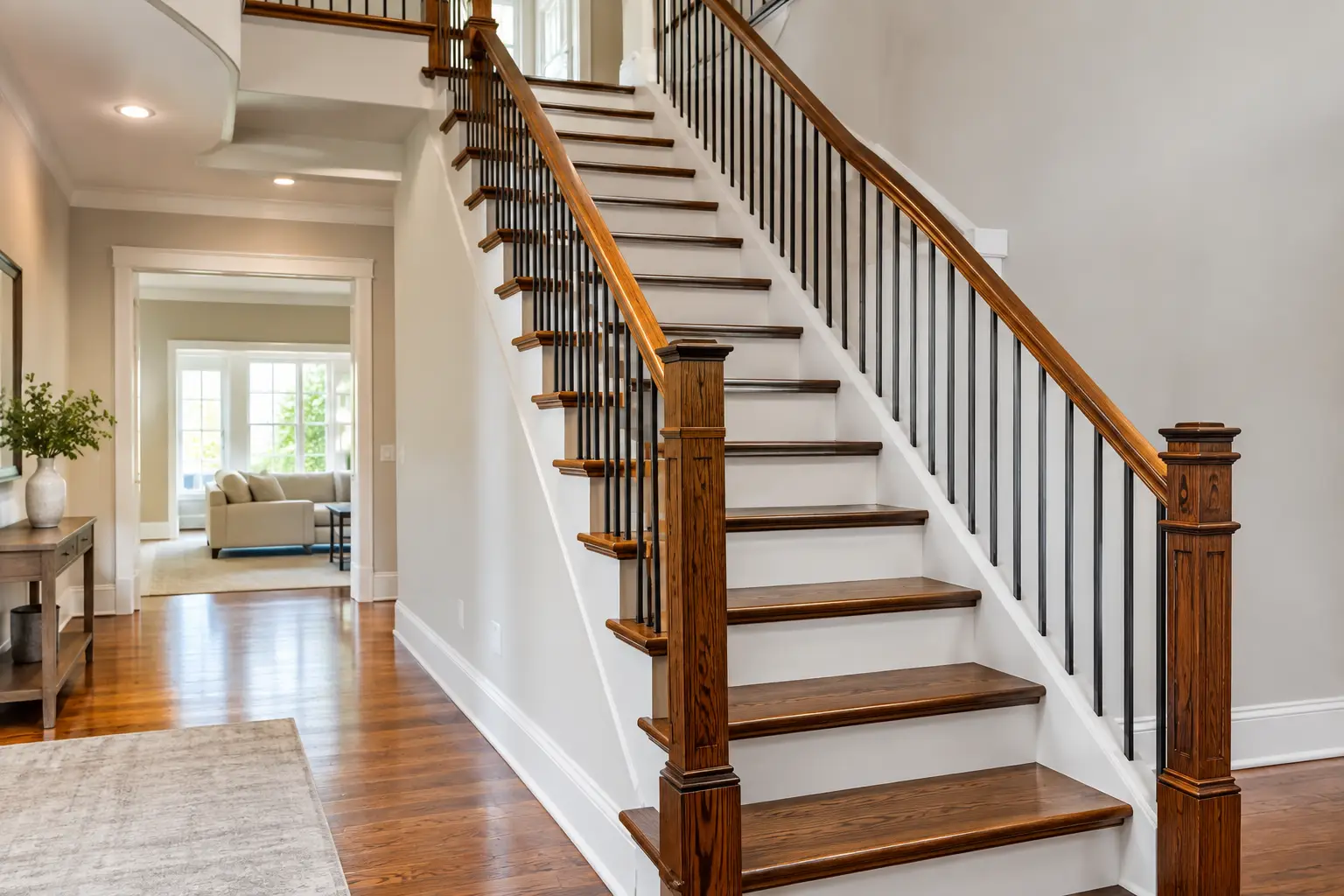
A staircase is more than the route between floors. It is often the first architectural detail guests notice from an entryway, and one of the most frequently used surfaces in the house. Custom hardwood stairs Maryland homeowners select should therefore do more than coordinate with a floor. They should feel solid underfoot, suit the proportions of the home, and carry the same level of craftsmanship from the first tread to the final handrail.
For a historic Annapolis property, that may mean preserving the warmth of existing oak while correcting decades of wear and unevenness. In a newer Potomac or Montgomery County home, it may mean creating a cleaner transition between wide-plank flooring, a contemporary railing system, and a custom stain. The right solution depends on the structure, the wood species, the desired finish, and the way a household actually lives.
Why Stairs Require a Different Level of Craft
Hardwood flooring is installed across a broad, relatively consistent plane. Stair work is a sequence of precise individual components. Every tread, riser, return, nosing, landing, and transition has to align visually and perform reliably. A slight inconsistency in tread depth or a poorly fitted return can be felt every day, even if it is not immediately obvious from across the room.
This is why stair projects demand more than matching boards to a floor. The installer must account for the existing framing, subfloor conditions, wall lines, trim details, and the geometry of the staircase itself. Older homes can introduce additional complications: settled stringers, out-of-square walls, varied riser heights, or prior repairs concealed beneath carpet. A careful assessment before materials are ordered protects both the finished appearance and the investment.
Custom work also gives homeowners control over the details that make a staircase feel intentional. The profile of a nosing can be traditional or streamlined. Risers can match the treads, contrast in painted wood, or be finished in a complementary material. Landings can continue the direction of adjacent flooring or establish a distinct visual break. None of these decisions should be treated as afterthoughts.
Selecting the Right Wood for the Job
The best species is not always the hardest one or the most expensive one. It is the wood that suits the home’s character, the visual goals of the project, and the expected level of traffic.
Oak remains a leading choice for hardwood stairs because it is durable, stable, and remarkably versatile under stain. White oak offers a refined grain and works especially well with natural, neutral, and modern finishes. Red oak has a more familiar grain pattern and warm undertones that can be a natural fit for traditional Maryland homes. Both are dependable choices when properly installed and finished.
Maple provides a smoother, subtler grain and a clean, tailored appearance, though it can accept stain differently than oak. Walnut creates a richer, more dramatic effect, with naturally deep color and elegant variation. Cherry develops a warmer patina over time, while ash offers strength and an expressive grain that can feel both classic and fresh.
Reclaimed wood deserves special consideration in homes where character is the point. Its nail marks, mineral streaks, and aged patina can create a staircase with real presence. Yet reclaimed material requires experienced handling. Board quality varies, milling must be exact, and color differences should be planned rather than hidden. The result can be extraordinary, but it is not the same as ordering uniform new stock.
Matching Stairs to Existing Hardwood Floors
A perfect color match is not always possible, particularly when existing floors have aged in sunlight or been refinished more than once. Wood is natural material, and each board responds to stain and finish in its own way. A skilled craftsperson aims for a harmonious relationship, not an artificial uniformity.
When the staircase and flooring are being completed together, materials and finish samples can be coordinated from the start. When new stairs meet older floors, custom blending and test boards become more valuable. Sometimes the strongest design choice is a deliberate contrast, such as natural white oak treads beside medium-toned flooring, provided the transition is repeated elsewhere in the room and feels purposeful.
The Details That Define Custom Hardwood Stairs in Maryland
The word custom should mean more than choosing a stain color. It should describe the way the stair system is considered as part of the house.
Tread thickness matters because it affects both the visual weight and the solid feel of the stair. A substantial tread can complement wide-plank floors and substantial millwork, while a more restrained profile may suit a lighter, contemporary interior. Bullnose and return details should be selected in relation to the exposed sides of the staircase and the style of the railing.
Risers play a significant visual role as well. Stained hardwood risers create continuity and richness, especially in formal entries. Painted risers can brighten a stair hall and draw attention to the tread material. For families with active households, the trade-off is practical: painted surfaces may show scuffs more readily, while an all-wood stair may reveal scratches differently depending on sheen and species.
Handrails, balusters, and newel posts must be treated as part of the composition, not separate accessories. A beautifully crafted oak stair can lose its impact if its railing proportions or finish are poorly coordinated. In some renovations, existing rail components can be retained and refinished. In others, a new railing is the better choice for visual consistency, code requirements, or structural integrity.
Finish Is Where Beauty Meets Daily Life
A staircase is subjected to concentrated wear. Shoes strike the same leading edge of each tread. Pets turn at landings. Children sit on the steps. A finish must be selected for how the home is used, not simply for how a sample appears under showroom lighting.
Modern, high-performance finishes offer excellent protection without filling the home with the harsh odor historically associated with site-finished wood. Very low-VOC, quick-drying, GreenGuard-certified systems support better indoor air quality and help families return to normal routines sooner. They also allow for a range of sheens, from understated matte to a more traditional satin appearance.
Lower-sheen finishes are often forgiving of fine surface marks and can emphasize the natural character of white oak, reclaimed wood, and wire-brushed textures. Satin can offer a slightly richer visual depth while remaining practical for many homes. High-gloss finishes are rarely the best choice for busy stairs because they show scratches, dust, and reflected imperfections more readily.
Color should be tested on the actual wood selected for the project. A stain that looks warm on an oak sample may read cooler under a home’s north-facing light, while a darker tone can deepen the visual contrast between tread edges and risers. This is where thoughtful sampling prevents costly disappointment.
Planning Around Structure, Safety, and Daily Use
Stair renovation can be straightforward when the existing stair structure is sound and the goal is to replace carpet with hardwood treads and risers. It becomes more involved when framing needs correction, landings must be rebuilt, or the home requires new railings. Good planning acknowledges that distinction early.
Measurements are not merely a formality. Stair dimensions, clearances, and railing details have safety implications. An experienced team evaluates what is present, identifies irregularities, and develops an approach that respects both the home’s design and the practical standards that stairs must meet. Covering a problem without addressing its cause can create a beautiful surface over a persistent issue.
Homeowners should also consider timing. Staircases are difficult to take out of service, especially in multi-level homes. A well-managed project establishes access plans, protects adjacent flooring and walls, and sequences the work to limit disruption. Clean preparation and precise installation are as important as the final coat of finish.
A Long-Term Approach to Stair Care
Custom hardwood stairs reward simple, consistent care. Grit is the enemy of any wood finish, so regular sweeping or vacuuming with a hard-floor setting is worthwhile. Wipe spills promptly, use cleaners approved for the finish system, and avoid soaking the wood with water. Runners can reduce wear in high-traffic areas, but they should be chosen and secured carefully so they do not conceal moisture or create a trip hazard.
Over time, a stair may need professional maintenance before it needs a full refinish. Addressing surface wear early can preserve the color and integrity of the wood beneath. When deeper restoration is required, professional evaluation helps determine whether selective repair, recoating, or complete sanding is the responsible path.
At Royal Oaks Flooring, stair work is approached with the same discipline as a fine hardwood floor: careful material selection, exact preparation, and finishing systems built for lasting beauty. The most successful staircase does not call attention to shortcuts. It quietly makes every arrival, descent, and view through the home feel more considered.