A hardwood floor can set the visual temperature of an entire home. In an older Annapolis residence, it may need to respect original millwork and warm patina. In a clean-lined Potomac renovation, it may need to carry an open floor plan without competing with the architecture. When weighing oak versus maple flooring, the right choice is not simply the harder species or the lighter color. It is the wood whose grain, finish, movement, and aging character suit the way you live.
Both are exceptional domestic hardwoods with long records in beautiful homes. Both can be refinished more than once when properly installed and maintained. Yet they create distinctly different impressions underfoot, and those differences become more pronounced across a large room, a staircase, or a series of connected spaces.
Oak Versus Maple Flooring: The Visual Difference
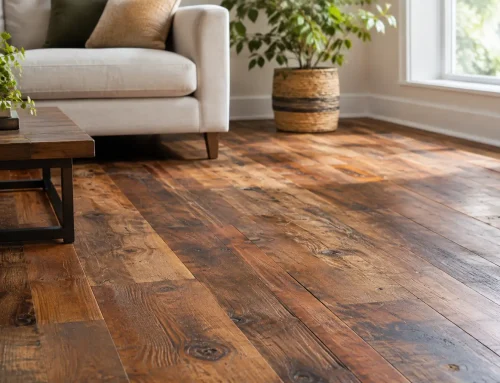
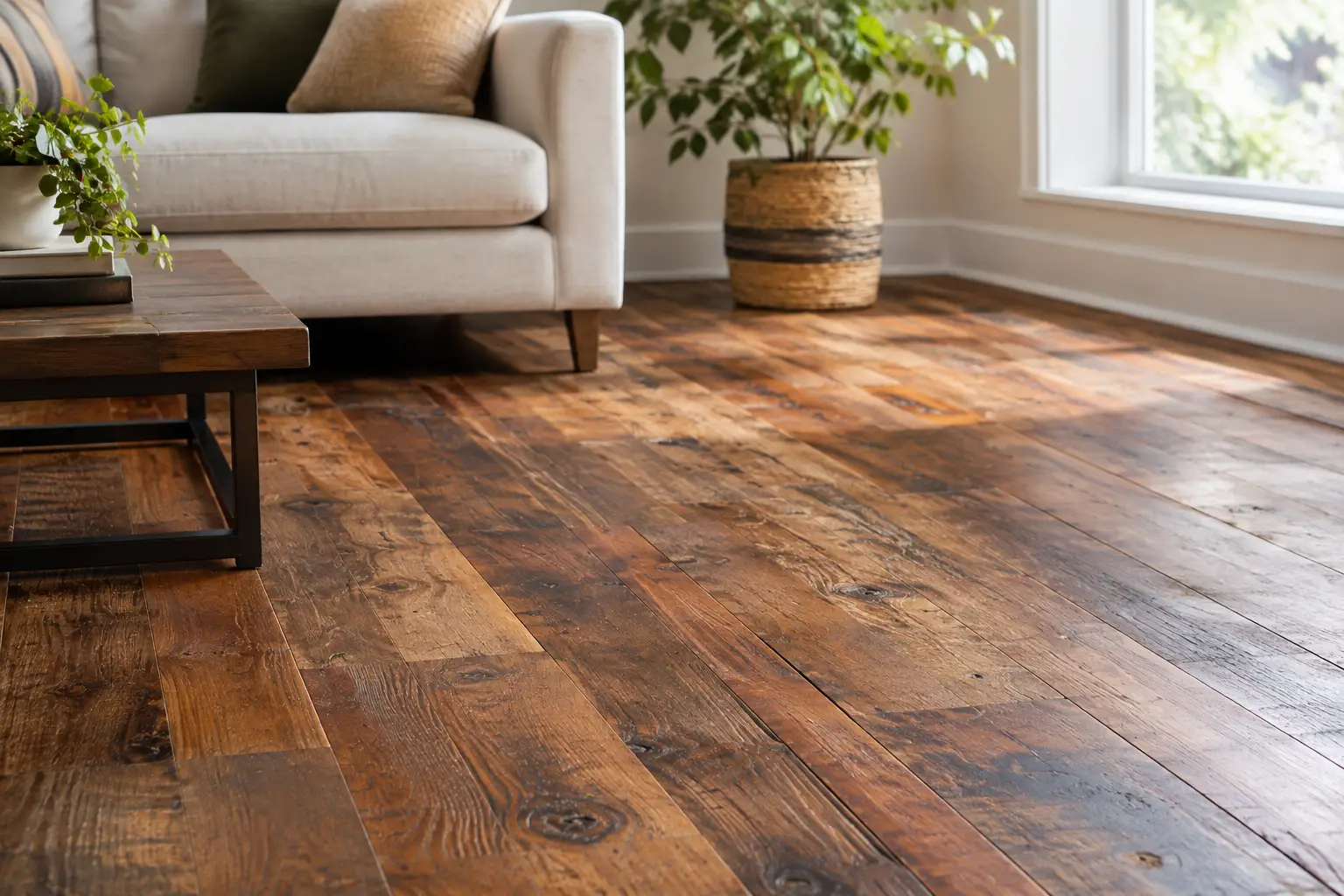
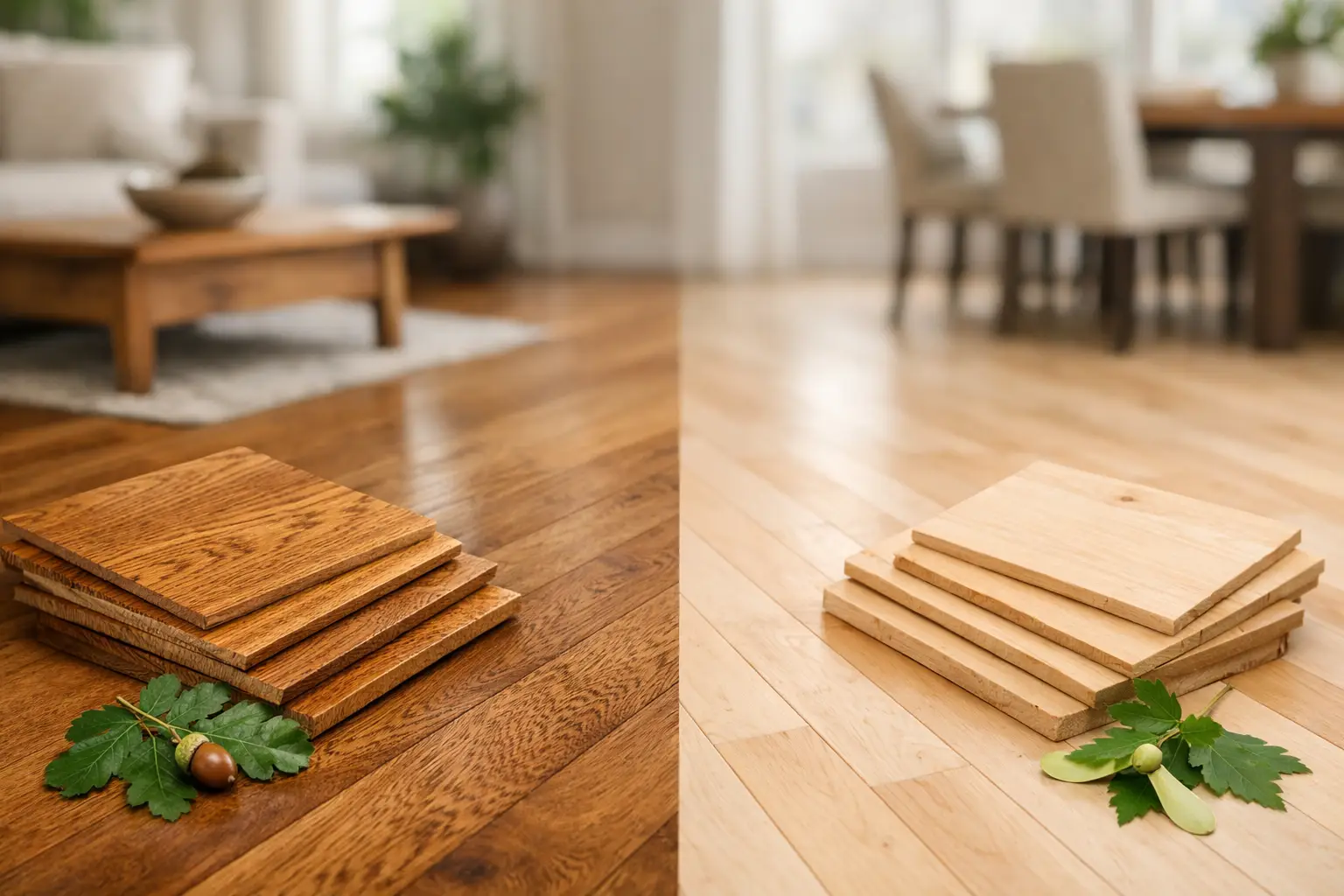
The most immediate distinction is grain. Oak has a pronounced, open grain with visible texture and movement. Red oak often carries warmer undertones, while white oak tends toward a more neutral brown and can show distinctive rays and flecks, especially in quarter-sawn or rift-sawn boards. It has depth and variation that feel at home in traditional properties, tailored transitional interiors, and spaces that benefit from natural character.
Maple is calmer. Its grain is generally tight, subtle, and more uniform, with a smooth, fine texture. In clear grades, maple can appear almost understated from a distance, allowing cabinetry, stone, or furniture to take a stronger role. It is a natural fit for contemporary interiors, light-filled kitchens, and homeowners who prefer a floor with a clean, quietly refined presence.
Neither look is inherently more luxurious. Oak makes its character visible. Maple expresses quality through restraint. A full-size sample viewed in the intended room is far more revealing than a small piece examined under showroom lighting. Daylight, wall color, and the direction of the boards can change the reading of either species considerably.
Why board cut matters as much as species
A comparison based only on species can miss a critical design decision: the cut of the lumber. Plain-sawn oak has the familiar cathedral pattern many homeowners recognize. Rift-sawn and quarter-sawn oak produce straighter grain, greater consistency, and a more architectural appearance. They are often chosen for premium wide-plank work and historic restorations where stability and visual discipline matter.
Maple is also available in different grades and cuts, though its subtler grain means the effect is less dramatic. If you want a floor with visible natural pattern and texture, oak offers more possibilities. If your goal is visual calm, carefully selected maple can be remarkably elegant.
Hardness, Wear, and Everyday Family Life
Maple is slightly harder than most common oak flooring on the Janka hardness scale. Hard maple typically measures around 1,450, compared with roughly 1,290 for red oak and 1,360 for white oak. That difference is real, but it should not be overstated. Oak has performed beautifully for generations in busy homes, and no hardwood floor is immune to dropped cookware, pet claws, grit at the door, or furniture dragged without protection.
For a household with energetic children, large dogs, or frequent entertaining, maple’s added hardness can be appealing. Its smooth grain also gives it a sleek appearance that works especially well in modern spaces. But a harder wood is not always a more forgiving-looking wood. Because maple is often more uniform in color and texture, dents and scratches may stand out under certain finishes.
Oak’s pronounced grain can be more visually accommodating. Small marks often blend into its natural movement, particularly with matte finishes, medium tones, or wire-brushed textures. For many active households, the most durable choice is less about a small difference in hardness and more about selecting the right finish sheen, color, entry protection, and maintenance routine.
Stain Color and Finish Behavior
This is where professional guidance matters. Oak is notably receptive to stain because of its open grain and porous structure. It takes color predictably and offers broad flexibility, from natural clear finishes to rich browns, weathered neutrals, and custom tones. White oak, in particular, remains a favorite for homeowners seeking modern neutral palettes, soft European-inspired hues, or a refined natural finish.
Maple can be more demanding. Its dense, closed grain does not absorb stain as evenly as oak, which can lead to blotching or uneven color if the surface preparation and finishing process are not carefully controlled. Dark-stained maple is possible, but it requires skill, appropriate conditioning, and realistic expectations. A floor that looks even on a small sample may read differently across a sunlit room.
For maple, clear or lightly tinted finishes often produce the most successful results. They celebrate the wood’s natural brightness and fine texture rather than forcing it to imitate another species. If the desired look is a deep espresso, a dramatic gray, or a layered custom stain, oak is usually the more dependable canvas.
Choose sheen with real life in mind
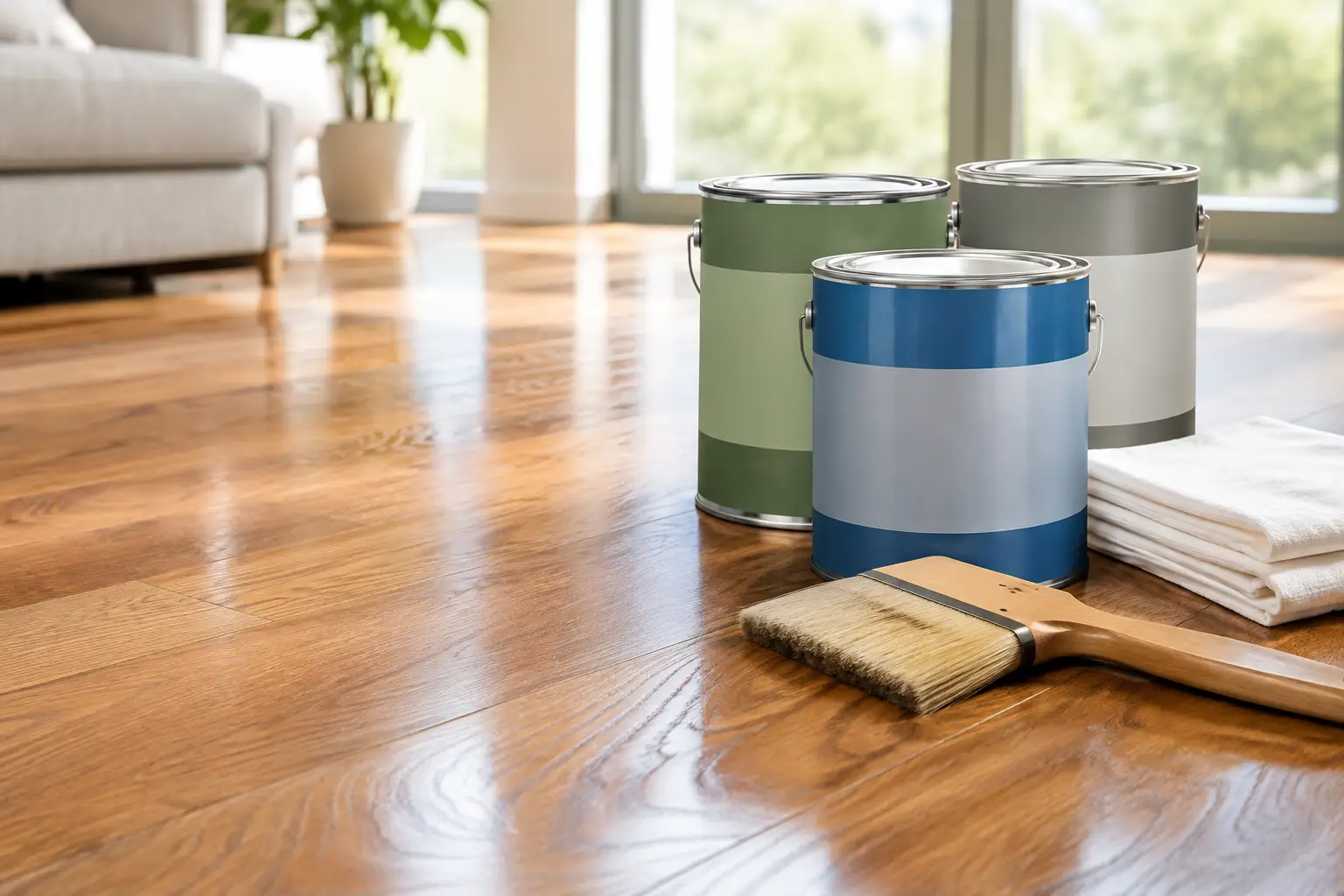
A finish’s sheen can change how either wood performs visually. High-gloss floors reflect light beautifully but reveal dust, footprints, and surface scratches more readily. Satin remains classic, while matte and low-luster finishes have become popular for their softer, more natural appearance and practical ability to disguise everyday wear.
High-performance, very low-VOC finishes are especially valuable in occupied homes. They protect the wood while minimizing off-gassing and helping families return to their spaces sooner. The best finish system is matched to the species, stain plan, traffic level, and desired feel of the home rather than selected as an afterthought.
Movement, Moisture, and Installation Precision
Wood responds to seasonal humidity. That is not a flaw. It is part of working with a natural material. In the D.C. Metro area and along Maryland’s Eastern Shore, humid summers and dry heated winters make proper acclimation, moisture testing, subfloor preparation, and expansion planning essential.
Maple is a relatively stable hardwood, but it is dense and requires careful installation practices. Oak also performs reliably when properly acclimated and installed, with white oak often favored for its balance of durability and dimensional stability. Neither species can compensate for a damp subfloor, poor site conditions, or rushed installation.
This is especially significant with wide-plank flooring. Wider boards make wood movement more visible, so material selection and installation technique become even more exacting. A craftsman should evaluate the home, the subfloor, the board width, and the intended environment before recommending a fastening method or finish schedule.
Refinishing and Long-Term Value
A well-installed solid oak or maple floor is a long-term investment because it can be renewed. Over decades, refinishing can remove accumulated wear, repair surface damage, and give the home a fresh visual direction. Oak is generally easier to recolor because it accepts stain more readily, making it an adaptable choice for homeowners who may update their interior palette later.
Maple can also be refinished successfully, though changing it to a significantly darker color requires more specialized work. Homeowners who love maple’s pale, natural appearance often see that consistency as a benefit, not a limitation.
Maintenance is straightforward for both species: use protective pads under furniture, place quality mats at exterior doors, clean grit promptly, and avoid soaking the floor with water or harsh cleaners. Recoating a finish before wear reaches bare wood is one of the most effective ways to preserve the floor and postpone a full sanding.
Which Hardwood Belongs in Your Home?
Choose oak when you want expressive grain, broad stain flexibility, and a floor that can complement traditional, historic, transitional, or modern interiors with equal confidence. It is particularly compelling for wide-plank designs, custom stains, and rooms where the floor should contribute visible warmth and texture.
Choose maple when you want a fine, quiet grain, a light and polished appearance, and modest additional hardness for daily activity. It is especially well suited to contemporary homes and interiors where a smooth, uncluttered material palette is central to the design.
The final decision should be made with real samples, not assumptions. Place finished boards beside your cabinetry and trim, view them morning and evening, and consider how they will look after years of sunlight, gatherings, and ordinary family life. The right hardwood is the one that will still feel intentional when it has acquired the honest, graceful signs of a well-lived home.