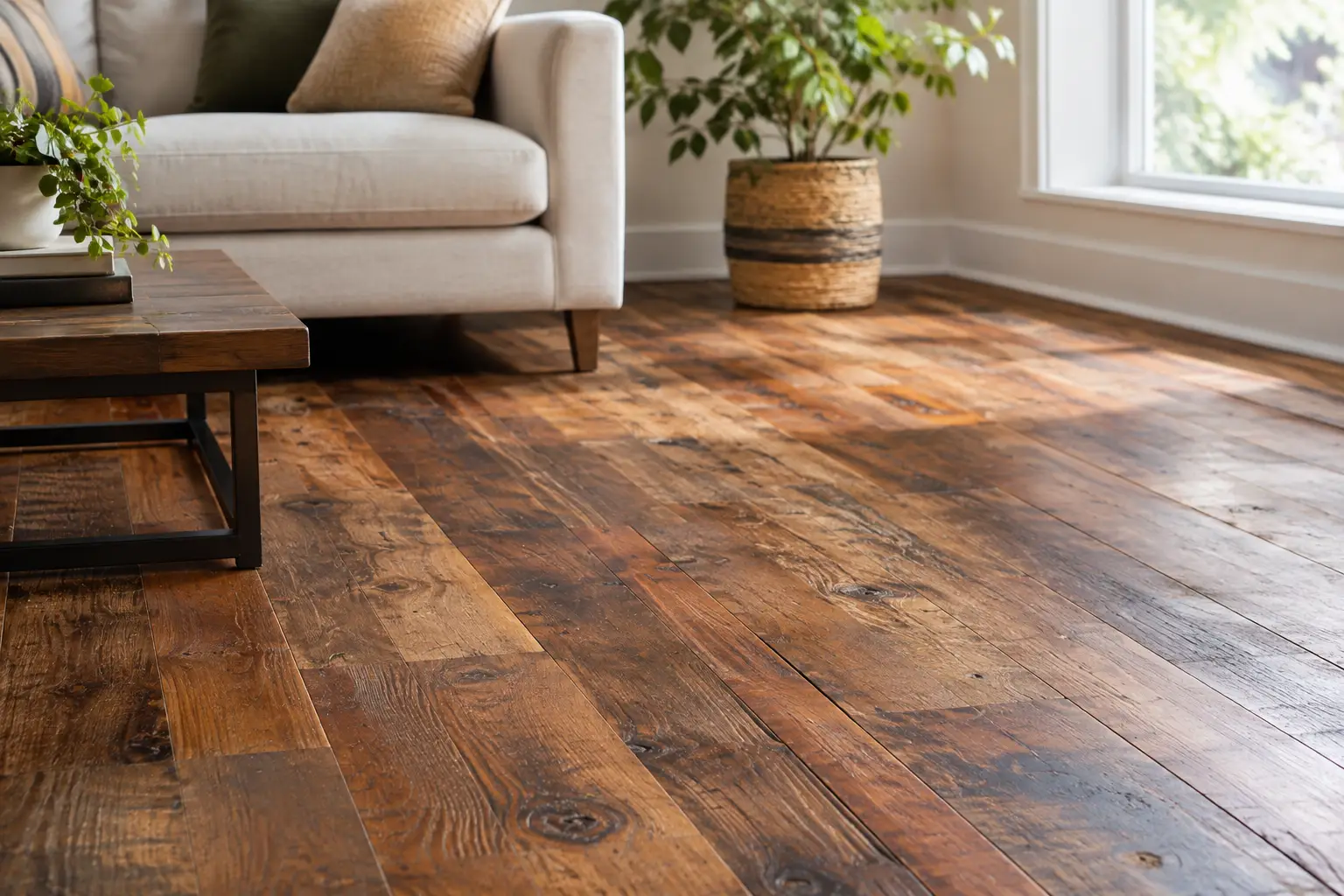
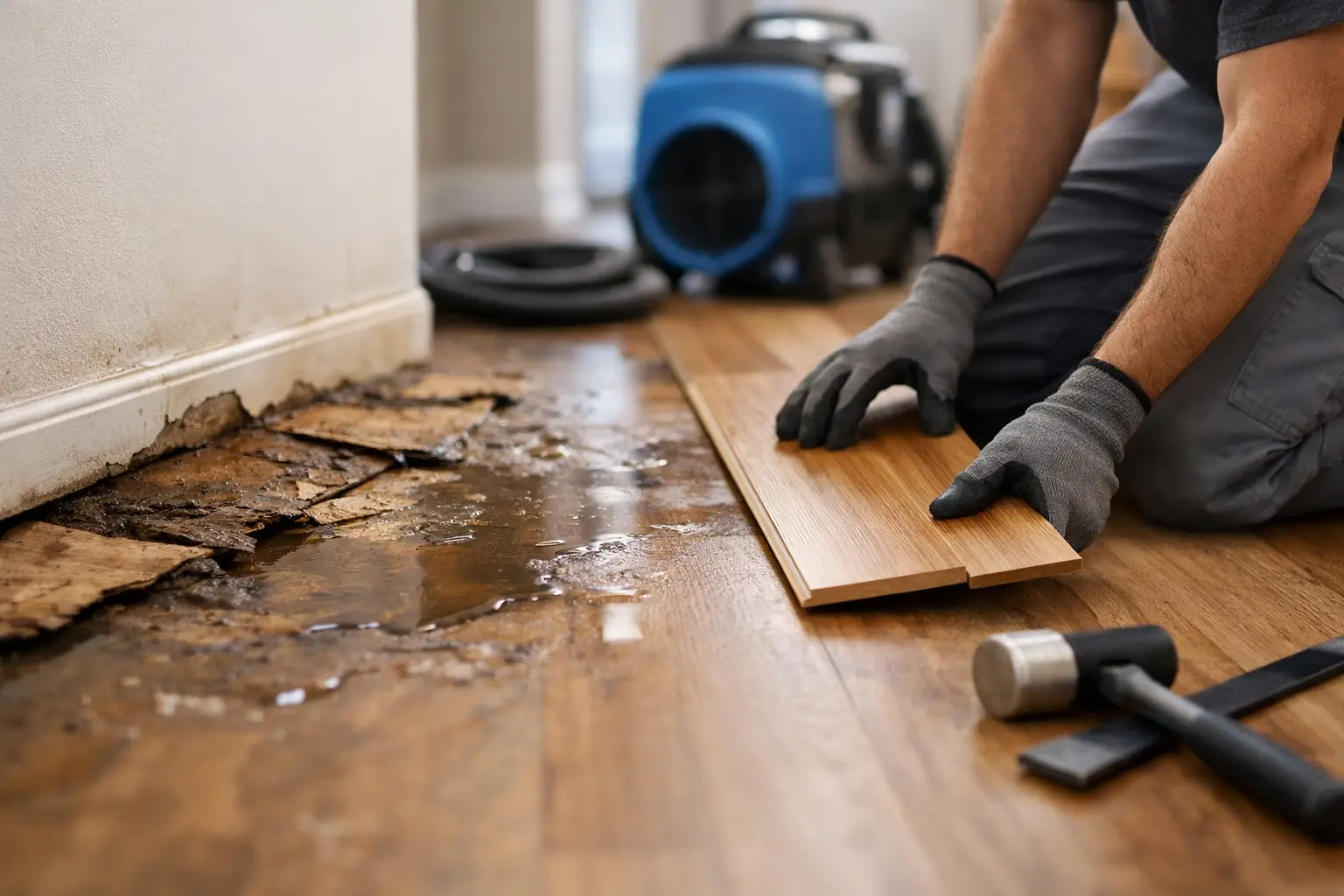
A wet hardwood floor can look deceptively calm at first. The real evidence often appears days later: boards that cup at the edges, a finish that turns cloudy, dark staining around seams, or a hollow sound underfoot. Water damaged floor restoration is not simply a matter of sanding away the visible marks. It is a careful process of stopping moisture, protecting the wood’s structure, and deciding whether the floor can be restored with integrity.
For homeowners who have invested in hardwood, wide-plank flooring, reclaimed material, or a custom finish, that distinction matters. A rushed repair can leave trapped moisture beneath a newly refinished surface, while unnecessary replacement can erase character that a skilled restoration could have preserved.
The First 48 Hours Set the Direction
Whether water came from a dishwasher leak, a failed supply line, a storm-driven window leak, or a flooded basement, the first priority is to stop the source and remove standing water. Move rugs, furniture, and other items that hold moisture against the floor. Blot and extract water promptly, but avoid aggressive heat or unmeasured drying methods that can cause wood to shrink too quickly.
Hardwood moves with changes in moisture. When it absorbs water, it expands. If the surface is forced dry while the underside remains wet, boards may warp, split, or develop gaps as the moisture balance shifts. The goal is controlled drying, with airflow and dehumidification tailored to the room, the flooring construction, and the extent of the water intrusion.
This is why a floor that appears dry is not necessarily ready for repair. Moisture may remain in the subfloor, along wall plates, below baseboards, or in the spaces between boards. A professional assessment uses moisture readings to compare affected areas with unaffected sections of the home. That information guides every next step.
What Determines Whether Hardwood Can Be Saved
The question is rarely just, “How wet is the floor?” The more useful question is, “What has the water changed?” A restoration specialist evaluates the species, board width, installation method, finish condition, subfloor, and duration of exposure.
Solid hardwood often offers the best opportunity for restoration because it can usually be sanded and refinished more than once. Cupping, where board edges rise above the center, may lessen as moisture levels normalize. If sanding begins before that equilibrium is reached, however, the floor can later crown – with the center of each board rising above the edges – after the lower layers dry.
Engineered hardwood requires a more selective approach. Quality engineered floors can sometimes be repaired or refinished, but the thickness of the wear layer limits how much material can be removed. If water has compromised the plywood core, separated layers, or caused boards to release from the subfloor, replacement of the affected section may be the wiser investment.
Luxury vinyl, laminate, and other floating floors respond differently. Vinyl itself may resist water, but moisture can still migrate below the planks and affect the underlayment or subfloor. Laminate is especially vulnerable at its seams and edges, where swelling is generally permanent. The finish of a floor is one factor, but the condition beneath it is what determines a lasting result.
The Type of Water Matters
Clean water from a recent plumbing leak presents a very different restoration path than water from a sewer backup, river flooding, or a long-standing leak with microbial growth. Category 2 or Category 3 water can introduce contaminants that make salvaging porous materials unsafe or impractical.
When contamination is involved, health and proper remediation come before preserving the floor. Some materials may need to be removed so the subfloor and surrounding structure can be properly cleaned and dried. A beautiful floor is never worth concealing an unresolved moisture or sanitation problem.
A Proper Water Damaged Floor Restoration Process
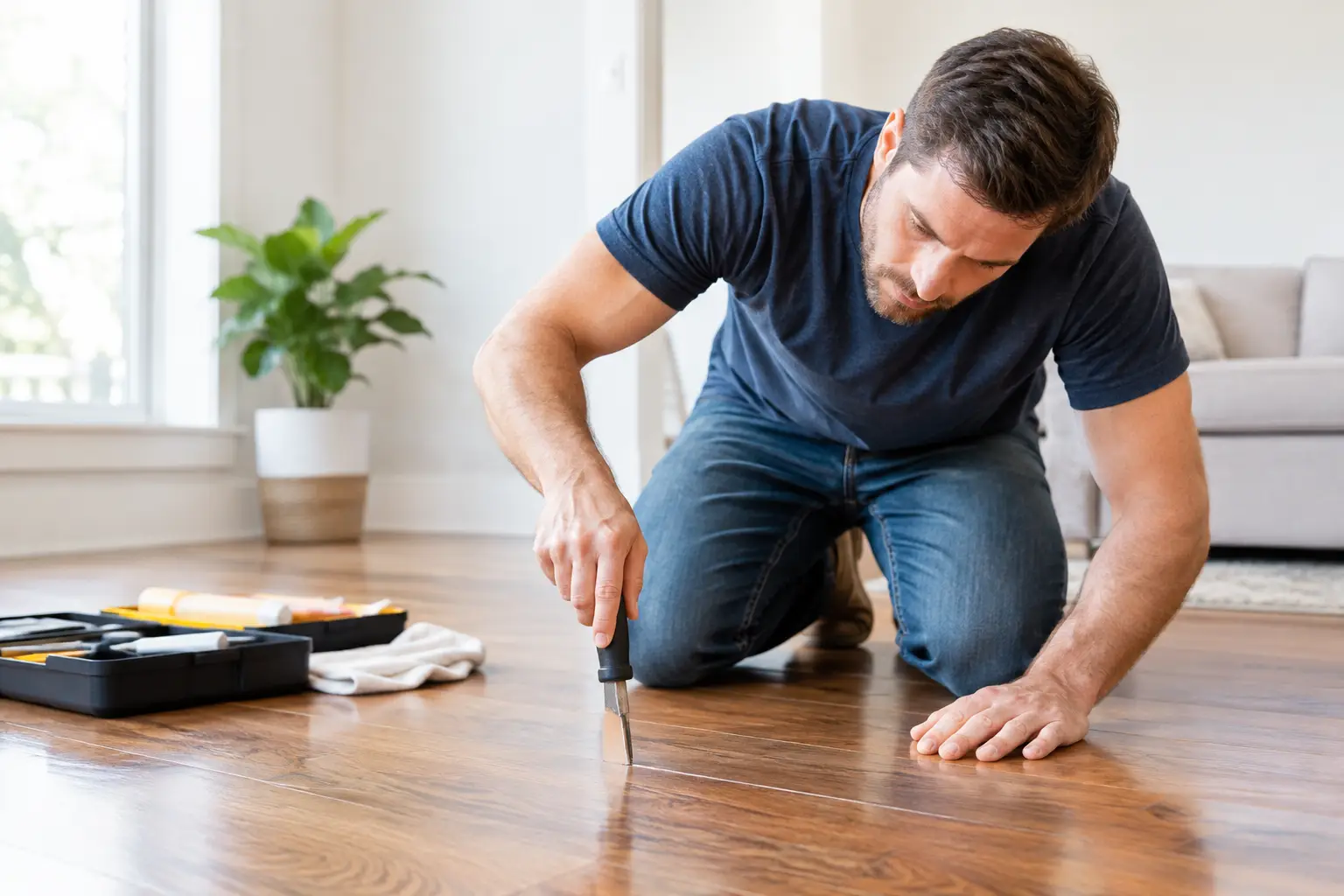
Restoration begins with diagnosis, not a sander. The affected space should be inspected for moisture migration, damaged boards, loose fasteners, staining, finish failure, and changes in the subfloor. In older homes throughout the D.C. Metro region and Maryland’s Eastern Shore, this may also mean accounting for original flooring, previous repairs, crawl spaces, and seasonal humidity.
Once the source is corrected, the floor is dried gradually and monitored until its moisture content is appropriate for repair. This stage can take longer than homeowners expect, especially after water has traveled under cabinets or through several rooms. Patience here protects the quality of the final work.
After drying, individual boards may be replaced if they are split, permanently distorted, delaminated, or structurally loose. Matching replacement material requires more than choosing a similar color. Grain pattern, board width, milling profile, species, age, and the way wood accepts stain all influence whether the repair disappears into the original floor or remains an obvious patch.
If the floor is stable, sanding can remove shallow staining, surface irregularities, and a failed finish. Deep black water marks may extend farther into the wood than sanding can safely reach. In those cases, a craftsman may use targeted treatments, selective board replacement, or a finish strategy that complements the natural variation rather than fighting it.
The final finish should be selected for the home’s use, light exposure, and desired appearance. Modern very low-VOC, quick-drying finishes can provide exceptional protection while supporting healthier indoor air quality. The best finish is not always the glossiest one. A matte or satin sheen often suits active family spaces and makes small scratches less conspicuous, while a richer sheen can heighten the depth of formal oak, walnut, or cherry.
Common Mistakes That Make Damage Worse
The understandable instinct is to make the floor look normal as quickly as possible. That is where costly mistakes happen. Sanding before the wood has fully stabilized can create a floor that looks flat briefly but changes shape again after refinishing. Covering damp hardwood with rugs, plastic, or furniture can trap moisture and invite staining or mold growth.
Homeowners should also be cautious about bleach, harsh household cleaners, and steam mops. These products can damage the finish, drive moisture into seams, or alter the color of tannin-rich woods such as oak. A dark mark is not always surface dirt, and treating it as though it is can make a repair more complicated.
Another frequent mistake is replacing only the most visibly damaged boards without checking the adjoining flooring and subfloor. Water does not respect clean boundaries. A precise repair requires understanding how far moisture traveled, even when the visible damage is limited to a small area.
When Restoration Is Worth the Investment
Restoration is often the right choice when the floor has dried successfully, the subfloor remains sound, and the majority of boards retain their structural integrity. It is particularly valuable for historic floors, quality site-finished hardwood, and reclaimed lumber with a patina that cannot be duplicated by new material.
Replacement may be more appropriate when damage is widespread, the floor has repeatedly flooded, mold or contamination is present, or engineered boards have delaminated. There is no virtue in forcing a restoration when the material can no longer perform as a stable floor. A trustworthy recommendation weighs appearance, safety, longevity, and the cost of future problems.
For partial replacement, the objective should be a transition that feels intentional. New boards can be woven into an existing floor, then sanded and finished across a larger area to unify color and sheen. That level of work calls for a close eye, disciplined preparation, and respect for the original material.
Protecting the Floor After Repair
Once the floor is restored, prevention becomes part of its care. Keep indoor humidity reasonably consistent, address appliance drips immediately, use breathable mats near exterior doors, and avoid wet mopping. Felt protectors beneath furniture and prompt cleanup after spills will preserve both the finish and the wood beneath it.
If a home has experienced one plumbing failure, it is wise to look for the conditions that allowed it to go unnoticed: aging supply lines, loose refrigerator connections, failing dishwasher hoses, or poor drainage near an exterior entry. Flooring repair and water prevention belong in the same conversation.
At Royal Oaks Flooring, restoration is approached with the same discipline as a fine new installation: assess carefully, preserve what deserves preserving, and rebuild only where the floor can no longer serve the home well. When water reaches hardwood, the right response is not panic or a cosmetic shortcut. It is measured action that gives a well-made floor its best chance to remain a lasting part of the home.