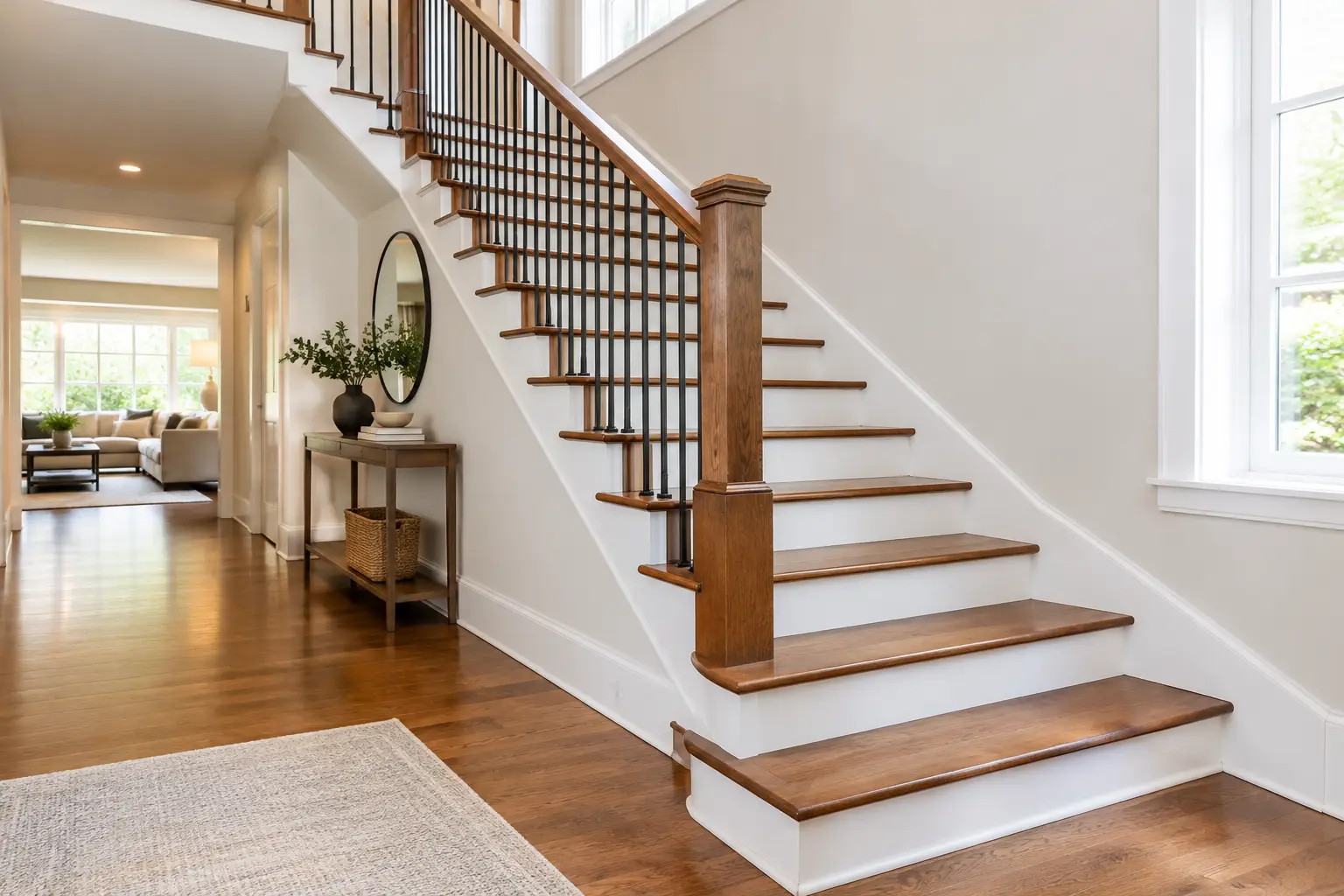
A floor can look perfect on a showroom sample and entirely different once it sits beneath your windows, beside your cabinetry, and under the warm light of evening. That is why wood floor color selection deserves more than a quick preference for light, dark, or gray. The right color should belong to the architecture of your home, support the way your family lives, and retain its appeal long after a passing design trend has faded.
For homeowners investing in fine hardwood, color is not a finishing touch. It is one of the decisions that gives the entire room its balance, warmth, and sense of permanence.
Begin Wood Floor Color Selection With What Will Stay
Start with the fixed elements of the room, not with a stain card. Cabinetry, stone countertops, fireplace surrounds, interior doors, stair parts, and built-ins typically outlast a paint color or area rug. Their undertones will determine whether a wood floor feels harmonious or slightly off from the first day.
Look closely at the color beneath the obvious color. A cream kitchen cabinet may carry a soft yellow undertone; another may lean gray or pink. Marble can read cool but contain warm veining. Brick often brings red, rust, or brown into the room. These details matter because wood also has an undertone, even when the finish is subtle.
White oak is prized for its adaptable, balanced character. It can support natural finishes, soft warm browns, weathered tones, and many contemporary looks without excessive red or orange. Red oak has a more pronounced grain and naturally warmer cast, which can be beautiful in traditional homes but must be considered carefully when a cooler stain is desired. Walnut brings deep brown richness with natural variation, while maple has a finer, quieter grain and can be more demanding when stained evenly.
A well-chosen floor does not need to match cabinets or furniture exactly. Exact matching can make a room feel flat. Instead, aim for a considered relationship: warm oak with creamy cabinetry, medium walnut beside painted millwork, or a natural white oak floor that lets a distinctive stone surface remain the focal point.
Let Natural Light Have a Vote
The same floor color changes throughout the day. Morning light, afternoon sun, shaded exposures, and artificial lighting all affect the way a finish is perceived. This is especially noticeable in homes with large windows, open floor plans, or rooms that connect directly to outdoor living spaces.
North-facing rooms often receive cooler, softer light. A very pale gray-brown floor may look muted or slightly blue in that setting, while a natural or gently warm finish can restore balance. South- and west-facing rooms receive stronger, warmer daylight. Here, a light natural floor can feel airy and expansive, while a very dark stain may create dramatic contrast but also show dust and sun-faded areas more readily.
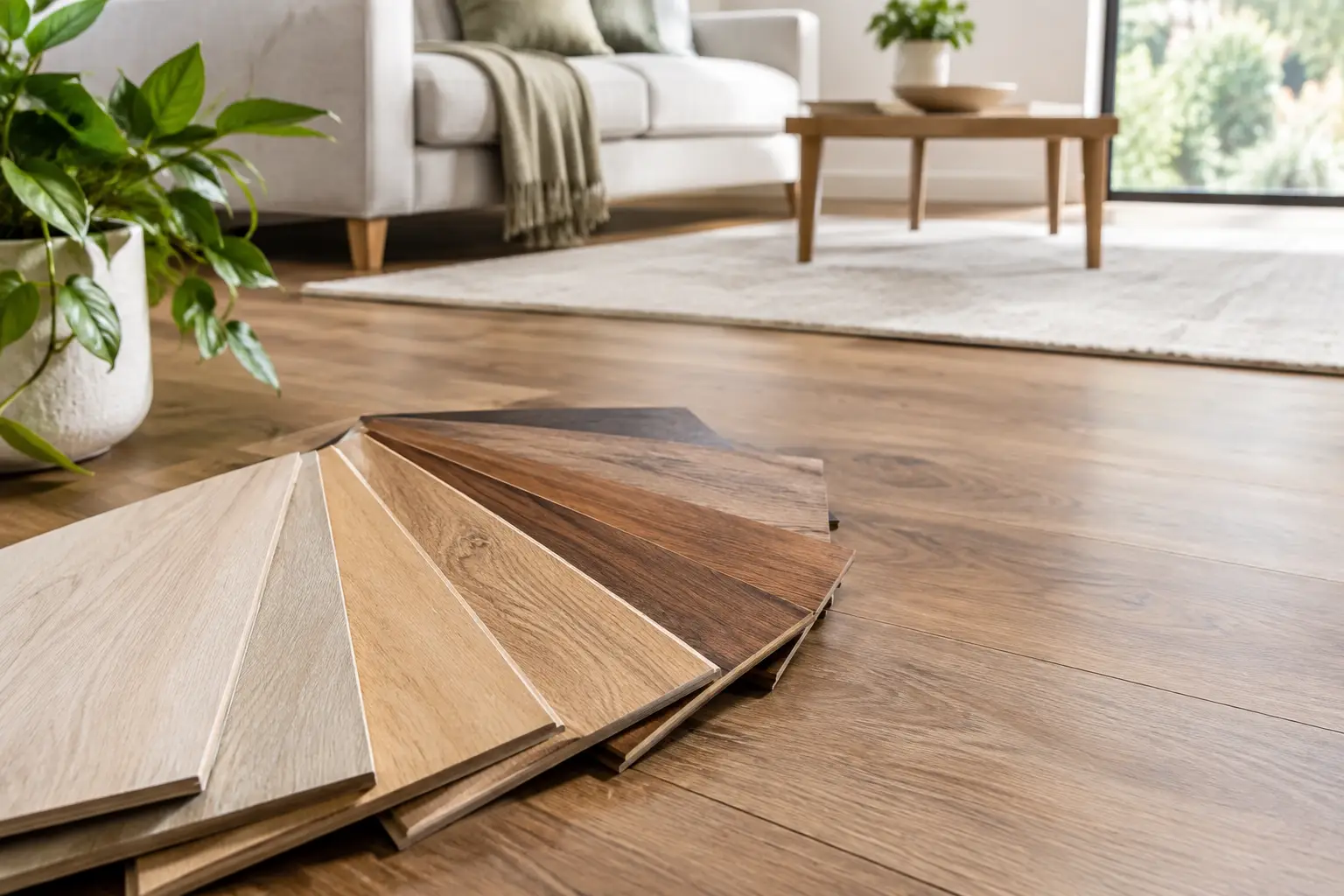
Before committing, view large finish samples in the actual space. Move them near windows, under cabinets, and into adjacent rooms. Look at them in daylight and again after sunset with the lights you use most often. A small hand sample is useful for narrowing options, but it cannot show how grain, board width, and light will work across an entire floor.
At Royal Oaks Flooring, this evaluation is treated as part of the craft. A custom floor should be judged where it will live, not only under showroom lighting.
Choose a Depth That Fits Daily Life
Light, medium, and dark floors each offer a different visual effect, along with practical trade-offs. The best choice depends on the household and the condition of the subfloor, surrounding finishes, and wood species.
Light natural floors make rooms feel open and allow the grain to remain visible. They are particularly well suited to wide-plank white oak, reclaimed wood with restrained finishing, and homes where daylight is a major feature. They can be forgiving of minor scratches, pet hair, and everyday dust, though pale finishes are not maintenance-free. Spills, scuffing, and grime still need prompt attention.
Medium brown floors are often the most versatile choice for long-term ownership. They introduce warmth without making a room feel heavy, work across traditional and transitional interiors, and tend to conceal daily wear better than very pale or very dark colors. For many Maryland, Virginia, and Washington-area homes, a medium tone provides a graceful bridge between historic architectural details and updated kitchens or furnishings.
Dark floors create depth and formality. They can make a bright room feel grounded and elegant, particularly when paired with light walls and tailored millwork. Yet darker colors usually reveal dust, footprints, scratches, and pet hair more clearly. They also absorb more light, which can be a drawback in smaller rooms or spaces with limited natural light. A dark floor is a beautiful choice when the home and the maintenance routine support it, not simply because it looks striking in a photograph.
Respect the Wood, Rather Than Covering It
Wood is not a blank canvas. Each species accepts color differently, and each board carries its own mineral streaks, knots, grain direction, and natural variation. The most successful finishes work with those characteristics.
For example, a nearly opaque stain may reduce the lively grain that makes oak appealing in the first place. On the other hand, a natural finish on a character-grade or reclaimed floor can celebrate saw marks, filled knots, and tonal shifts that would be out of place in a highly formal setting. The question is not whether variation is good or bad. It is whether the variation suits the home you are creating.
If consistency is a priority, ask about grade, cut, and board selection along with stain color. Rift- and quarter-sawn oak usually presents a more linear, refined grain than plain-sawn oak. Select-grade material generally offers less color variation than character-grade boards. These material decisions can influence the finished appearance as much as the stain itself.
Consider Sheen Alongside Color
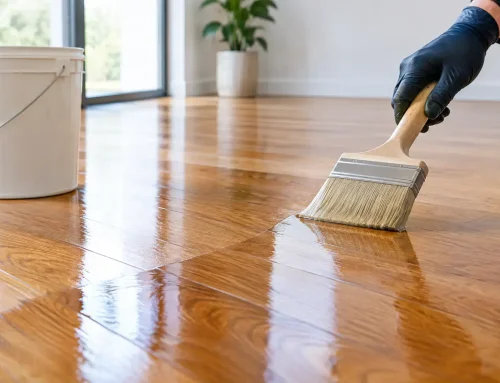
A floor’s sheen can make the same stain appear lighter, darker, warmer, or more formal. High-gloss finishes reflect more light and can emphasize the depth of rich wood tones, but they also reveal scratches and surface marks. Satin has a gentle luster and remains a classic choice for polished residential interiors. Matte and low-luster finishes have become popular because they keep the focus on the wood itself and are generally more forgiving in active households.
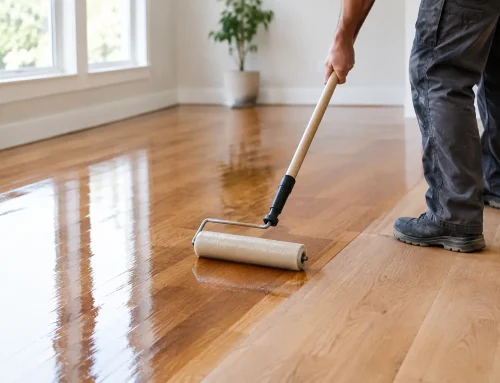
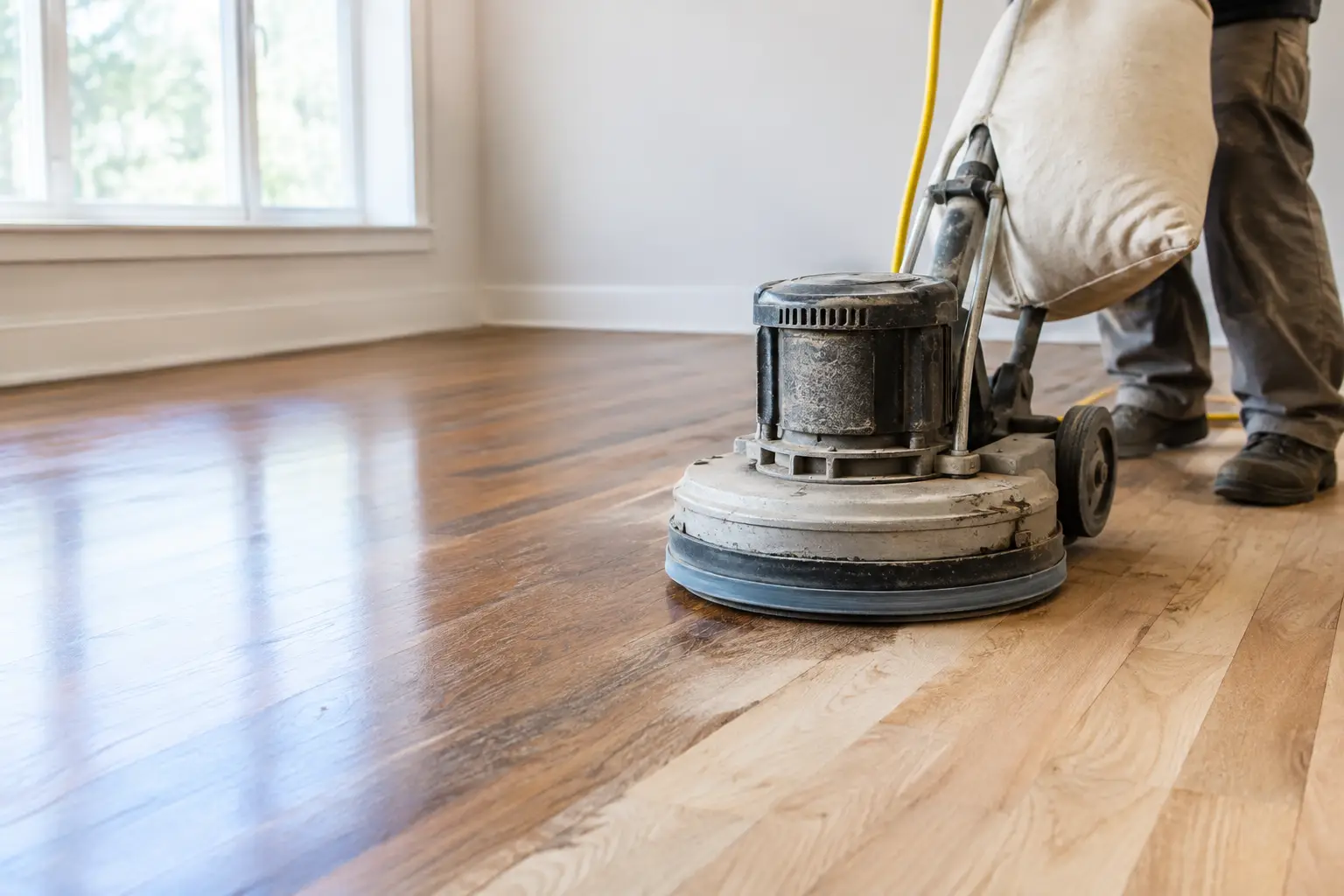
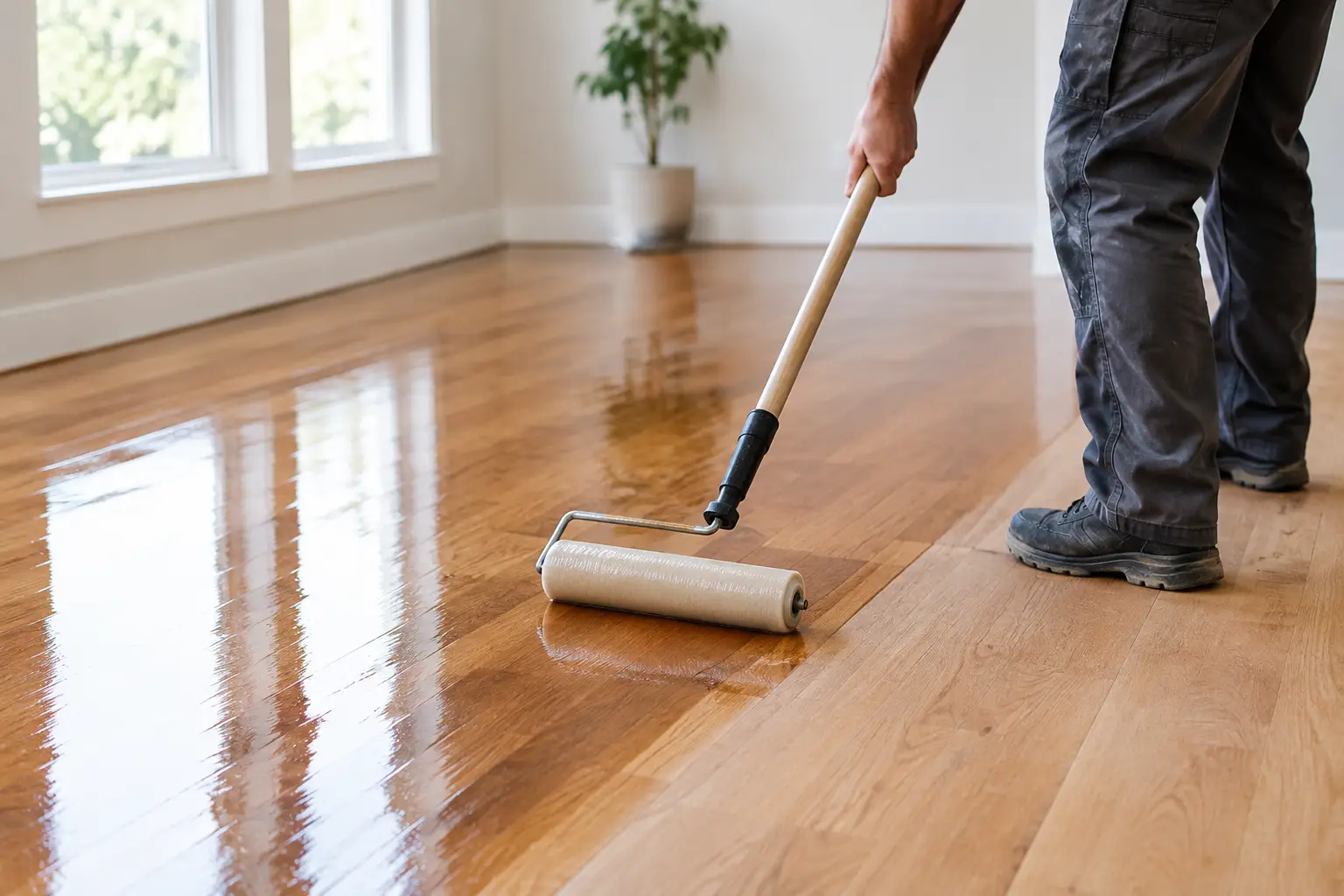
Color and sheen should be tested together. A stain that looks ideal in satin may feel too contemporary in matte or too dramatic in gloss. This is also where finish quality matters. Modern, very low-VOC finishes can provide excellent durability and clarity while supporting healthier indoor air quality. A professionally applied finish protects the color beneath it and helps preserve the floor’s depth through years of use.
Avoid Choosing for a Trend Alone
Cool gray floors, extreme dark stains, and heavily whitewashed looks can be beautiful in the right home. Trouble arises when a fashionable color conflicts with permanent materials or demands a level of upkeep the household cannot realistically provide.
A more enduring approach is to choose a color that complements the home’s natural light, architecture, and existing finishes, then bring trend-forward expression through paint, textiles, furniture, and accessories. Those elements can change easily. A properly installed hardwood floor is meant to remain for decades.
This does not mean every floor should be neutral or cautious. A richly toned walnut, a warm amber oak in a historic home, or a softly muted custom finish can be deeply personal. The difference is intention. A lasting choice feels connected to the house rather than borrowed from a single moment in design.
Test Before the Final Decision
For site-finished hardwood, custom samples are indispensable. A skilled flooring professional can prepare sample areas or boards using the actual species, sanding sequence, stain, sealer, and finish planned for the project. This reveals how the color will interact with the wood, rather than presenting a generic stain swatch.
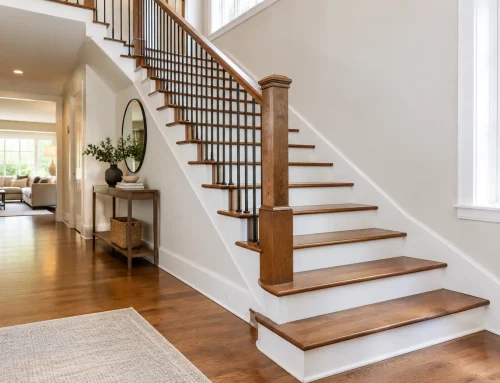
Review samples next to cabinetry and wall paint, but also place rugs and furniture fabrics nearby if they are already selected. Pay attention to transitions between rooms. Open-concept homes do not always require one uninterrupted color, but changes should feel deliberate and technically appropriate. Existing floors, new additions, stair treads, and rooms with different light exposures may call for careful blending rather than a one-size-fits-all answer.
Give yourself time with the samples. The color that feels most exciting at first glance is not always the one that still feels right after several days of changing light. The best floor color often has a quieter confidence: it makes the room feel complete without asking for constant attention.