A hardwood floor can look tired long before it is truly worn out. Fine scratches, dull traffic lanes, old finish buildup, and uneven color often make homeowners think replacement is the only answer. In many cases, the better question is simpler: what is wood floor sanding, and can it bring the floor back to life?
Wood floor sanding is the process of removing the top layer of finish and a very thin layer of wood to create a clean, level surface that can be refinished. Done properly, it reveals fresh wood beneath years of wear and prepares the floor for stain, sealer, and protective finish. It is one of the most effective ways to restore solid hardwood and many engineered hardwood floors, but it is also one of the jobs where craftsmanship matters most.
What is wood floor sanding and what does it do?
At its core, sanding corrects what everyday use leaves behind. Shoes grind in grit. Furniture creates scratches. Sunlight shifts the floor’s color over time. Spills, pet traffic, and repeated cleaning can slowly wear away the finish, especially in kitchens, hallways, and family rooms.
Sanding removes those surface problems so the floor can be refinished evenly. It can reduce or eliminate minor scratches, shallow dents, finish failure, staining from old coatings, and small height differences between boards. It also opens the door to a design change. If a floor is structurally sound, sanding may allow you to move from a dated orange tone to a more natural matte look, or from a dark stain to a cleaner, lighter appearance.
That said, sanding is not a cure for every issue. Deep pet stains that have soaked into the wood, severe cupping from moisture, termite damage, or boards that are too thin may require board replacement or a different restoration approach. A good floor professional evaluates the condition of the wood before deciding how far sanding should go.
How the sanding process works
For homeowners, the visible change is dramatic. For craftsmen, the result comes from a series of controlled steps, not one pass with a machine.
Inspection comes first
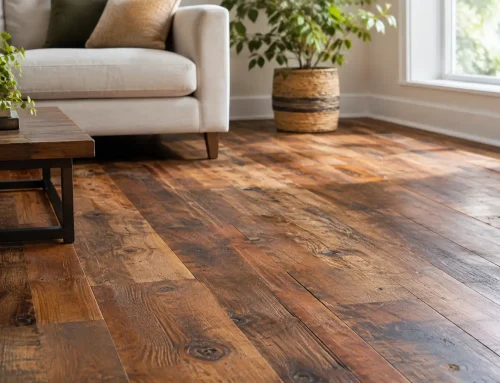
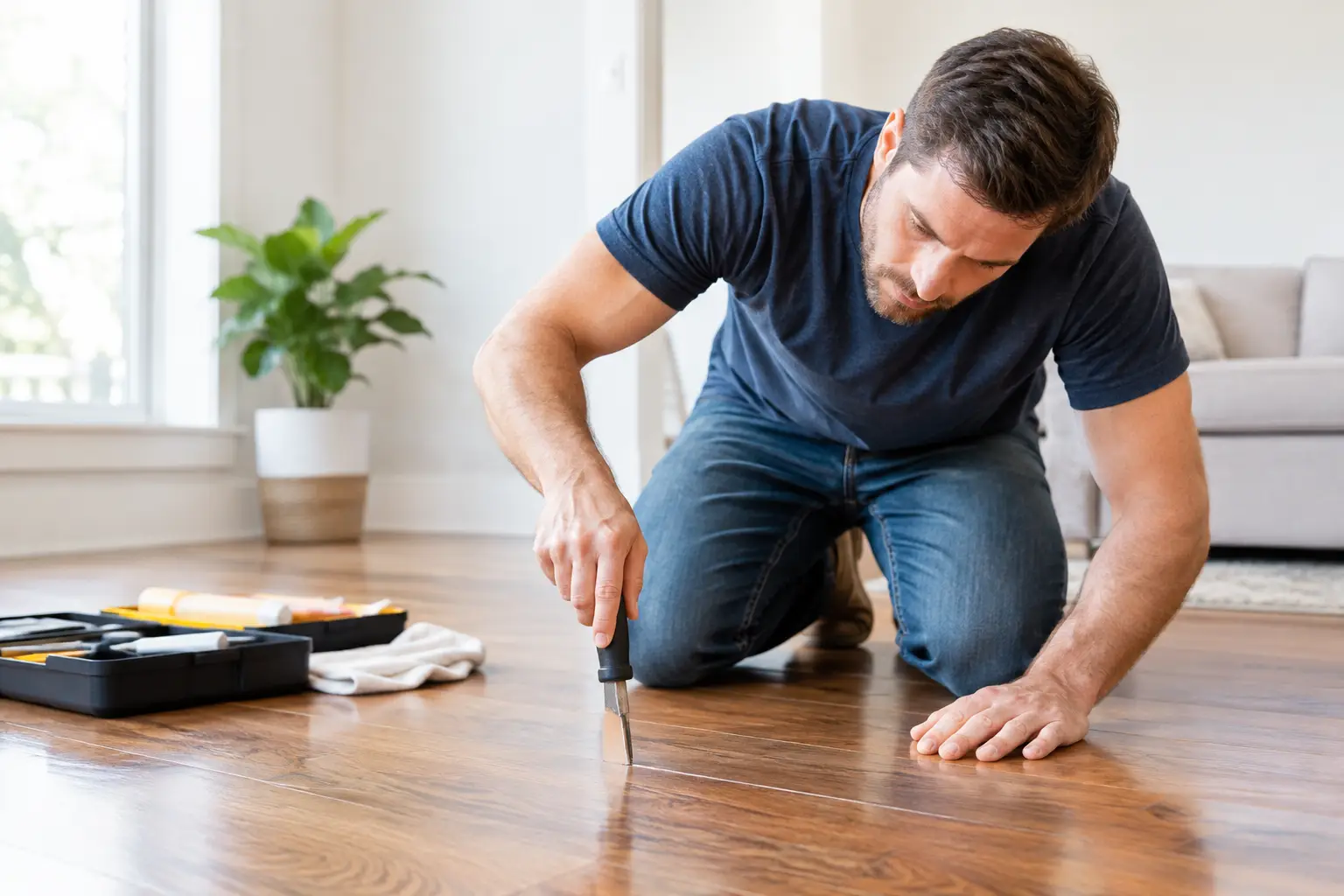
Before any sanding begins, the floor should be inspected for board movement, moisture concerns, old repairs, deep stains, protruding nails, and previous refinishing history. This step matters because every species, plank width, and floor condition responds differently. Older oak in a historic home may sand beautifully. A thinner engineered floor may allow only a limited sanding. Reclaimed wood may need a more tailored approach because of its character, hardness variation, or prior wear.
Sanding happens in stages
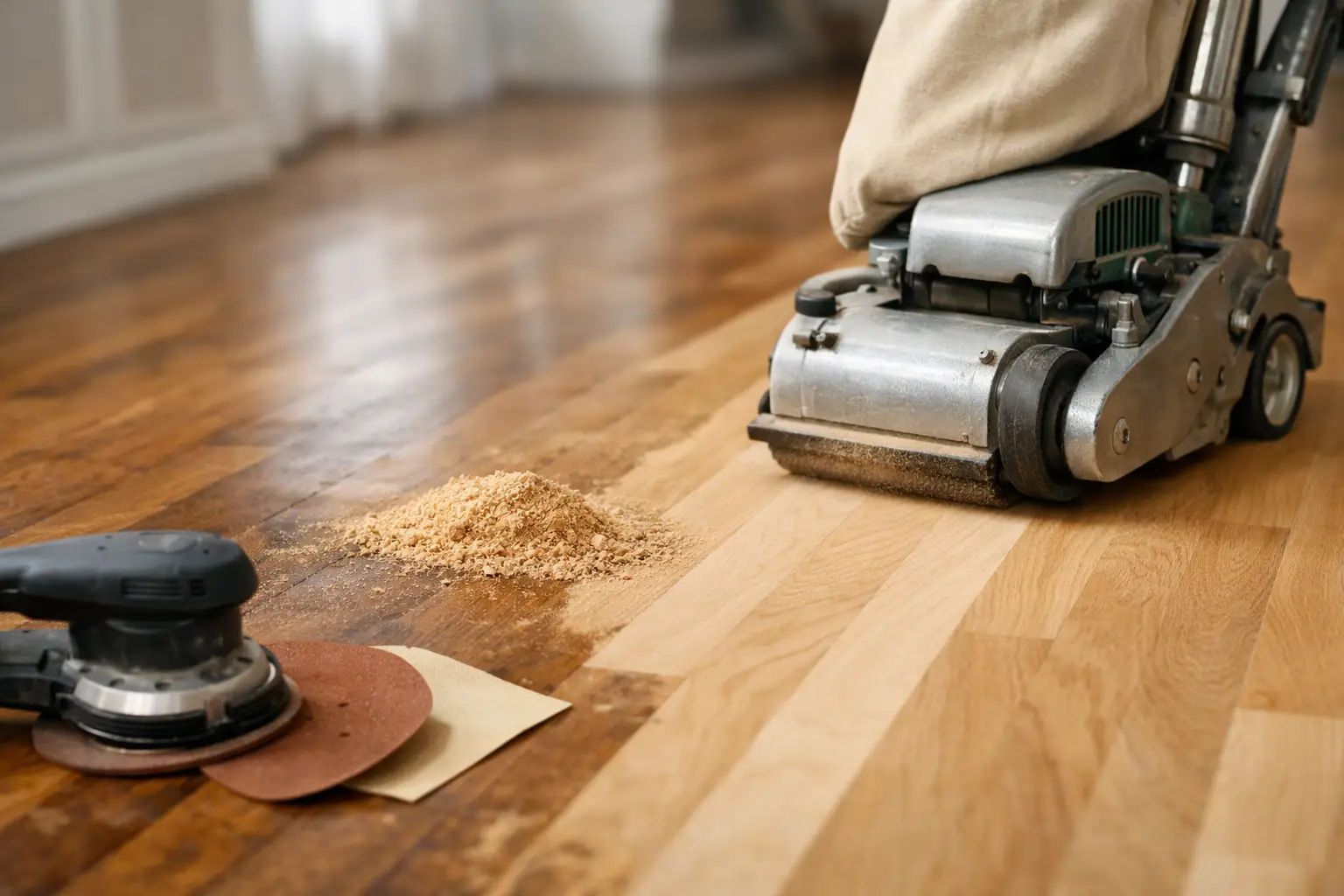
Professional sanding is done with progressively finer grits. The initial passes remove the old finish and flatten the surface. Later passes refine the texture and reduce visible scratch patterns. Edges and corners are handled with separate tools because large drum or belt sanders cannot reach them properly.
This staged approach is what separates a refined result from a rough one. If the grit sequence is rushed or uneven, the flaws often show up after finish is applied. That is when swirl marks, chatter, edge lines, or patchy stain absorption become obvious.
Gaps, repairs, and preparation
Depending on the floor, this phase may include filling certain gaps, replacing damaged boards, setting nails, or blending repairs so the floor reads as one surface rather than a collection of fixes. Not every gap should be filled, especially in homes with seasonal movement, but many floors benefit from selective repair before finishing.
Stain and finish complete the work
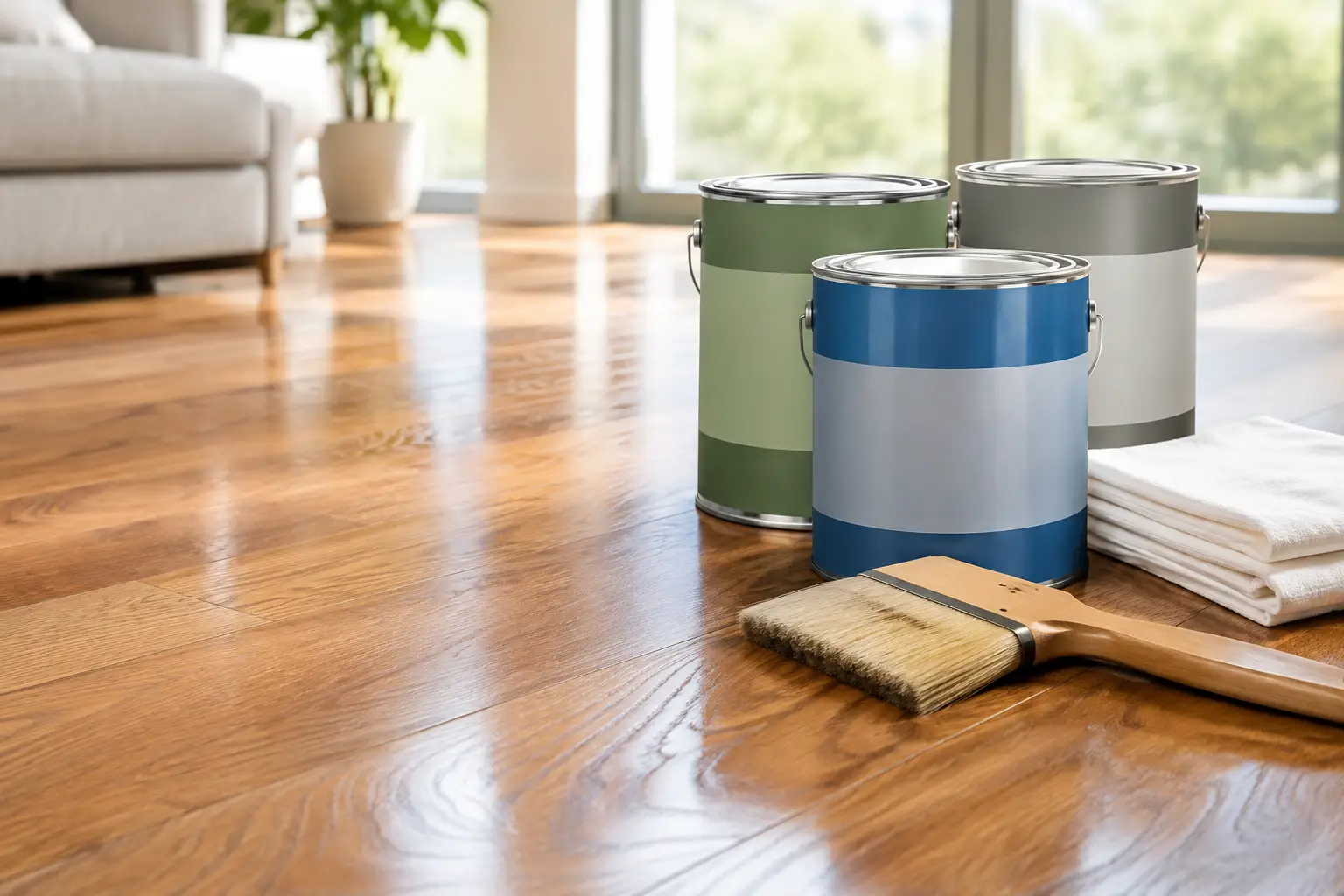
Once the wood is properly sanded, it can be left natural or stained. Then the protective finish is applied. This is where beauty and performance meet. Modern low-VOC finishes offer strong durability, faster dry times, and better indoor air quality than many older products, which is especially important for families living through a renovation.
When wood floor sanding is the right choice
Sanding is often the right solution when the floor has cosmetic wear but still has sound wood beneath it. If the finish has turned dull, scratched, cloudy, or uneven, sanding can restore clarity and depth. It is also a strong option when homeowners want to update the appearance of existing hardwood without removing a floor that still has decades of life left.
This is especially relevant in older homes across Maryland, Northern Virginia, and Washington-area neighborhoods where original hardwood is often one of the home’s best features. A well-sanded and refinished floor preserves that character in a way replacement rarely can.
Still, the decision depends on the floor’s construction and history. Solid hardwood usually offers the most flexibility because it can often be sanded multiple times over its lifespan. Engineered hardwood varies. Some products have a thick enough wear layer to support sanding, while others do not. An expert assessment prevents costly mistakes.
What sanding can and cannot fix
Sanding can do a great deal, but knowing its limits helps homeowners make better decisions.
It can usually address worn finish, light surface scratches, moderate discoloration, and many shallow imperfections. It can often improve the look of minor waviness or small lippage between boards. It can also dramatically improve floors that were previously coated with incompatible or aging finishes.
It cannot reliably erase deep black stains from pet urine if the wood fibers are heavily penetrated. It will not solve moisture problems that are still active. It will not correct structural subfloor issues on its own. And if a floor has already been sanded too many times, removing more material may not be responsible.
That is why the best refinishing plans are not generic. They are built around the species, thickness, age, finish history, and performance needs of the home.
Why professional sanding matters
Wood floor sanding looks straightforward until the machines touch the floor. In practice, it is a precision trade. The operator has to read grain direction, control cut depth, manage transitions, and keep the floor flat without leaving machine marks. Even small errors can become permanent visual defects once stain and finish are applied.
Dust control is another major factor. Modern sanding systems can significantly reduce airborne dust when used correctly, helping protect the home and keeping the project cleaner. Just as important, a professional crew knows how to isolate the work area, protect adjacent surfaces, and manage the project with respect for the home itself.
There is also the question of finish quality. A beautiful final result does not come from sanding alone. It comes from sanding, preparation, stain control, product selection, and proper coating application working together. That level of execution is where true floor craftsmen stand apart.
What homeowners should expect during the project
Most sanding projects involve some disruption, but the scope depends on square footage, floor condition, repair needs, and the type of finish being used. Furniture must be removed, and the rooms being worked on generally need to stay off-limits during sanding and finishing.
Dry times vary by product. Some modern finishes cure more quickly than traditional systems, but even fast-drying products require proper care in the early days. Rugs, heavy furniture, and pets may need to stay off the floor longer than homeowners expect. A good contractor sets those expectations clearly from the start.
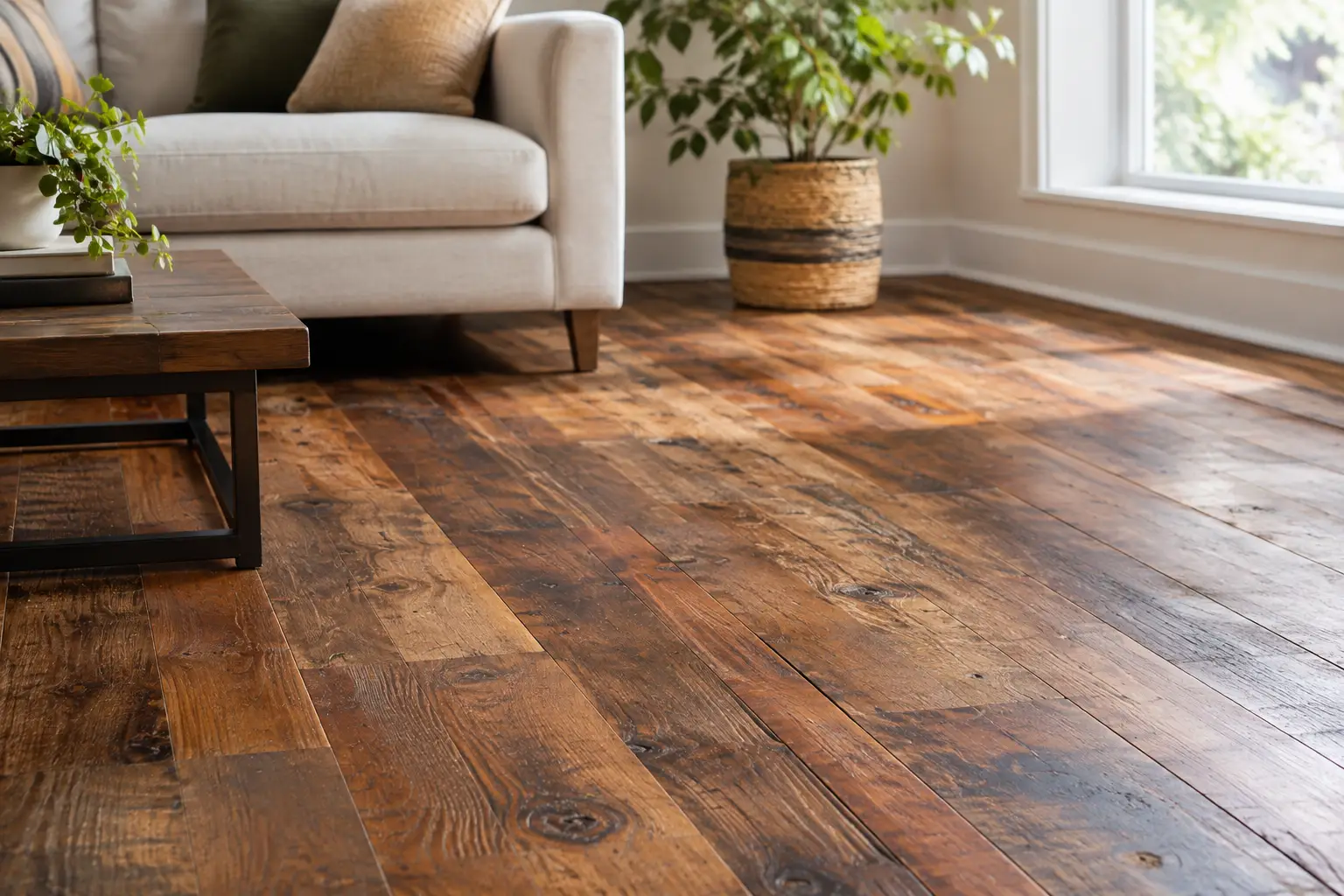
The payoff is substantial. When the process is handled correctly, the floor does not just look cleaner. It looks intentional again. Grain becomes more visible. Light reflects evenly. The room feels finished in the true sense of the word.
Is every wood floor a candidate for sanding?
No, and that is an important part of an honest recommendation. Some floors are better served by a screen-and-coat maintenance service if the finish is lightly worn but the wood itself does not need full sanding. Others may need partial board replacement before refinishing. In some cases, replacement is the wiser investment, particularly if the floor has extensive damage or incompatible prior materials.
For premium homes, the right answer is rarely the fastest one. It is the one that protects the integrity of the wood and the long-term value of the space. That philosophy has guided craftsmen for generations, and it remains just as relevant today.
A better way to think about wood floor sanding
Wood floor sanding is not just surface removal. It is surface renewal with judgment behind it. The goal is not to strip a floor down for the sake of it, but to restore proportion, clarity, and durability so the wood can perform beautifully for years to come.
When approached with skill, sanding gives an older floor another chapter rather than an ending. For homeowners who value real materials, thoughtful restoration, and the kind of workmanship that holds up under close inspection, that makes all the difference.