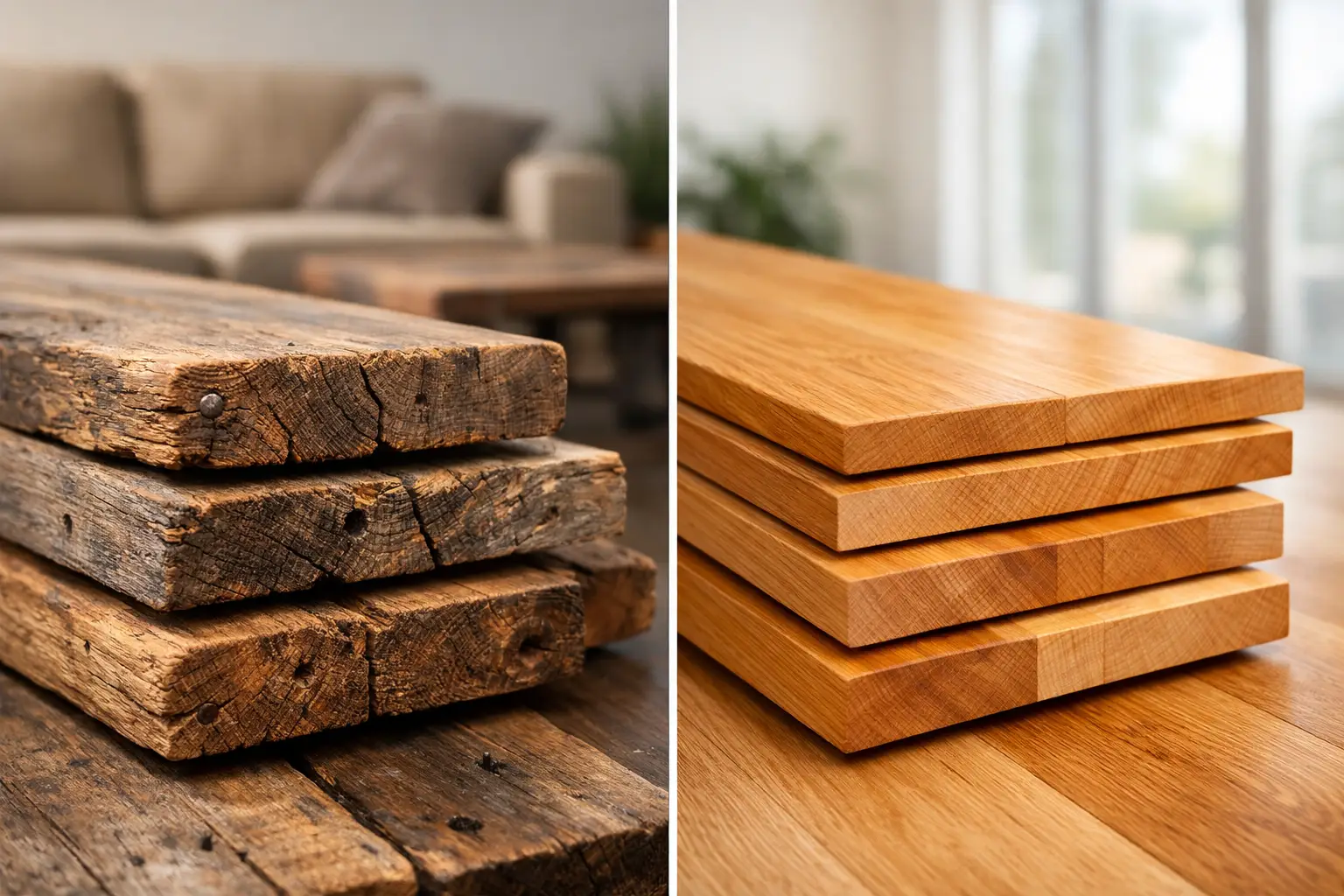
A floor is not merely a surface underfoot. It sets the visual temperature of a room, carries the wear of daily life, and often becomes more beautiful as the years pass. When homeowners are weighing reclaimed wood vs new hardwood, the real decision is not simply old versus new. It is a choice between distinct histories, installation requirements, design possibilities, and expectations for how the floor will live in the home.
For a historic residence in Annapolis, a waterfront retreat on the Eastern Shore, or a carefully planned renovation in Potomac or McLean, either material can be exceptional. The right answer depends on the condition of the space, the look you want to achieve, and the level of variation you are prepared to embrace.
Reclaimed wood vs new hardwood: the essential difference
New hardwood is milled from recently harvested timber, graded for appearance, and manufactured to consistent dimensions. It offers a broad range of species, board widths, stains, textures, and construction types. Because the material is produced for modern flooring applications, it is generally easier to source in predictable quantities and install with a refined, controlled result.
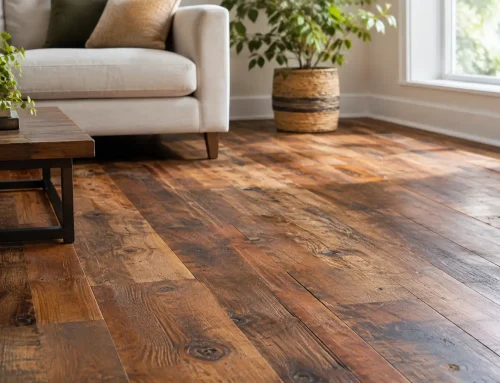
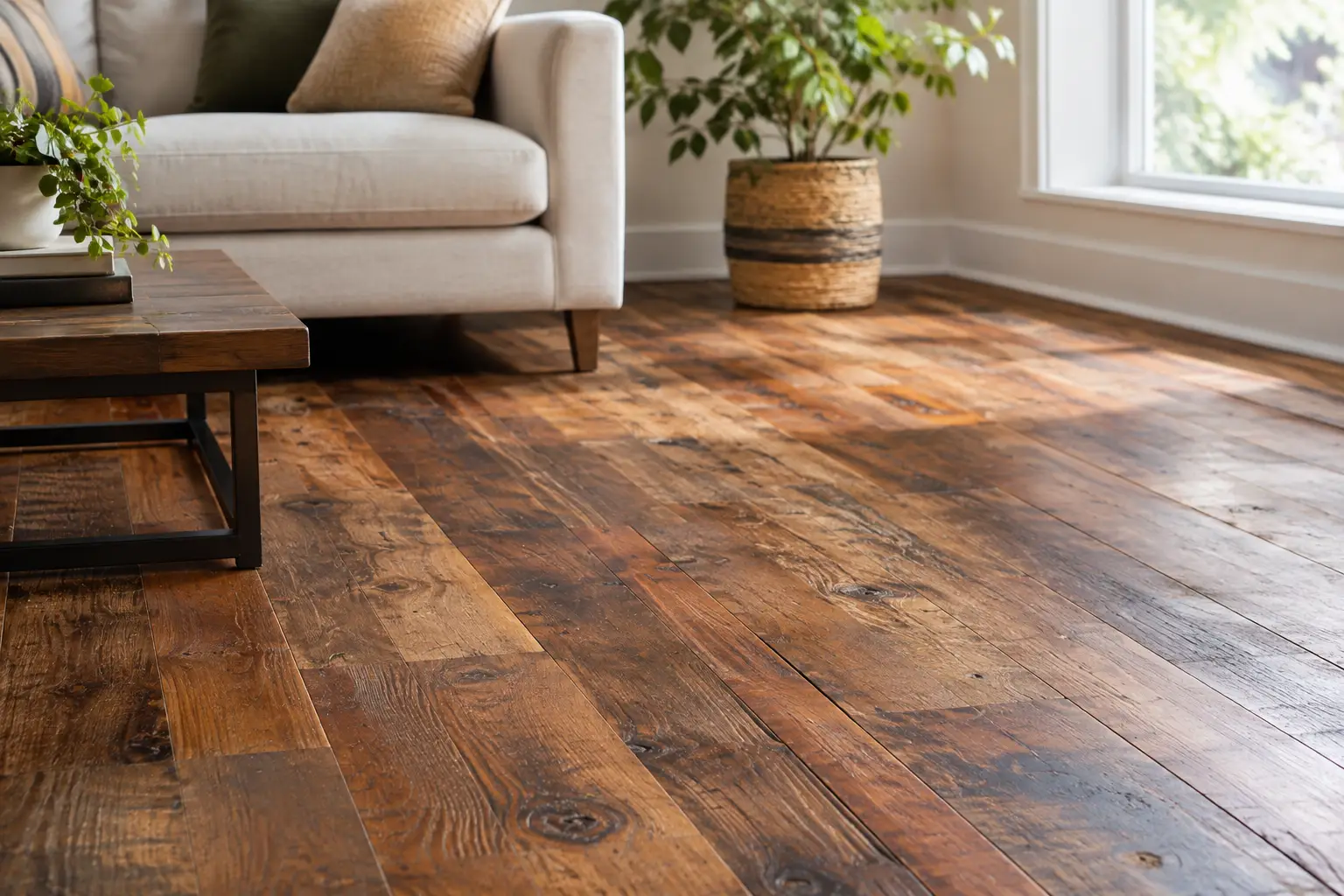
Reclaimed wood is recovered from older structures, such as barns, warehouses, agricultural buildings, and industrial sites. Its appeal lies in what cannot be manufactured convincingly: nail marks, mineral streaks, weathered patina, irregular grain, and the deep color that develops over decades. Each board has already lived a previous life, and that history remains visible.
This distinction affects more than appearance. Reclaimed boards must be carefully inspected, de-nailed, dried, milled, and graded before they become a suitable floor. Quality reclaimed flooring is not simply salvaged lumber laid indoors. It is a material that has been prepared with patience and technical discipline.
Character is the strongest argument for reclaimed wood
If your design calls for authenticity rather than uniformity, reclaimed wood has unusual power. It can make a newly renovated home feel established, give a kitchen or great room an architectural center, and complement original beams, brick, plaster, or period millwork without looking staged.
Reclaimed heart pine, oak, chestnut, and other older-growth materials often display tighter growth rings than many newly available boards. That visual density can create remarkable depth, especially in wide-plank floors where the grain has room to speak. Natural color variation is also part of the appeal. A reclaimed floor may shift from honey and amber to tobacco brown within the same room.
That character is not for everyone. Homeowners who prefer a quiet, even field of color may find reclaimed wood too active or unpredictable. Knots, filled voids, surface variation, and occasional signs of its former use are features, not defects, but they must suit the architecture and the owner’s taste.
New hardwood offers its own kind of beauty: clarity, consistency, and flexibility. Rift- and quarter-sawn white oak can feel tailored and calm. Walnut brings rich, formal depth. Maple provides a cleaner, lighter grain. With new hardwood, it is easier to select a precise grade and finish that supports a contemporary, transitional, or traditional interior without introducing too much visual movement.
Durability depends on preparation, not age alone
A common assumption is that reclaimed wood is automatically harder or more durable because it is old. The truth is more nuanced. Some reclaimed flooring comes from old-growth timber that can be dense and exceptionally stable. However, species, cut, moisture content, milling quality, subfloor preparation, and finish all matter more than a board’s age alone.
A well-made new white oak floor can serve a household beautifully for generations. It can be sanded and refinished multiple times, repaired when needed, and maintained with relative ease. A carefully prepared reclaimed floor can do the same, while bringing a level of visual texture that makes small dents and scratches less noticeable.
For busy families, that last point can be meaningful. A hand-textured reclaimed floor tends to accept life gracefully. A dropped toy, a dog’s hurried turn at the doorway, or an occasional scratch may blend into its existing character rather than stand apart. A smooth, uniform new floor may show fresh damage more readily, particularly in darker stains or high-gloss finishes.
Neither choice is maintenance-free. Hardwood performs best when humidity is reasonably stable, spills are addressed promptly, and entryways are protected from grit and moisture. The finish is also critical. Modern, very low-VOC finishes can provide strong wear resistance while supporting healthier indoor air quality and reducing the wait before a home can be enjoyed again.
Installation is where the comparison becomes practical
Reclaimed flooring asks more of the installer. Board widths may vary, lengths can be more irregular, and the material can contain hidden stresses from its earlier life. Before installation, each shipment should be evaluated for moisture, flatness, milling consistency, and usable yield. The subfloor must be properly assessed and corrected before the first board is set.
This is especially significant with wide planks. Wide reclaimed boards make a striking statement, but they demand meticulous acclimation, proper fastening, thoughtful layout, and appropriate expansion space. A floor’s beauty is only as dependable as the preparation beneath it.
New hardwood typically offers greater consistency from board to board, which can simplify planning and reduce material waste. That does not make it a casual installation. Fine hardwood work still requires precise moisture testing, careful racking, clean transitions, and expert attention to the room’s sightlines. But it does make the final result more predictable, particularly for large projects with a firm schedule.
Homeowners should also consider where the flooring will be installed. Solid reclaimed or new hardwood is usually best above grade and in climate-controlled areas. For a lower-level space, a concrete slab, or an area with greater moisture exposure, engineered hardwood may be the wiser choice. It provides the look of real wood with a layered construction designed for improved dimensional stability.
Cost is about material, labor, and the cost of getting it right
Reclaimed wood often carries a higher initial price because its supply is limited and its preparation is labor-intensive. The purchase price may also reflect wider planks, uncommon species, or a particular provenance. Installation can cost more as well, particularly when boards require additional sorting, custom milling, or repair before they can be placed.
New hardwood spans a wider price range. Select-grade oak may offer a more accessible path to a premium floor, while wide-plank walnut or custom-finished white oak can rival or exceed many reclaimed options. The most useful comparison is not reclaimed versus new in the abstract. It is the complete project cost for the exact species, grade, width, finish, subfloor work, and installation complexity your home requires.
A lower material price does not compensate for poor preparation or rushed workmanship. Flooring is a long-term investment, and correcting movement, gaps, unevenness, or finish failure after installation is far more disruptive than doing the work properly from the start.
How to choose the floor that belongs in your home
Choose reclaimed wood when the goal is singular character, an established sense of place, and a floor that welcomes variation. It is particularly compelling in historic homes, homes with substantial natural materials, and spaces where wide planks and visible grain can anchor the design.
Choose new hardwood when you want greater control over color, grading, dimensions, and delivery timing. It is often the stronger choice for a crisp contemporary renovation, a room requiring a very specific palette, or a project where consistent material availability is essential.
There is also a middle ground. New hardwood can be wire-brushed, hand-scraped, smoked, or custom-finished to create texture and depth without the sourcing variables of reclaimed material. Conversely, reclaimed wood can be milled and finished with remarkable precision, allowing its history to feel refined rather than rustic.
At Royal Oaks Flooring, the starting point is always the home itself: its architecture, light, subfloor conditions, daily use, and the level of character the owner wants to see every morning. The best floor is not the one with the strongest trend or the most dramatic story. It is the one whose material, finish, and craftsmanship continue to feel right after the renovation is long finished.