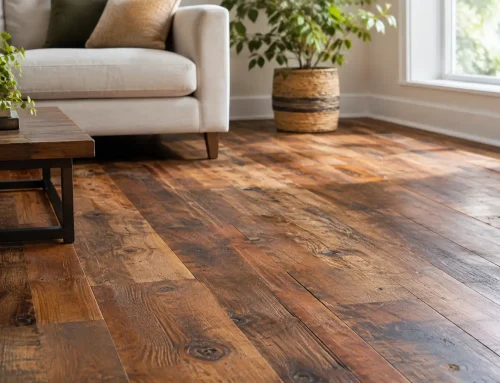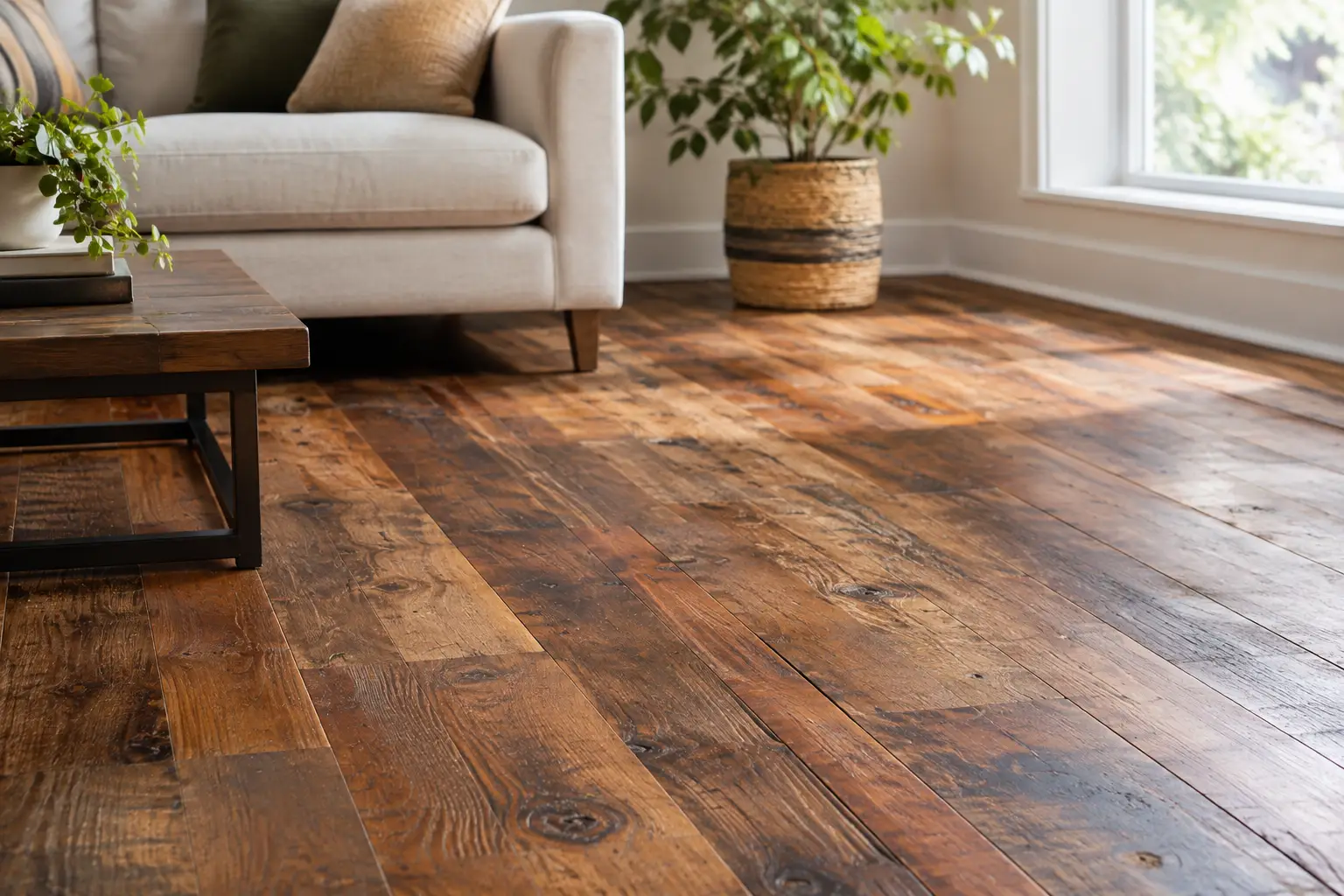
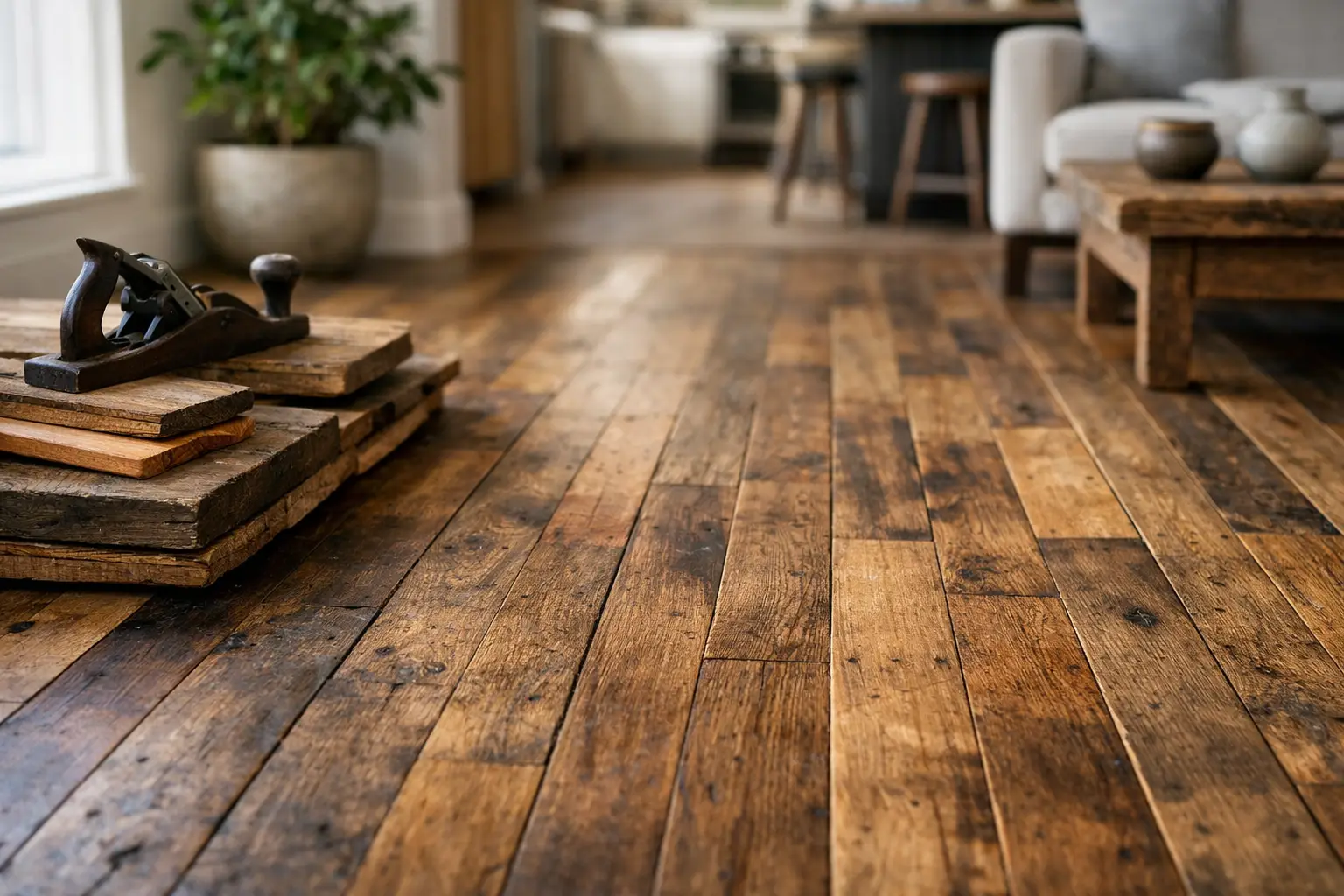
A reclaimed wood floor can carry more visual depth in a single board than many new floors develop over years of use. Saw marks, knot shadows, mineral streaks, old nail holes, and gentle shifts in color give the material a history that cannot be manufactured on demand. This reclaimed wood flooring guide explains what to look for before bringing those one-of-a-kind boards into your home.
For design-conscious homeowners, reclaimed flooring is not simply a rustic choice. Properly selected and carefully installed, it can be refined, architectural, and remarkably versatile. It can suit an Eastern Shore farmhouse, a restored D.C.-area row house, or a contemporary home that needs warmth beneath clean-lined furnishings. The difference lies in the wood itself, the preparation behind it, and the craftsmanship of the installation.
What Makes Reclaimed Wood Different?
Reclaimed wood comes from a previous life. It may be recovered from barns, warehouses, factories, tobacco farms, river structures, or older residences. Its appeal begins with provenance, but its real value is often found in its maturity. Many reclaimed boards were cut from slow-grown trees, producing dense grain patterns that are less common in modern lumber.
That history also means variation. One lot may include boards with pronounced weathering and open knots, while another is milled from old-growth beams and has a cleaner, more formal appearance. Species matter as much as source. Reclaimed oak offers familiar strength and adaptable grain; heart pine brings warmth and distinctive amber tones; walnut creates a quieter, richer statement; and chestnut, when available, offers exceptional character and rarity.
The word reclaimed should not be treated as a promise of quality by itself. Wood that has survived for a century still requires expert inspection, moisture testing, metal detection, milling, and grading before it is ready to become a dependable floor.
Choosing the Right Character Level
The most successful reclaimed floor fits the architecture of the home without turning every room into a theme. Start by deciding how much visible history you want underfoot. A heavily distressed floor may feature filled nail holes, cracks, surface checking, color movement, and broad variation from board to board. This is a strong choice for homes where the floor is intended to be a central design feature.
A more select grade can retain the depth of reclaimed material while presenting a calmer surface. Boards may be carefully milled, lightly wire-brushed, and finished to preserve grain without emphasizing every mark. This approach often works beautifully in updated colonials, tailored waterfront homes, and renovations that balance traditional details with modern cabinetry and lighting.
Width deserves the same attention. Wide planks create a generous, uninterrupted look and show off the wood’s natural variation. They also require more careful subfloor preparation and disciplined acclimation than narrow-strip flooring. In rooms with significant seasonal humidity changes, the installer must allow the floor to move as wood naturally does. A floor should never be forced into stillness at the expense of its long-term performance.
Ask About the Source and Milling Process
A reputable supplier should be able to explain the wood’s species, likely origin, moisture content, dimensions, and how it was processed. Ask whether the boards were de-nailed and metal-scanned, kiln-dried or otherwise conditioned, and milled with tongue-and-groove edges. These are not minor details. Hidden fasteners can damage tools and compromise installation, while poorly dried lumber can create excessive gaps, cupping, or movement after installation.
It is also wise to view a generous sample, not just a single display board. Reclaimed wood is defined by variation. Looking at several boards together gives a more honest sense of the color range, knot frequency, texture, and amount of patching that will appear across an entire room.
Installation Is Where the Floor Earns Its Longevity
Reclaimed material asks more from an installer than standard prefinished flooring. Each board may differ slightly in width, grain direction, or straightness. That does not make it inferior. It means the installer must understand how to sort boards, blend color and character, manage irregularities, and maintain a balanced layout from the first row to the last.
Before installation begins, the job site must be ready. The home should be enclosed, HVAC should be operating under normal living conditions, and wet work such as plaster, tile, and painting should be complete. The subfloor must be dry, flat, clean, and structurally sound. A beautiful reclaimed floor installed over an unstable subfloor will not perform like a beautiful floor for long.
Acclimation is equally important, although it is not simply a matter of leaving boxes in the room for a few days. The goal is to bring the wood into balance with the expected indoor environment. Professional moisture readings of both the flooring and subfloor help determine when that condition has been reached.
For wide-plank installations, fastening schedules, adhesive selection, expansion space, and board layout require particular care. Depending on the product and subfloor, a combination of adhesive and mechanical fastening may be appropriate. The right method depends on the flooring construction, plank width, site conditions, and manufacturer guidance, not on a one-size-fits-all installation habit.
Finish Choices Shape the Final Look
The finish is not an afterthought. It determines whether reclaimed wood reads as raw and weathered, softly refined, or deeply polished. A matte or low-sheen finish is often a natural fit because it lets texture and grain remain the focus. It also tends to make everyday dust and small surface marks less noticeable than a high-gloss floor.
Color should be approached with restraint. Many homeowners choose reclaimed wood because they want its natural depth, and opaque stains can conceal the very qualities that make it special. That said, a carefully chosen stain or reactive treatment can unify boards from different sources, soften strong orange or red undertones, or better coordinate the floor with existing millwork.
Modern waterborne finishes offer meaningful advantages for occupied homes. High-performance, very low-VOC, Green Guard certified systems can dry quickly, reduce lingering odor, and provide strong wear protection without burying the wood beneath an artificial-looking coating. The best finish is the one that respects the character of the boards while matching how the household actually lives.
Expect Patina, Not Perfection
A reclaimed wood floor will evolve. Sunlight may deepen or mellow the color. Dogs, children, moved furniture, and daily life can add small marks. For many owners, that is not a failure of the floor but part of its appeal. Reclaimed wood has already proven that it can carry history gracefully.
Still, there is a difference between an honest patina and preventable damage. Use felt pads under furniture, place breathable mats at exterior entries, clean spills promptly, and avoid soaking the floor with water. Vacuum with a hardwood-safe attachment or use a dry microfiber mop regularly. When cleaning is needed, use a product designed for the finish on the floor rather than oil soaps, waxes, or harsh household cleaners.
Budget for Material, Preparation, and Skill
Reclaimed flooring is often more expensive than conventional hardwood, but material cost tells only part of the story. The price can reflect sourcing, transportation, de-nailing, milling, grading, waste allowance, custom staining, job-site preparation, and the added labor required to install boards with genuine variation.
A lower material price may be attractive until the boards arrive with inconsistent milling, excessive moisture, or insufficient quantity to sort out defects. Conversely, premium reclaimed material can be an excellent long-term investment when it is properly prepared and installed by craftsmen who understand its behavior. The practical question is not whether reclaimed wood costs more. It is whether the material, finish, and installation standard align with the life you expect from the floor.
Is Reclaimed Wood Right for Your Home?
Reclaimed wood is an exceptional choice for homeowners who value individuality, natural materials, and a floor with visual depth that cannot be duplicated from one house to the next. It is especially compelling in restorations and custom renovations where standard flooring would feel too new, too uniform, or too detached from the home’s character.
It may be less suitable when a project requires perfectly consistent color, near-flawless boards, or the lowest possible upfront cost. In those cases, select-grade new hardwood or a carefully chosen engineered wood product may deliver a better fit. Good flooring decisions are guided by the home, the family, and the desired result, not by a trend.
When reclaimed wood is sourced thoughtfully, acclimated correctly, and installed with exacting care, it becomes more than a surface. It becomes the material that quietly anchors the room for generations. Royal Oaks Flooring approaches that work with the patience and precision that distinctive wood deserves.