A hardwood floor can look very different on a showroom sample than it does across a sunlit living room, beside original millwork, or through the open sightlines of a renovated kitchen. That is why the choice between prefinished vs unfinished hardwood deserves more than a quick decision based on color. Both can deliver a beautiful, long-lasting floor. The better choice depends on the character of the home, the desired level of customization, the installation conditions, and how much disruption the project can accommodate.
For many homeowners, prefinished flooring offers speed and predictability. Unfinished hardwood offers a more tailored, unified result. The distinction is not simply convenience versus quality. With the right material, preparation, and craftsmanship, either can become a floor worth living with for decades.
What Is Prefinished Hardwood?
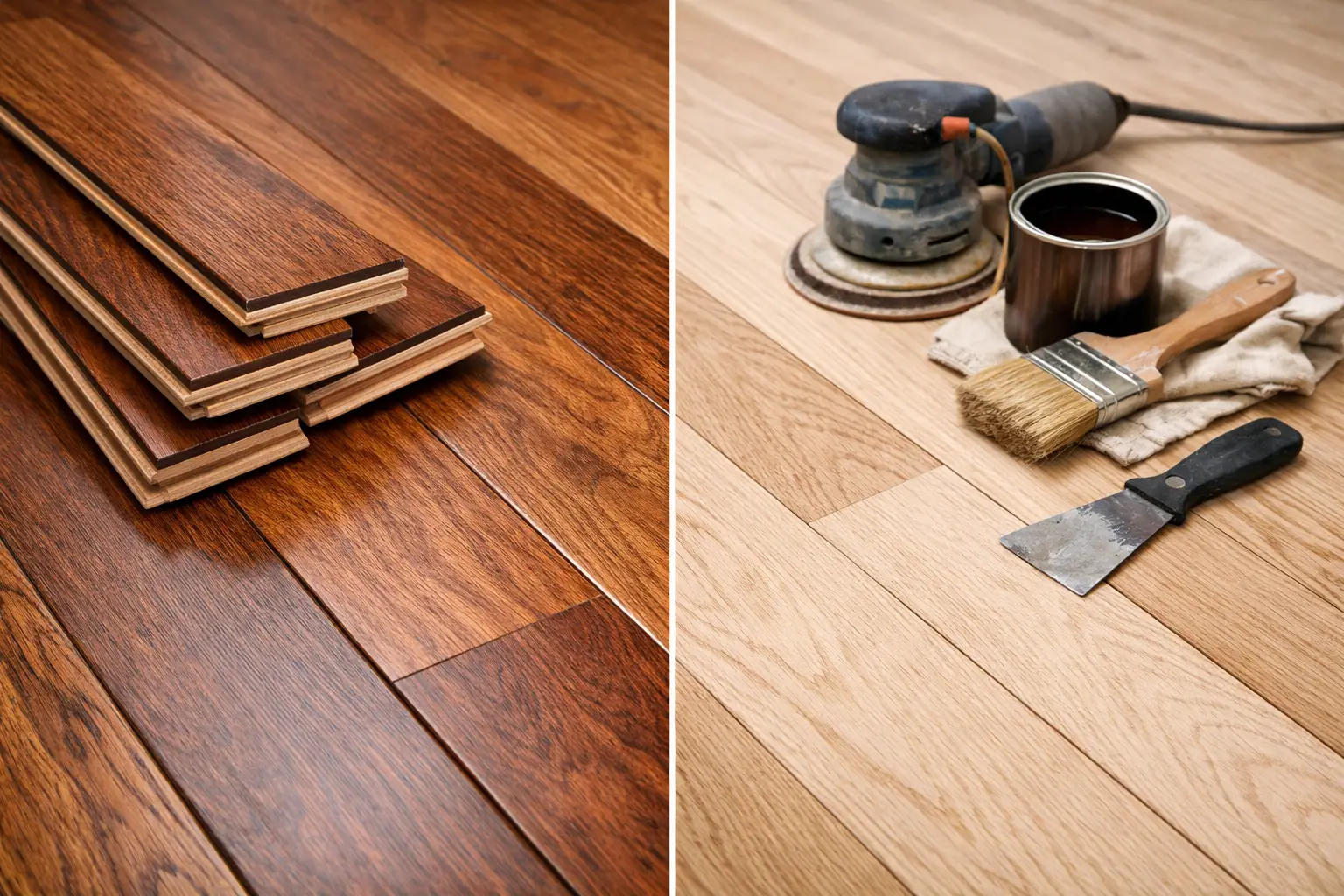
Prefinished hardwood is sanded, stained if applicable, and coated at the factory before it arrives at the home. Boards are ready to install, with a durable finish already cured under controlled manufacturing conditions. Many premium prefinished products use aluminum oxide or similarly resilient coatings designed to stand up well to everyday traffic.
Because the finishing is complete before installation, a prefinished floor generally eliminates on-site sanding, staining, and finish curing. This can shorten the active work period considerably and reduce dust and odor in the home. For an occupied residence, a project with a tight move-in deadline, or a straightforward replacement of existing flooring, those benefits can be meaningful.
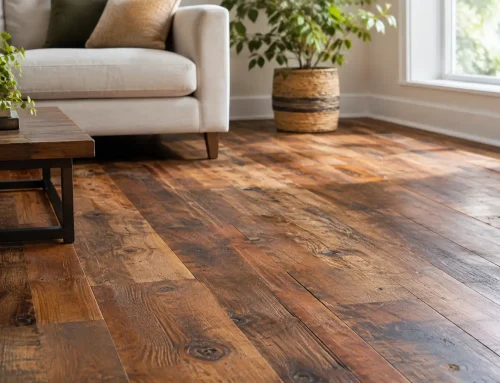
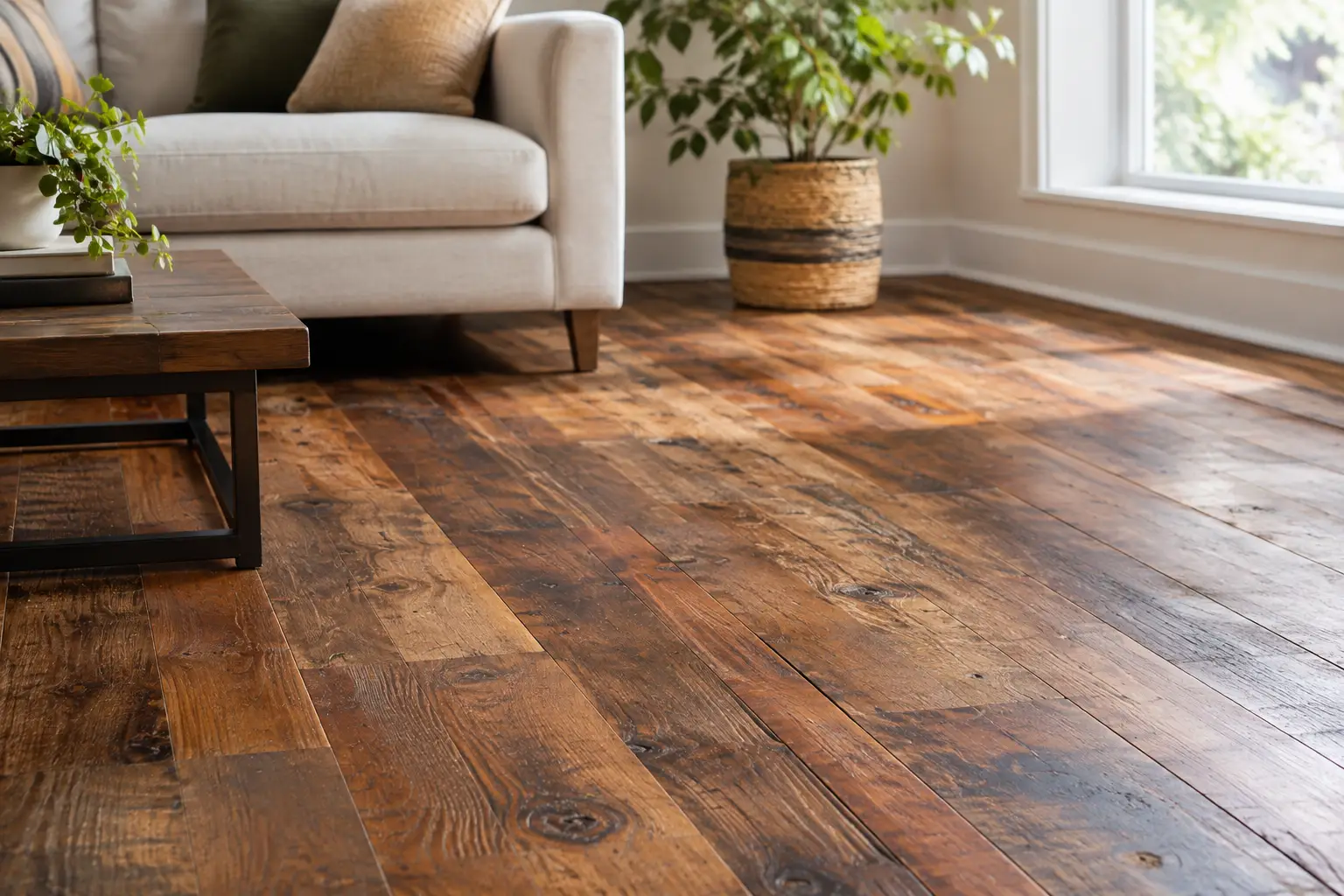
Prefinished boards usually have subtly beveled edges where each plank meets the next. These micro-bevels help accommodate slight variations between boards and protect the factory finish during installation. They are a familiar part of the prefinished look, but they also create a more defined plank-to-plank line than a floor sanded and finished after installation.
Where Prefinished Flooring Makes Sense
Prefinished hardwood is often a strong fit when the selected color and plank profile are already right for the space. It is especially practical for bedrooms, upper-level renovations, investment properties, and homes where minimizing on-site finishing work is a priority.
It can also be an excellent choice when a homeowner wants the assurance of a specified factory finish. The key is choosing a product with a substantial wear layer, stable construction, and a finish appropriate for the household. Not every factory-finished floor is equal. Species, board grade, milling quality, and manufacturer specifications all affect how the finished floor will perform.
What Is Unfinished Hardwood?
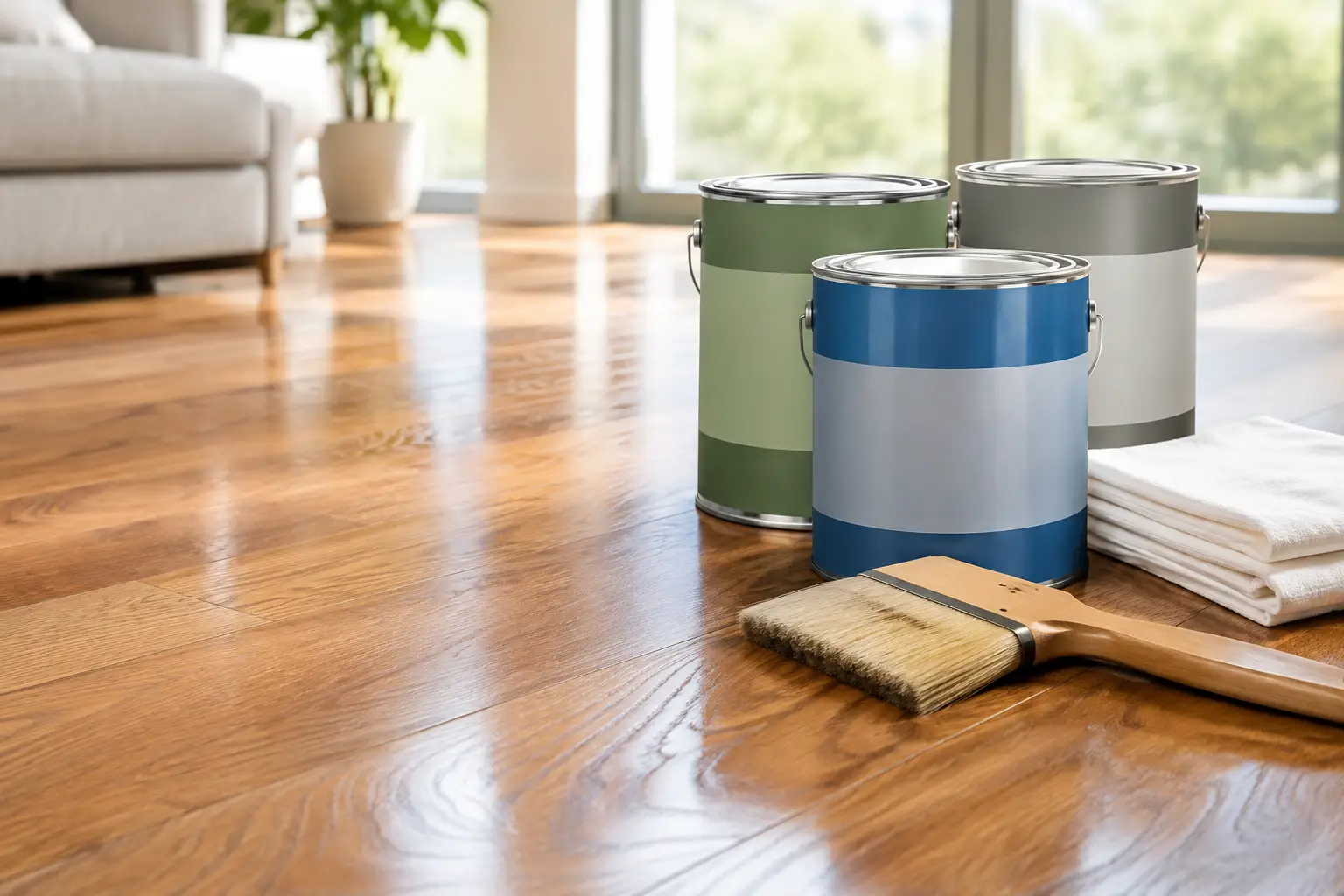
Unfinished hardwood arrives as raw wood. The boards are installed first, then sanded as one continuous surface, stained if desired, and sealed with finish on site. This process gives the installer and homeowner far greater control over the final appearance.
With unfinished flooring, the floor can be matched to existing woodwork, adjacent historic flooring, cabinetry, or a specific design palette. A white oak floor can be kept natural and quiet, warmed with a custom brown tone, or finished in a richer shade that complements a traditional home. The same flexibility is valuable when working with walnut, maple, cherry, reclaimed material, or wide planks that deserve a carefully considered finish.
The result is typically a smoother, more monolithic surface with minimal visible beveling between boards. In a formal dining room, a historic restoration, or an open-plan main level where hardwood carries through several rooms, that continuous appearance can be striking.
The On-Site Finishing Difference
Modern on-site finishing has come a long way from the strong odors and long cure periods many homeowners remember. High-performance, very low-VOC, Green Guard certified finishes can dry quickly while supporting healthier indoor air quality. Still, unfinished hardwood requires additional time for sanding, staining, coating, and curing. The home must be managed carefully during that phase.
An experienced flooring professional will also account for humidity, temperature, subfloor conditions, and the wood’s acclimation period before installation. Those details are central to a stable floor, particularly in the D.C. Metro region and along the Eastern Shore, where seasonal moisture changes can be significant.
Prefinished vs Unfinished Hardwood: The Real Trade-Offs
The most visible difference is customization. Unfinished flooring gives homeowners nearly unlimited control over stain color and sheen, while prefinished flooring limits the project to available factory options. That does not make prefinished generic. Many manufacturers offer refined colors, wide-plank formats, matte finishes, and character grades. But if the goal is a precise custom tone, unfinished is usually the more reliable path.
Installation timeline is the other major divide. Prefinished material can often be installed with less interruption because there is no need to sand and apply finish in the home. Unfinished floors take longer, though the added time is often justified when the floor is a defining architectural feature.
Durability requires a more nuanced comparison. Factory-applied finishes can be exceptionally hard and abrasion-resistant. On-site finishes, however, are also highly durable when properly specified and applied, and they allow a professional to build a finish system suited to the room’s use. A busy entry, a family room with dogs, and a formal sitting room may not call for precisely the same approach.
Neither option is scratch-proof. Hardwood is real wood, and it develops character through use. The goal is not to create a surface that never changes, but to choose a finish that wears gracefully and can be maintained intelligently.
Repairs, Refinishing, and Long-Term Care
A floor should be evaluated not only for how it will look on installation day, but also for how it can be cared for ten or twenty years later. This is one area where unfinished flooring often has an advantage. Because the floor is sanded and finished as a whole after installation, future refinishing can restore a consistent appearance across the room.
Prefinished boards can also be refinished, provided the flooring has sufficient solid wood or wear-layer thickness. Yet spot repairs may be more noticeable because of the beveled edges and factory finish. Replacing a damaged board is possible, but matching color, sheen, and aging can require careful work.
For either type, regular maintenance protects the investment. Use felt pads beneath furniture, place quality mats at exterior doors, clean with products appropriate for the finish, and address spills promptly. Avoid excessive water and steam cleaning. The greatest enemy of a hardwood floor is not ordinary daily use, but moisture allowed to sit or move repeatedly into the wood.
Matching the Floor to the Home
In a historic home in Annapolis, Potomac, or the surrounding Maryland and Virginia communities, unfinished hardwood often provides the freedom needed to blend new flooring with established architectural details. It is particularly well suited to restoration work, custom inlays, transitions into existing rooms, and reclaimed wood with natural variation that should be finished as a unified surface.
In a contemporary renovation, prefinished wide-plank white oak may provide exactly the clean, restrained look the design calls for, while keeping the project moving efficiently. A carefully chosen matte factory finish can be practical and elegant, especially for a family that wants a finished space sooner.
Board width matters as much as finish type. Narrow strip flooring can feel traditional and detailed. Wide planks reveal more grain, create a calmer visual field, and can make a room feel more expansive. Species matters, too. Oak is versatile and forgiving, maple has a finer, more uniform grain, and walnut brings dramatic depth. The finish should honor those inherent qualities rather than obscure them.
How to Make the Right Choice
Start with the visual standard, not the product category. Ask whether the floor needs to match anything, whether a specific stain is essential, and whether visible micro-bevels would suit the intended design. Then consider the practical realities: Is the home occupied? Is there a firm move-in date? Are pets, children, or heavy foot traffic part of daily life?
It also helps to view large samples in the actual home. Light shifts throughout the day, and adjacent paint, cabinetry, and textiles can change the way a stain or wood species reads. A floor that looks perfect under showroom lighting may feel too cool, too red, or too uniform in a particular room.
The installation plan should be equally deliberate. Subfloor preparation, moisture testing, board layout, transitions, and finish selection all influence the final result. Royal Oaks Flooring approaches those decisions as part of the craft, because a premium hardwood floor is only as successful as the preparation beneath it and the judgment behind it.
A beautiful hardwood floor should feel settled into the home, not merely installed within it. Whether that calls for the efficiency of a refined prefinished product or the custom depth of an on-site finish, the right choice is the one that serves the home’s architecture and the way your family will live on it.