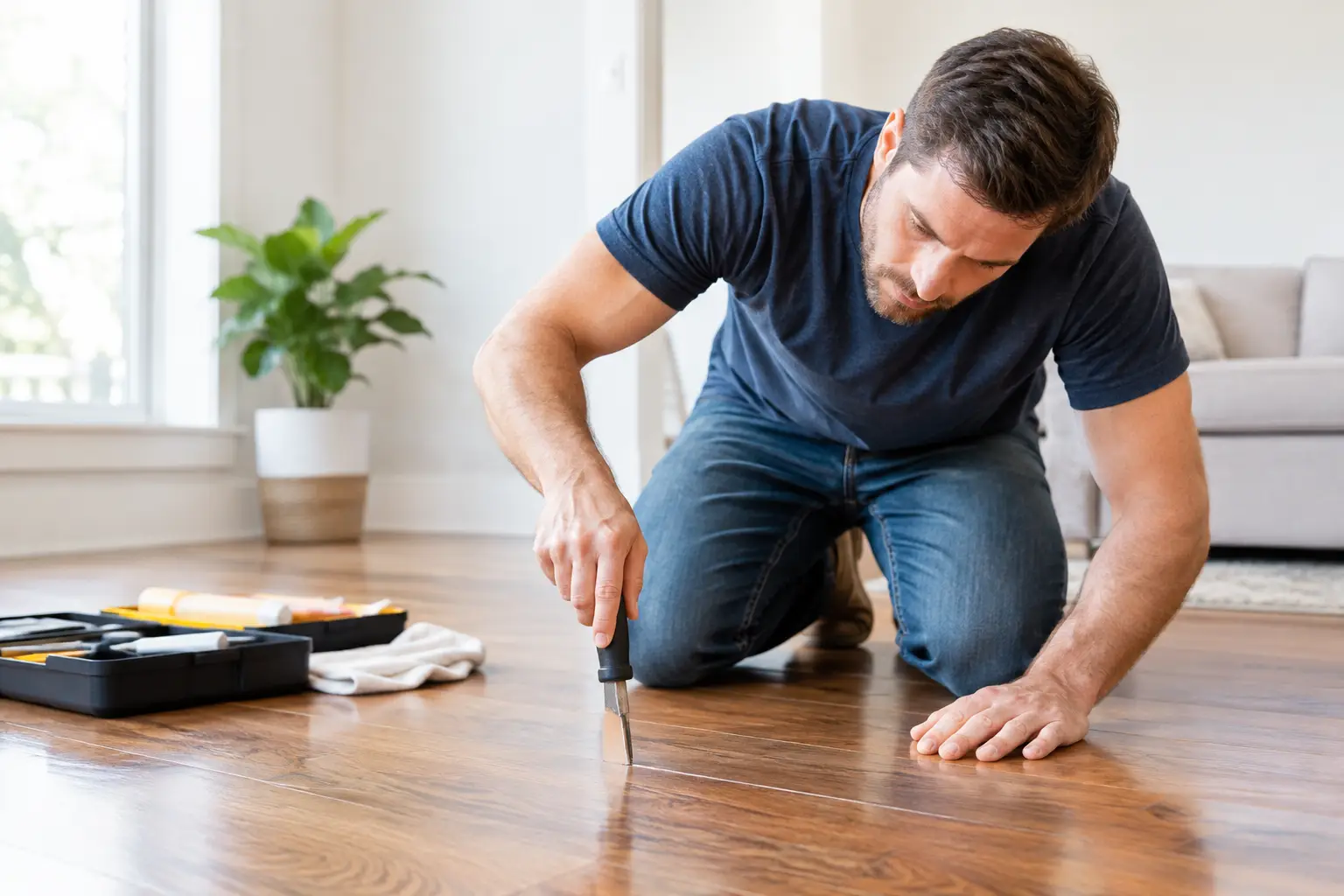
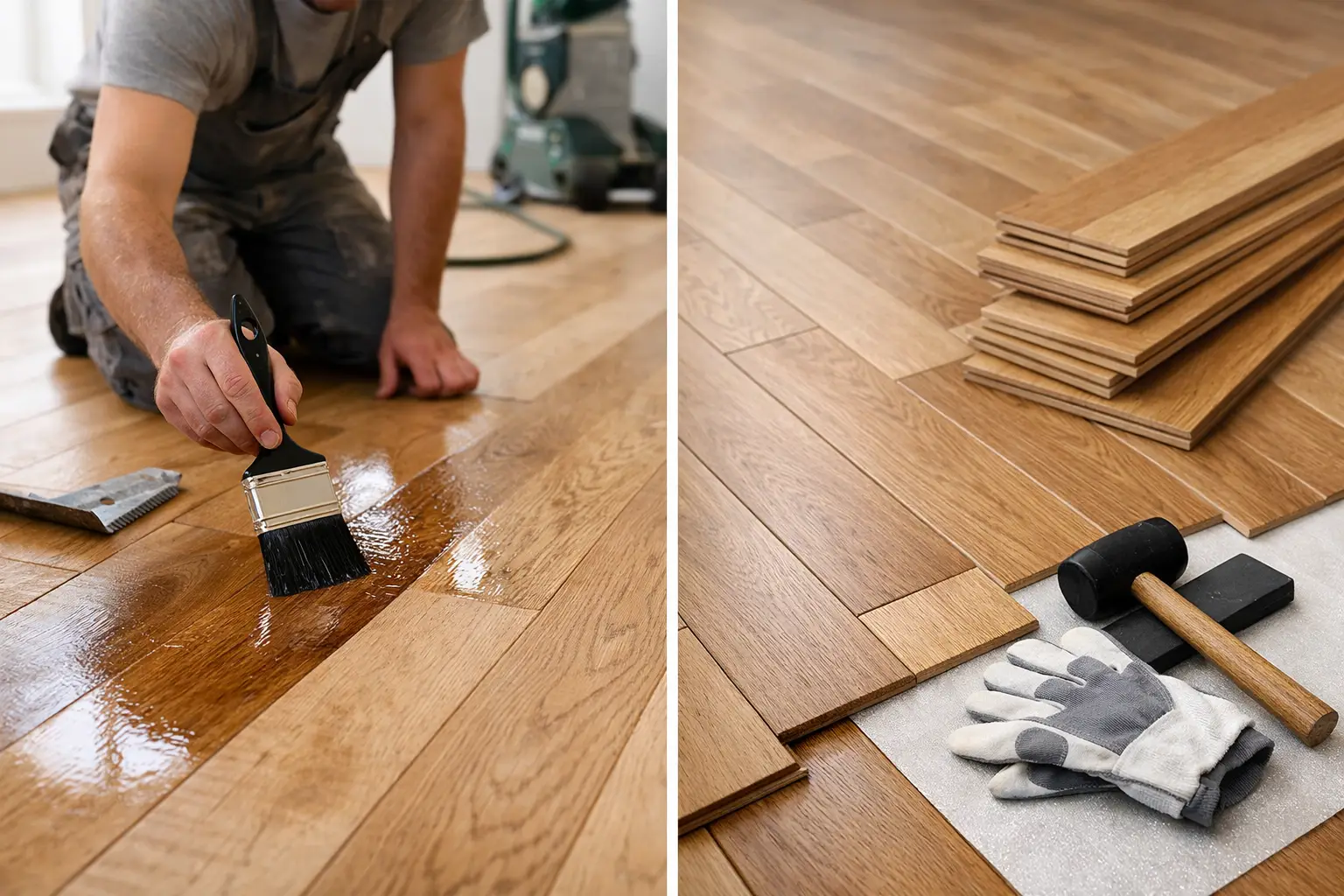
The decision between site finished versus factory finished hardwood is often made in a showroom, but it is truly decided in the finished room. One option may offer a carefully controlled factory coating and a shorter installation window. The other can create an uninterrupted, custom-crafted surface that gives the wood a deeper role in the architecture of your home.
Neither is universally better. The right choice depends on the material, the condition of the subfloor, the desired color, the project schedule, and how much visual continuity matters to you. For a premium hardwood floor, the distinction deserves more attention than a quick comparison of samples can provide.
What Is Factory-Finished Hardwood?
Factory-finished boards are sanded, stained when applicable, and coated before they arrive at your home. The manufacturer applies several layers of finish under controlled conditions, often using aluminum oxide or other highly wear-resistant systems. After installation, the floor is generally ready for normal use without a separate sanding and finishing process.
This approach is especially appealing for renovations with a firm move-in date. There is less dust on site, less odor, and no waiting for coats of finish to cure after the boards are installed. It can also be a sensible selection in a furnished home where containing a full sanding operation would be difficult.
The factory process produces consistent results board to board. For homeowners who want a clean, dependable finish in a classic or contemporary preselected color, that consistency is a genuine advantage. Many engineered hardwood products are also factory finished, making this route common when a thinner profile or greater dimensional stability is needed.
The Character of Beveled Edges
Most factory-finished hardwood has a small bevel along the edges of each plank. That bevel helps accommodate slight variations in board height and protects the coating during shipping and installation. It also means the individual boards remain visually defined after the floor is laid.
For some interiors, particularly a casual coastal home or a space with wider, more textured planks, this definition is attractive. In a formal dining room, a historic restoration, or a finely tailored custom home, some owners prefer the quieter appearance of a floor that reads as one continuous field of wood. That is where site finishing often stands apart.
What Is a Site-Finished Floor?
A site-finished floor is installed as unfinished wood, then sanded, stained if desired, and coated after the entire floor is in place. The craftsman levels the assembled surface and finishes it as a whole rather than treating each board as a separate prefinished piece.
The result can be exceptionally refined. Seams are softened, the texture is made consistent across the room, and the finish settles into a unified surface. With the right wood and installation, site finishing is especially well suited to traditional strip flooring, wide-plank oak, walnut, reclaimed material, and custom layouts with borders or feature details.
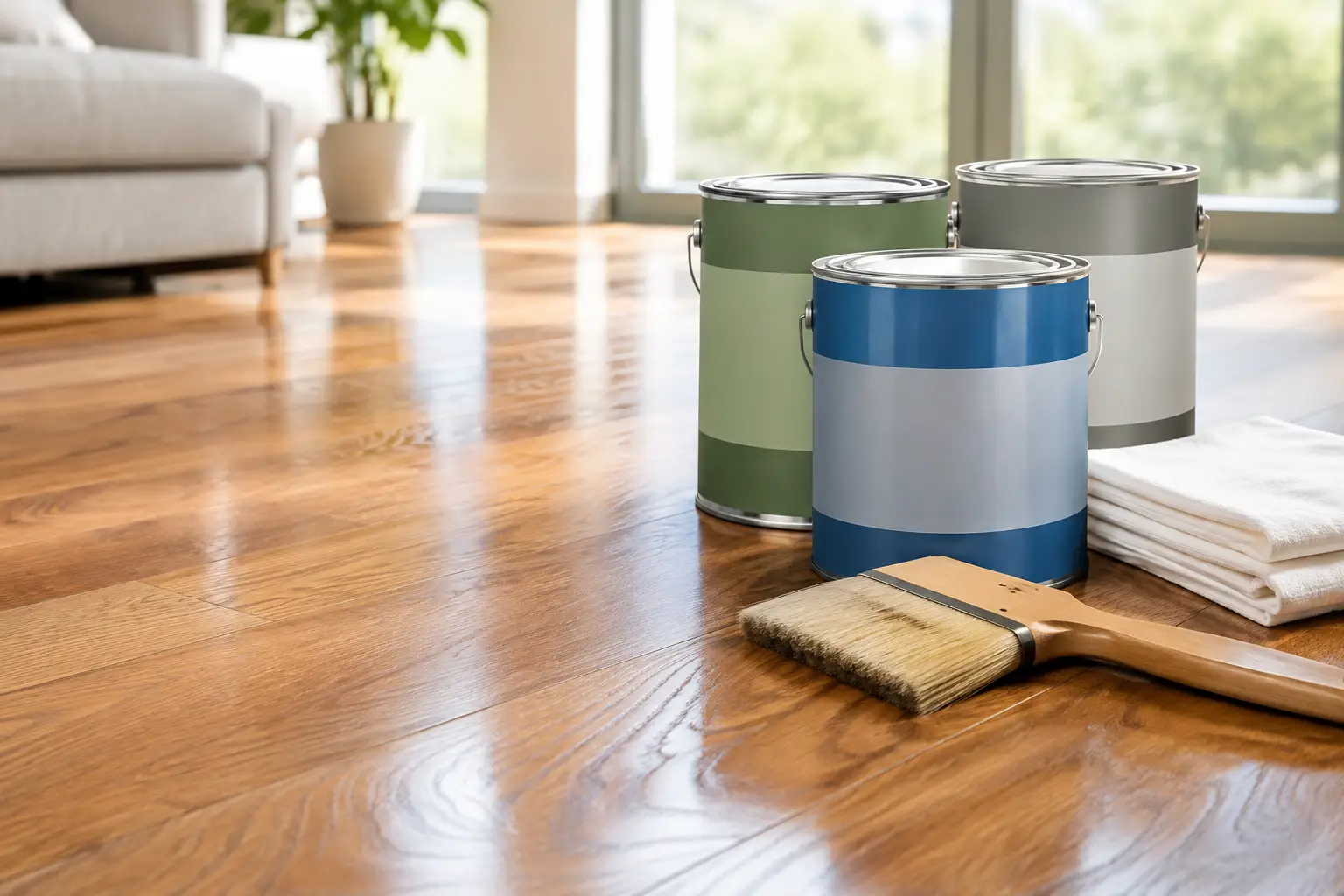
It also allows far greater freedom in color. Rather than selecting only from a manufacturer’s stain palette, homeowners can test tones in the actual room, where daylight, cabinet finishes, wall color, and existing millwork all influence the final effect. A pale natural oak may be exactly right in one home and feel too cool in another. A careful site sample reveals that before the full floor is committed.
Site Finished Versus Factory Finished: The Visual Difference
The most visible difference is continuity. A well-executed site-finished floor has a smooth, connected appearance, with minimal emphasis on individual plank edges. It can make a large room feel composed and expansive, while also giving custom woodwork and architectural details a more considered setting.
Factory-finished flooring has a more modular appearance because of its micro-bevels. This is not a flaw. It is simply a design characteristic. The best choice depends on whether you want crisp plank definition or an almost furniture-grade expanse of wood beneath your feet.
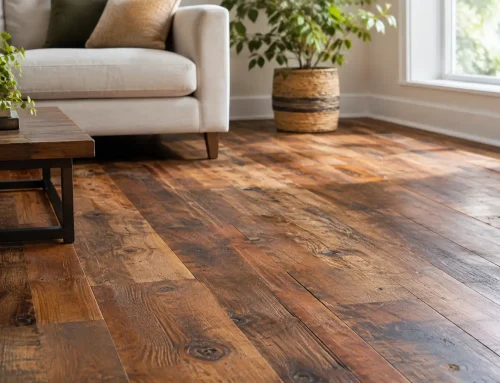
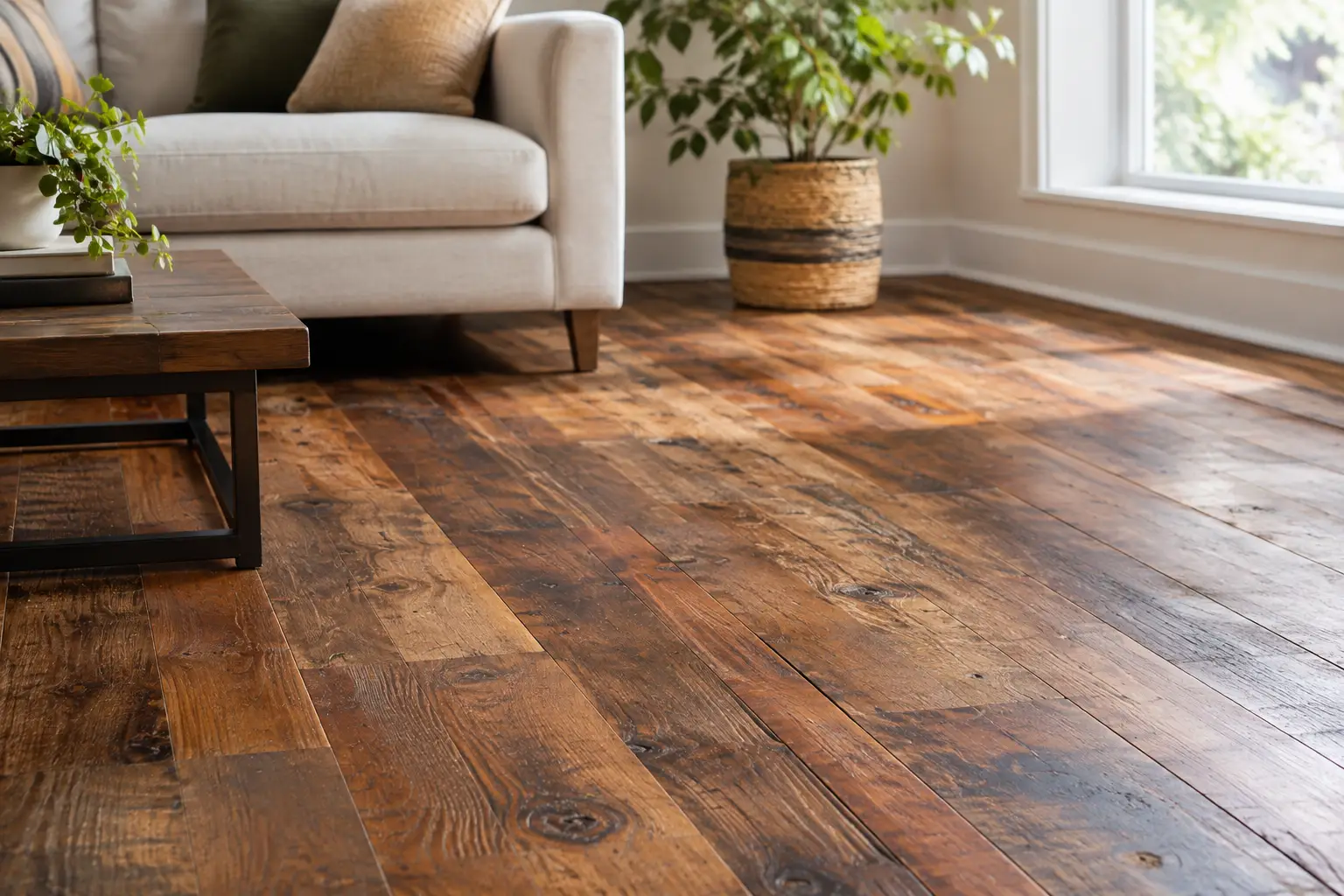
Wood selection matters as much as finish location. A character-grade white oak with knots, mineral streaks, and natural variation may look excellent with either approach. A clear-grade maple floor in a formal home may benefit more from the continuous, carefully controlled appearance of a site finish. Reclaimed wood, with its individual history and irregularities, often calls for experienced on-site work so the finished surface feels intentional rather than overly uniform.
Durability Is More Than a Finish Rating
Factory finishes are known for their abrasion resistance, and a quality factory-finished product can perform very well in active households. However, durability is not determined by the topcoat alone. The species, plank construction, moisture conditions, installation method, and maintenance habits all matter.
A site-applied finish from a skilled flooring professional can also provide excellent protection. Modern very low-VOC, quick-drying coatings offer strong wear resistance while supporting better indoor air quality. The advantage is that the system can be selected for the home and the wood itself. A family with large dogs, for example, may prioritize a forgiving satin sheen and a finish designed for straightforward renewal. A formal residence may favor a different look and maintenance plan.
No finish is immune to grit, standing water, or sharp impacts. Entry mats, felt pads beneath furniture, prompt cleanup, and a humidity-conscious home do more for a floor’s long-term condition than any promise of a scratch-proof coating. Hardwood earns its character over time, but thoughtful care keeps that character handsome.
Repairs and Future Refinishing
This is one of the most practical differences to consider before installation. With factory-finished floors, a damaged board can often be replaced individually, but matching the sheen, bevel profile, and color of an older floor may require care. Spot repairs can be more noticeable, particularly after years of sun exposure have mellowed the wood.
Site-finished floors are easier to blend across a larger area because the finish is applied after the floor is installed. When the time comes for renewal, the floor can be professionally screened and recoated, or sanded and refinished if the wear layer allows it. This makes site finishing a compelling choice for homeowners who view hardwood as a decades-long investment rather than a short-term surface.
That said, not every factory-finished floor is difficult to maintain, and not every site-finished floor should be sanded repeatedly. Engineered flooring has a limited wear layer, while solid hardwood generally offers more refinishing potential. The product construction deserves the same scrutiny as the finish.
Timing, Dust, and Household Disruption
Factory-finished flooring is generally the faster path from installation to occupancy. Once the boards are down and trim work is complete, the primary flooring work is finished. For a tight renovation schedule, that efficiency can be decisive.
Site finishing requires additional time for sanding, staining, coating, and appropriate curing. Professional dust-containment equipment significantly reduces airborne dust, but sanding is still a construction process. The work should be scheduled before final paint touch-ups, furniture delivery, and delicate finish installations whenever possible.
The added time is often worthwhile for a custom floor, but it should be planned honestly. A craftsman-led project protects both the floor and the household by accounting for acclimation, moisture testing, cure time, ventilation, and the sequence of other trades. Rushing these details can compromise even beautiful material.
How to Choose for Your Home
Choose factory-finished hardwood when project speed, minimal on-site finishing, and a manufacturer-selected color are your leading priorities. It is also a strong option for certain engineered products, busy renovations, and homeowners who appreciate the defined look of individual planks.
Choose site finishing when you want a custom stain, a near-seamless visual field, refined work with wide planks or specialty woods, or maximum flexibility for future restoration. It is often the natural choice for historic homes, reclaimed flooring, and spaces where the floor is intended to be a central design feature.
Before making the final selection, look at full boards rather than small chips. View them in morning and evening light. Consider how the floor will meet the adjoining rooms, stair treads, cabinetry, and thresholds. The finest hardwood installation is not simply a product choice. It is a measured relationship between material, room, and workmanship.
A well-chosen floor should still feel right after the furniture changes, the walls are repainted, and years of life have passed across its surface. Giving the finish decision the attention it deserves is one of the surest ways to create that lasting result.