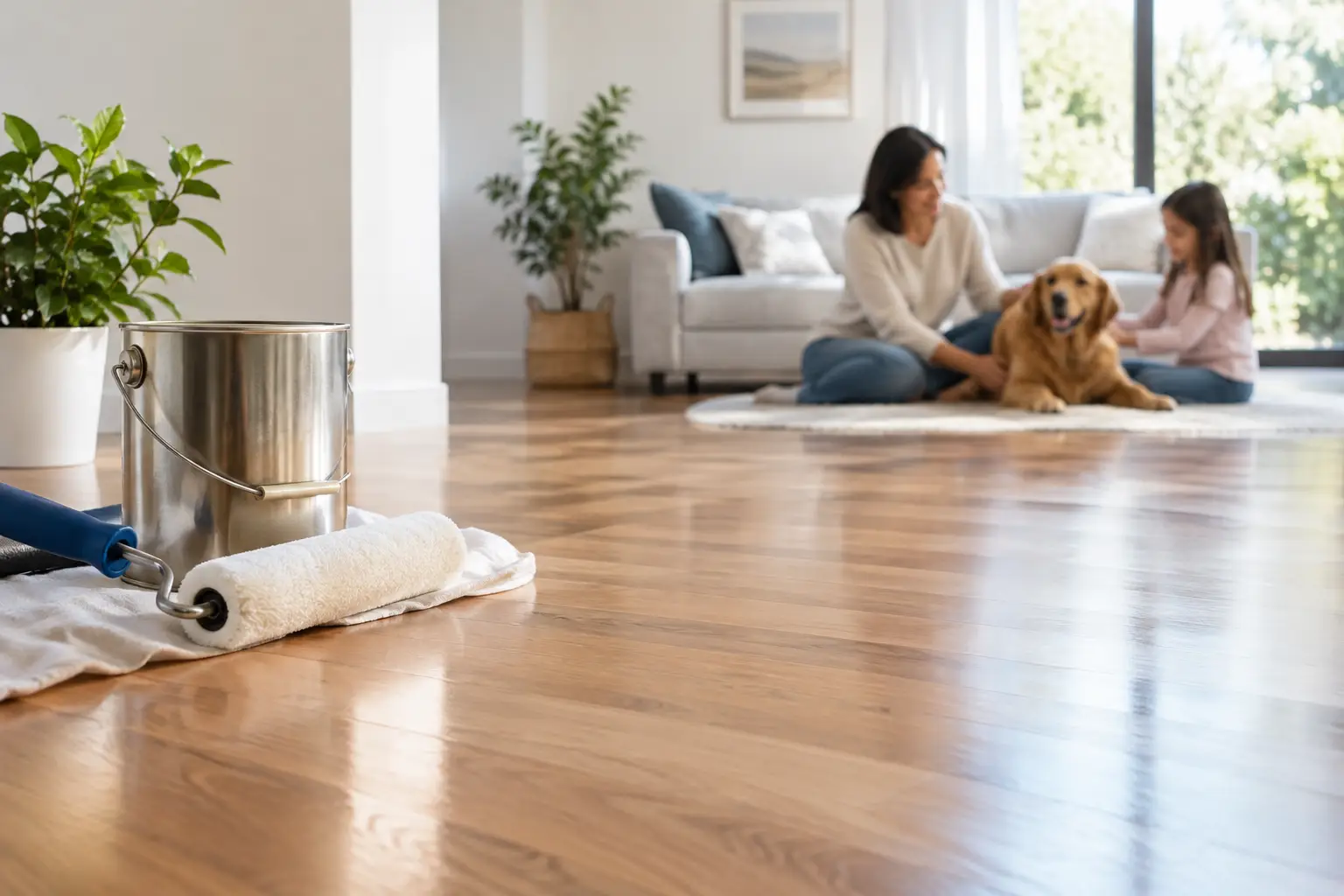
A newly sanded hardwood floor gives you one rare opportunity to decide how the wood will live in your home for years to come. The water based vs oil finish decision is not simply about sheen. It affects the floor’s color, the character of the grain, the disruption to your household, and the maintenance plan that protects your investment.
For homeowners choosing hardwood in Potomac, McLean, Annapolis, or along the Eastern Shore, the right answer often comes down to the wood itself and the life happening around it. A sun-filled kitchen, a historic home with antique oak, and a contemporary wide-plank installation may call for very different finish strategies.
Water Based vs Oil Finish: The Essential Difference
In most hardwood flooring discussions, an oil finish means oil-based polyurethane, while a water-based finish means waterborne polyurethane. Both form a protective surface layer over the wood. They should not be confused with penetrating oils or hardwax oil systems, which soak into the wood and require a different maintenance approach.
Oil-based polyurethane has been a trusted standard for generations. It is known for its rich amber tone, forgiving application qualities, and substantial film build. Waterborne polyurethane is the modern alternative: clearer in color, faster drying, lower in odor, and available in high-performance formulations designed for demanding residential use.
Neither option is automatically superior. The better finish is the one that respects the species, style, condition, and intended use of your floor.
Color: Preserve Natural Tone or Add Warmth
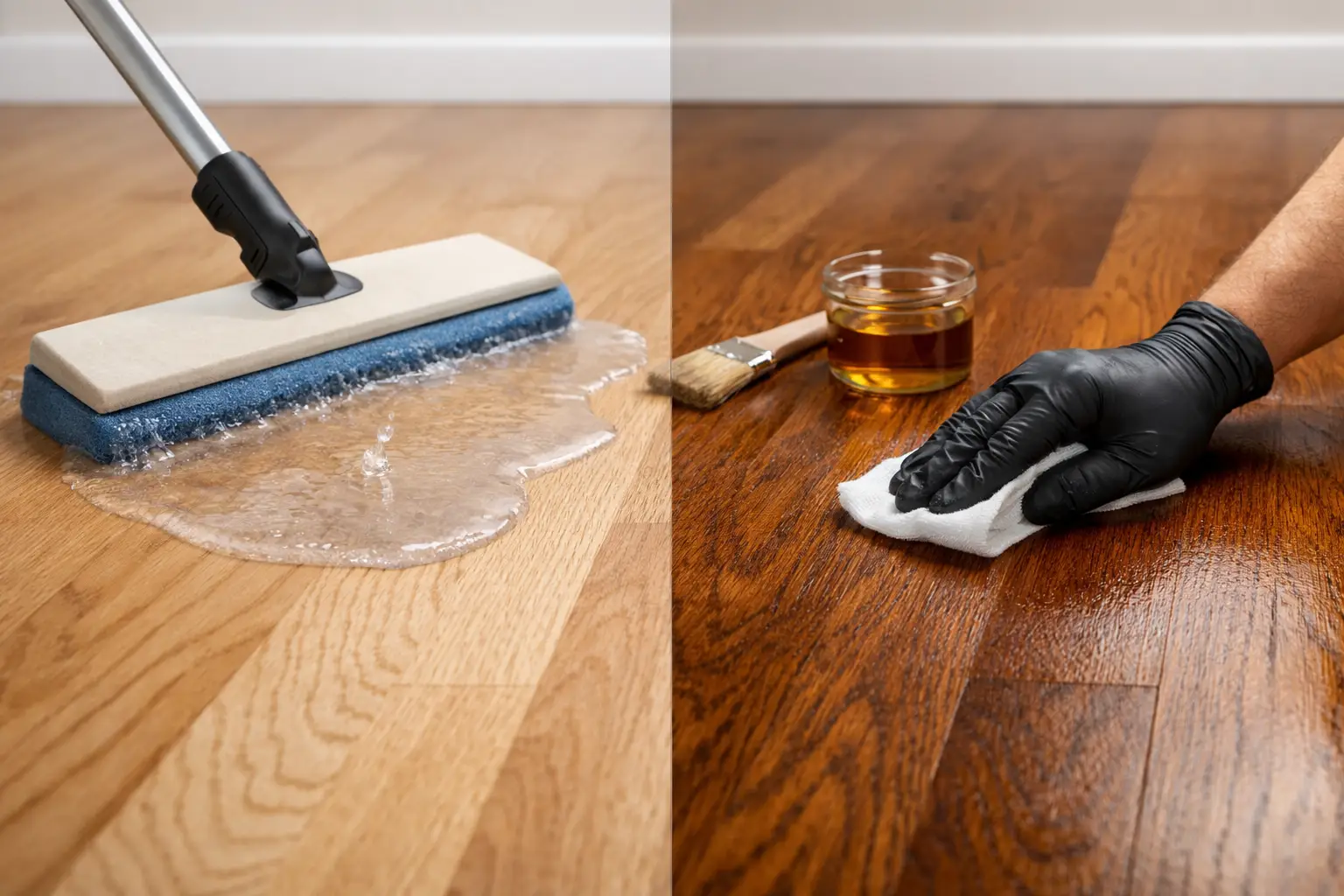
The most visible distinction appears the moment the finish goes on. Water-based finishes dry clear or nearly clear. White oak stays lighter, maple retains its pale clean appearance, and gray or natural stain colors remain more faithful to the sample. This makes waterborne finish a strong choice for contemporary interiors, Scandinavian-influenced palettes, and homes where a light, natural floor is part of the overall design.
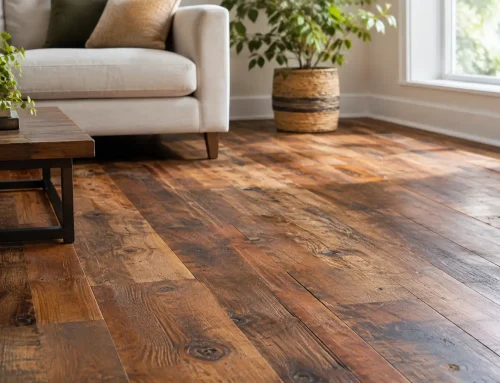
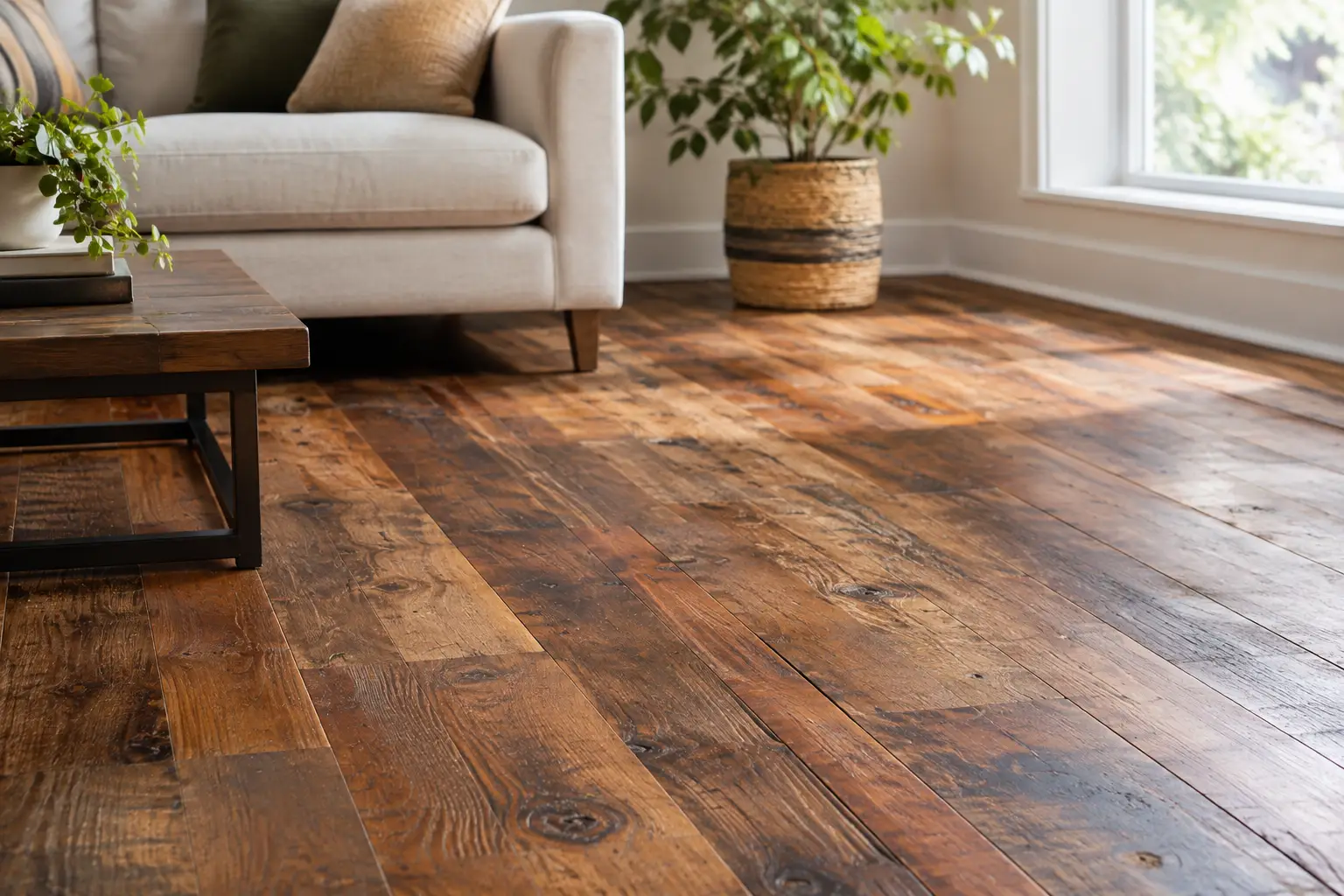
Oil-based polyurethane introduces warmth as it cures. On red oak, walnut, cherry, and many reclaimed boards, that amber cast can create depth that feels traditional, tailored, and beautifully established. It can also soften the look of a floor with varied grain and age. In a historic home, that warmth may feel entirely appropriate rather than dated.
The trade-off is long-term color change. Oil-based finishes typically amber further over time, particularly in rooms with strong daylight. Water-based finishes are more color-stable, although the wood beneath them will still respond naturally to light and age. If matching existing floors or cabinetry is critical, sample boards under the actual room lighting are worth far more than a finish chip viewed in a showroom.
Stain Can Change the Conversation
A stain can narrow the visible gap between the two systems, but it does not erase it. A warm stain under waterborne polyurethane may still look cleaner and less golden than the same stain under oil-based polyurethane. Conversely, an oil-based topcoat can make pale stains appear deeper or more yellow than expected.
A craftsman should create samples using the exact wood, stain, and finish planned for the project. That process is especially valuable with wide-plank oak, reclaimed lumber, and repairs woven into an older floor, where wood variation is part of the beauty but must be managed with care.
Drying, Curing, and Household Disruption
Waterborne finish earns a clear advantage when timing matters. Many systems dry within a few hours, allowing multiple coats in a day under suitable site conditions. The floor may be ready for careful foot traffic sooner, though full curing still takes time. Rugs, furniture, pets, and heavy use should wait until the finish manufacturer’s cure recommendations have been met.
Oil-based polyurethane dries more slowly and generally extends the refinishing schedule. It also carries a noticeably stronger odor during application and early curing. For a family remaining in the home, that can mean more planning around ventilation, temporary accommodations, and access to rooms.
Lower odor does not mean no precautions are needed. Every finish should be applied with proper ventilation, dust containment, temperature control, and attention to cure time. Still, modern very low-VOC, GreenGuard certified waterborne systems can be a meaningful advantage for homes with children, pets, allergy concerns, or a renovation schedule that leaves little room for delay.
Durability Is More Than a Label
A common assumption is that oil-based polyurethane is tougher because it has been used for so long. Quality matters more than that simple comparison suggests. Premium waterborne finishes can deliver excellent abrasion resistance, chemical resistance, and clarity in active households. They are frequently chosen for kitchens, hallways, living areas, and homes where the floor needs to return to service efficiently.
Oil-based polyurethane remains a durable, proven finish with a look many homeowners prefer. Its longer open time can also be helpful during application, particularly on large areas where a smooth, even result depends on careful technique.
A finish cannot prevent every mark. Grit under shoes, pet nails, rolling furniture, standing water, and neglected pads beneath chairs will damage even the finest coating. Durability comes from the full system: correct sanding, sound floor preparation, compatible stain and sealer, proper coat thickness, controlled drying conditions, and disciplined maintenance after the project is complete.
Choose Sheen With Real Life in Mind
Sheen has as much practical value as aesthetic value. Gloss reflects the most light but also reveals scratches, dust, and surface irregularities. Satin offers a refined, balanced look and remains a popular choice for traditional and transitional homes. Matte and low-sheen finishes create a quieter, more natural appearance that often suits wide plank and contemporary spaces well.
A lower sheen does not make a floor immune to wear. It simply hides everyday visual evidence of wear more gracefully. For busy family rooms and entries, that can be a thoughtful choice.
Maintenance and Future Refinishing
Both water-based and oil-based polyurethane floors benefit from the same fundamentals: sweep or vacuum with a hard-floor setting, clean spills promptly, use mats at exterior doors, place felt protectors under furniture, and avoid steam mops and harsh household cleaners. Water is wood’s persistent enemy, regardless of the finish on top.
When the surface begins to dull, a professional maintenance coat may extend the life of the existing finish before a full sanding is needed. This is one reason compatibility records matter. Keep a note of the finish system used, the stain color, the sheen, and the date of installation. That information helps a flooring professional assess future recoating options and avoid adhesion problems.
For floors that have been waxed, treated with unknown cleaners, or coated with incompatible products, a simple recoat may not be possible. A careful evaluation can determine whether deep cleaning, screening, or complete sanding is the responsible path.
Which Finish Fits Your Home?
Water-based finish is often the better fit when you want the wood’s natural color to remain visible, need a quicker project timeline, or prefer a lower-odor finish system. It is particularly compelling for pale oak, maple, cooler stain colors, and clean-lined interiors where yellowing would work against the design.
Oil-based polyurethane is often the better fit when you value traditional warmth, want to enrich naturally darker woods, or are restoring a home where an ambered, time-honored appearance belongs to the architecture. It can give oak and reclaimed wood an inviting depth that feels difficult to replicate with a clear coating.
There are also cases where the floor itself makes the decision. A century-old oak floor with repairs, color variation, and a warm existing patina may ask for a different treatment than newly installed select-grade white oak. The finish should serve the floor, not follow a trend.
Begin With Samples, Not Assumptions
The most dependable way to choose between water based vs oil finish is to view finish samples on your actual flooring in the room where it will live. Look at them in morning light, evening light, and under your installed fixtures. Consider how they relate to trim, cabinetry, stone, and furniture, not just how they look in isolation.
At Royal Oaks Flooring, that level of consideration is part of the craft. A well-finished hardwood floor should feel right on the first day, then continue to deepen the character of the home through years of daily life.