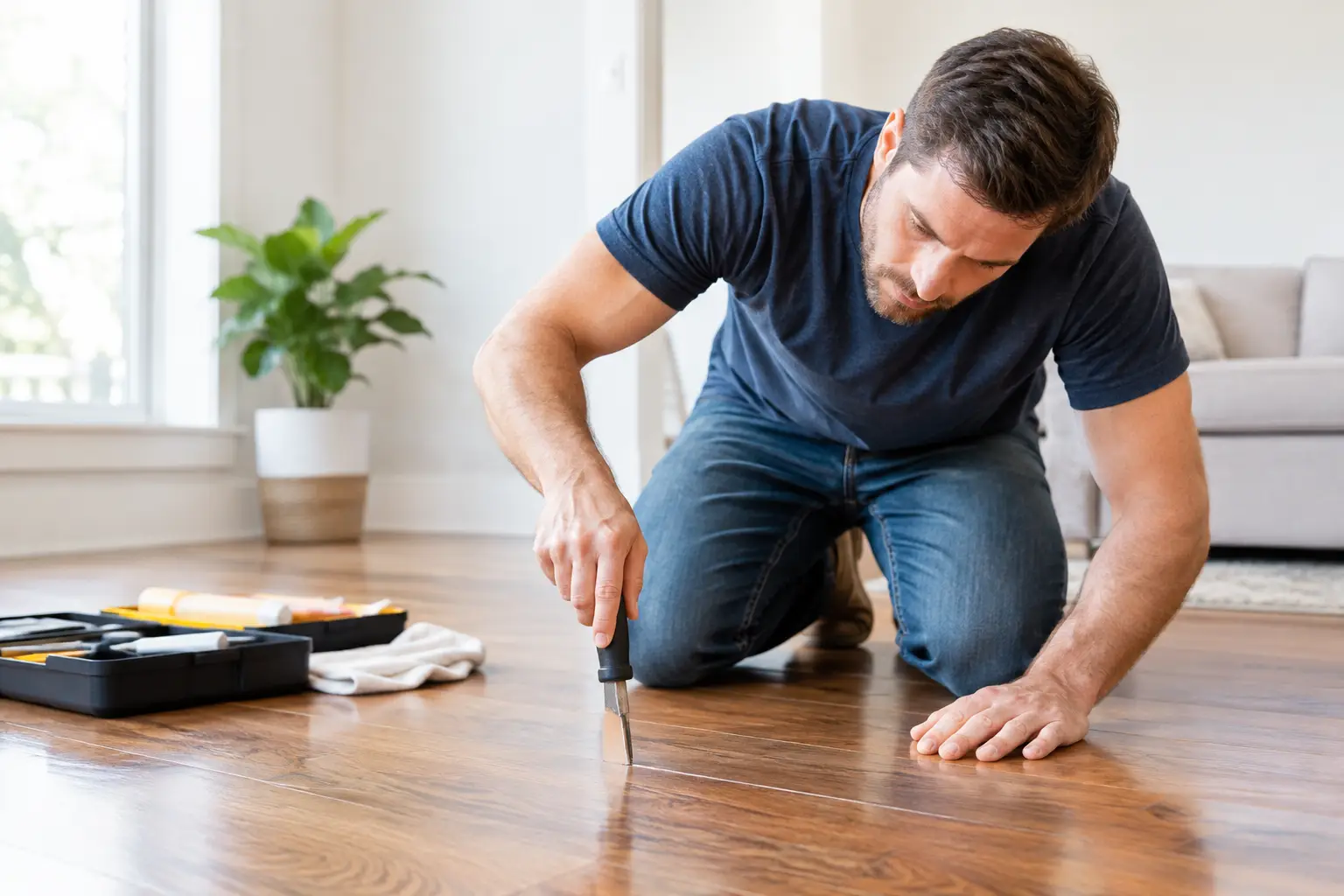
A hardwood floor rarely changes shape without giving you a reason to investigate. If you are asking, “why are my floors cupping,” the short answer is usually moisture. But the real answer is more specific: moisture has entered the wood unevenly, causing the bottom of each board to swell more than the face. The result is a floor with raised edges and slightly lower centers – a change that deserves prompt, careful attention.
Cupping can affect a newly installed floor, a treasured antique floor, or a wide-plank reclaimed oak floor that has performed beautifully for decades. The right response is not to rush toward sanding. First, identify where the moisture is coming from, stabilize the environment, and give the wood time to respond.
What Floor Cupping Looks Like
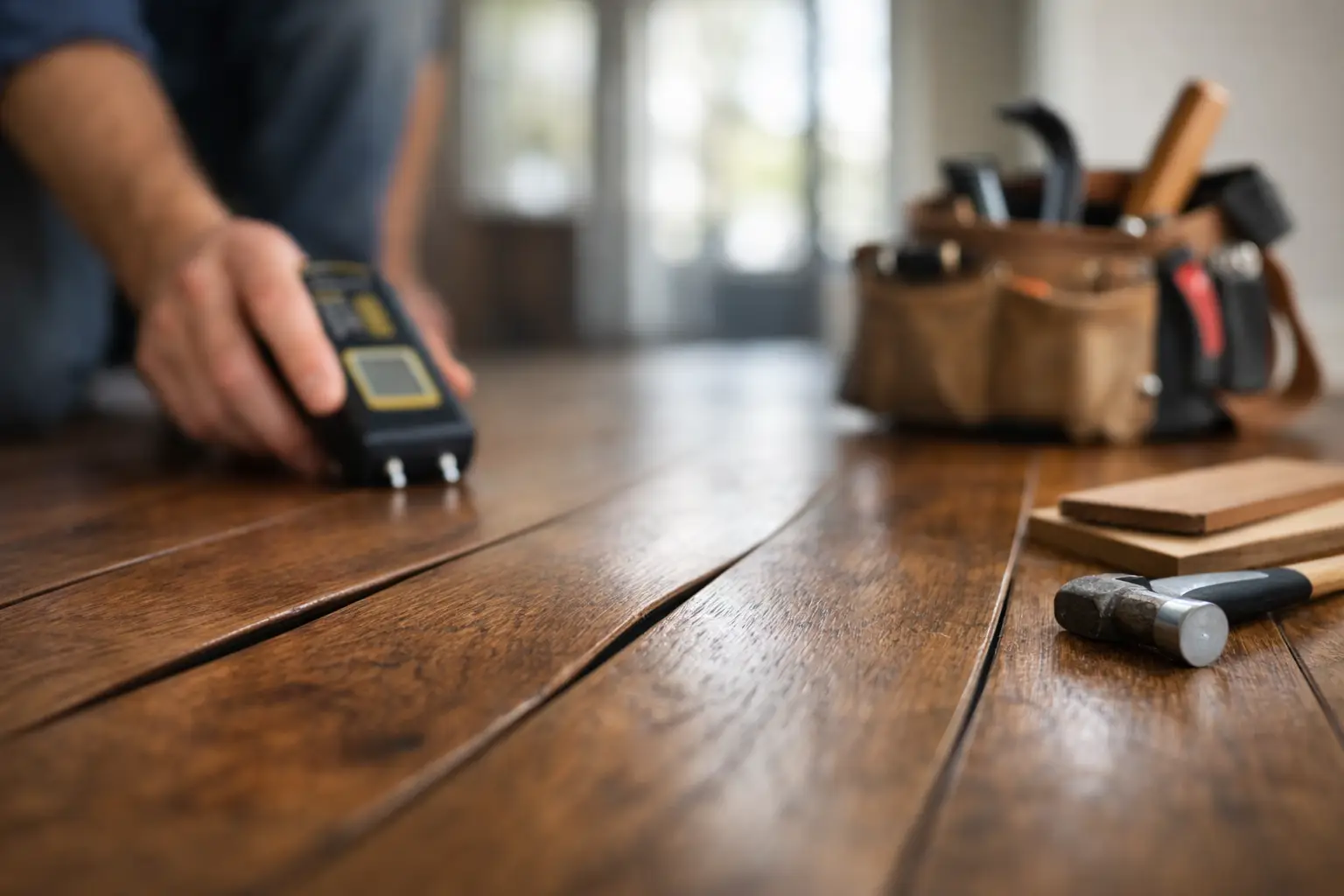
A cupped board has edges that rise higher than its center, creating a shallow U-shape across the width of the plank. In certain light, the floor may appear rippled or uneven. You may feel the raised edges beneath your feet, notice small gaps changing with the seasons, or see finish stress along the board edges.
Cupping is most apparent in solid hardwood because each board is one piece of natural wood that expands and contracts with changing moisture conditions. It can also occur with engineered hardwood, although a quality engineered product is often more dimensionally stable. Neither type is immune to a significant moisture event or prolonged high humidity.
Do not confuse cupping with crowning. Crowning is the opposite condition: the center of the board rises above its edges. It often occurs when a previously cupped floor is sanded flat before it has fully dried. Once the wood returns to a normal moisture level, the sanded edges sit lower than the center, leaving a permanent crown.
Why Are My Floors Cupping? Common Moisture Sources
Wood is hygroscopic, meaning it absorbs and releases moisture from the air and from nearby materials. When the underside of a floor becomes wetter than the top surface, the board expands from below and its edges curl upward.
In homes throughout Maryland, Northern Virginia, and the Chesapeake Bay region, summer humidity is a frequent contributor. A home that stays closed up without properly managed air conditioning can allow indoor relative humidity to climb high enough for wood flooring to take on moisture. This is especially common in vacant homes, seasonal properties, and rooms with inconsistent climate control.
A more localized pattern of cupping often points to moisture beneath the floor. A leak from a refrigerator line, dishwasher, ice maker, plumbing connection, radiator, or adjacent bathroom may wet the subfloor without immediately producing a dramatic surface puddle. In a basement or crawlspace, damp soil, poor vapor control, foundation seepage, or inadequate ventilation can allow moisture to migrate upward into the flooring system.
Moisture from above can be equally damaging. Wet mopping, standing water near an exterior door, pet accidents that reach board seams, or repeated spills can cause isolated boards to cup. Water does not need to flood a room to create a problem. Repeated small exposures can be enough, particularly where boards have open seams or unfinished edges.
Installation conditions also matter. Hardwood should be acclimated appropriately for the home and installed over a subfloor with moisture levels suited to the material and site conditions. If the subfloor is too wet, if a vapor retarder is missing or improperly installed, or if the flooring arrives with an unsuitable moisture content, cupping may appear after installation. This is one reason meticulous preparation matters as much as the visible craftsmanship of the finished floor.
The Pattern Can Help Identify the Cause
The location and extent of cupping offer useful clues. If it appears across an entire floor, suspect broad environmental humidity, a wet crawlspace, or elevated moisture in the subfloor. If the issue is concentrated near an appliance, wall, door, window, or plumbing fixture, investigate that area first.
Seasonal movement alone is not always a failure. Hardwood naturally expands during humid weather and contracts during drier months. Mild, temporary edge lift may settle as indoor humidity returns to a healthy range. Severe cupping, boards that remain distorted, staining, soft spots, or visible water damage call for faster action.
A professional flooring assessment should include moisture readings from the flooring and subfloor, along with a close look at the room, the floor’s perimeter, and the spaces below it. Moisture meters provide evidence that appearance alone cannot. A board can feel dry on its surface while its underside or the subfloor remains too wet.
What to Do Before Repairing a Cupped Hardwood Floor
The first priority is stopping the moisture source. Repair a plumbing leak, address water intrusion, improve drainage, correct a damp crawlspace condition, or resolve an appliance issue before considering cosmetic work. Refinishing a floor while the cause remains active only delays the next repair.
Next, bring the interior environment back into a stable range. For most hardwood floors, indoor relative humidity around 35 to 55 percent is a practical target, with steady temperatures and normal air circulation. Use air conditioning or dehumidification during humid periods as needed. In colder months, avoid allowing indoor air to become excessively dry, since dramatic swings in either direction stress wood.
If water entered the home recently, professional drying may be necessary. The goal is measured, controlled drying rather than simply blasting heat into the room. Excessive heat can create further stress, shrinkage, and finish damage. Remove rugs and furniture from the affected area, improve air movement where appropriate, and avoid wet cleaning until the floor has stabilized.
Most importantly, be patient. Hardwood often needs weeks or even months to reach an equilibrium moisture content after a significant moisture event. Some boards may flatten considerably once the moisture issue is corrected. Others may retain enough distortion that repair, board replacement, or refinishing becomes appropriate.
When Sanding Helps – and When It Makes Things Worse
Sanding can restore a floor that remains uneven after it has fully dried and stabilized, but it is not an emergency cure for cupping. Sanding too soon removes material from the raised edges while the board is still swollen. When the board later dries and flattens, those edges can become permanently lower than the center.
This risk is particularly significant with engineered hardwood. Its wear layer has a limited thickness, and unnecessary sanding can shorten the useful life of an otherwise excellent floor. A skilled flooring professional will evaluate the product, the remaining wear layer, moisture readings, and the degree of distortion before recommending refinishing.
In some cases, a few severely damaged boards are better replaced than sanded. In others, an older solid hardwood floor can be carefully restored after drying, then protected with a modern, low-VOC finish that renews both its appearance and resilience. The right path depends on the floor’s construction, age, species, finish, and moisture history.
Preventing Cupping in the Future
A well-built hardwood floor performs best when the whole home supports it. Maintain consistent indoor humidity, address leaks immediately, use mats at exterior doors, and wipe spills rather than allowing water to sit. Avoid soaking a hardwood floor with a mop or steam cleaner. Wood needs cleaning, but it does not benefit from excess water.
For rooms over crawlspaces, garages, or concrete slabs, proper moisture management beneath the floor is essential. Vapor retarders, subfloor preparation, insulation details, and installation methods should be selected for the specific site rather than treated as interchangeable steps. Wide-plank floors, reclaimed wood, and historic-home restorations deserve even more attention because each material and structure brings its own movement patterns and constraints.
A cupped floor can be unsettling, especially when it is the centerpiece of a carefully finished home. Yet many cases improve significantly once the source is corrected and the wood is allowed to stabilize. Treat the change as useful evidence, not merely a surface flaw: your floor is telling you that its moisture balance needs attention. With a measured diagnosis and craftsmanship-led repair, it can continue to bring warmth, character, and lasting value to the rooms it anchors.