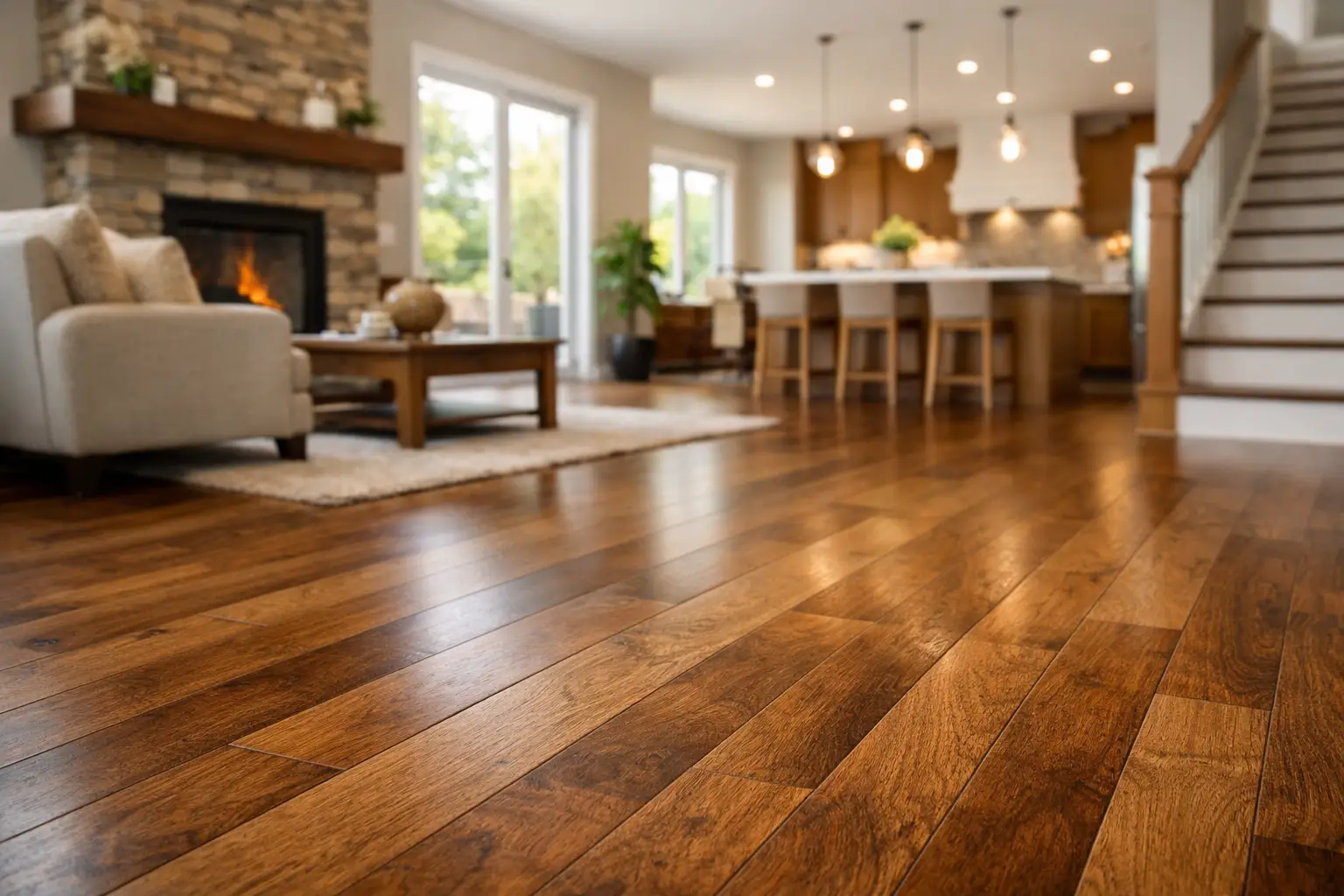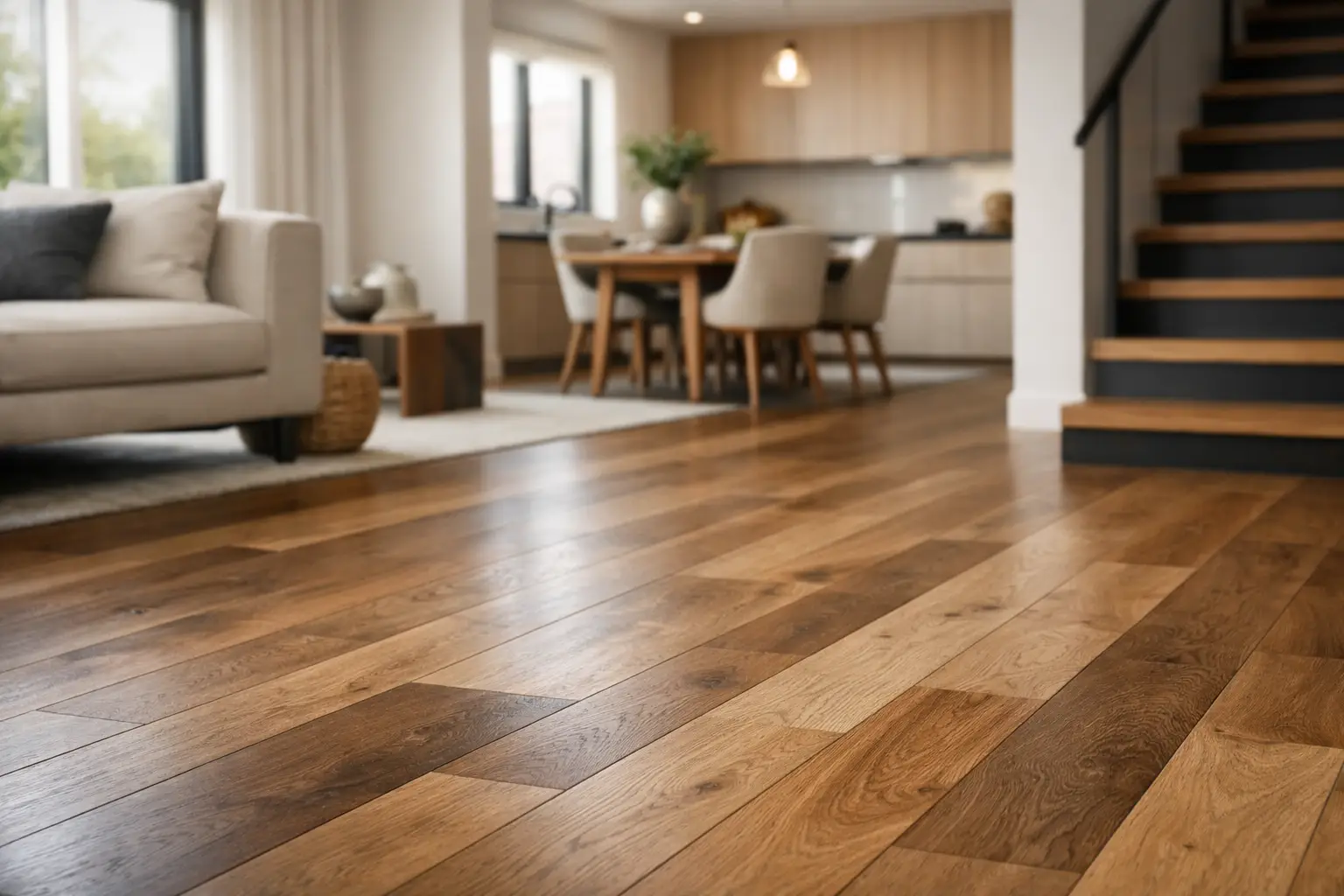
A well-finished oak floor should not demand constant attention. Its beauty comes from the way it quietly carries a room: the grain catching morning light, the warm tone grounding a carefully designed interior, and the surface developing character over time. Knowing how to maintain oak floors is less about aggressive cleaning than protecting that finish from the small, repeated stresses that gradually wear it down.
Oak is exceptionally durable, which is one reason it remains a favorite in historic homes, refined renovations, and custom new builds throughout Maryland and the D.C. Metro area. But durability is not invincibility. Grit, standing water, harsh cleaners, indoor humidity swings, and neglected furniture pads can all leave their mark. A considered care routine preserves both the protective finish and the natural material beneath it.
Start With the Finish, Not the Wood
Before selecting a cleaner or planning a maintenance schedule, determine what is actually on the surface of your floor. Most contemporary site-finished and prefinished oak floors have a polyurethane, waterborne, or oil-based protective finish. Some specialty or older floors may have penetrating oil, hardwax oil, shellac, or wax finishes, each of which requires different care.
This distinction matters because the finish is the first line of defense. A polyurethane-finished floor should not be treated with wax products, for example. Wax can interfere with future recoating and leave a cloudy buildup that is difficult to correct. Conversely, an oiled floor may need periodic maintenance oil to renew its protection and even out areas of wear.
If you inherited an older oak floor or are uncertain about its history, resist the temptation to experiment with household products. A flooring professional can identify the finish and recommend a compatible cleaning and maintenance approach. That modest step can prevent an expensive refinishing project later.
Keep Abrasive Grit Off the Surface
The most common source of premature dullness is not a dramatic spill or accident. It is ordinary tracked-in grit. Fine sand, gravel, salt, and dirt act like sandpaper under shoes, especially in entryways, kitchens, hallways, and around exterior doors.
Use substantial walk-off mats at every exterior entrance, ideally with one mat outside and another just inside. Avoid mats with rubber or vinyl backings unless the manufacturer confirms they are safe for wood floors. These materials can trap moisture and, in some circumstances, discolor the finish. In homes near the water or in areas that see wet winters, entry mats are a particularly worthwhile safeguard.
Sweep, dust mop, or vacuum with a hardwood-floor attachment several times each week in active areas. A soft microfiber mop is effective because it captures fine particles rather than simply pushing them across the surface. If vacuuming, make sure the beater bar is disengaged. Rotating brush bars designed for carpet can scratch a wood finish.
Clean Oak Floors Gently and Sparingly
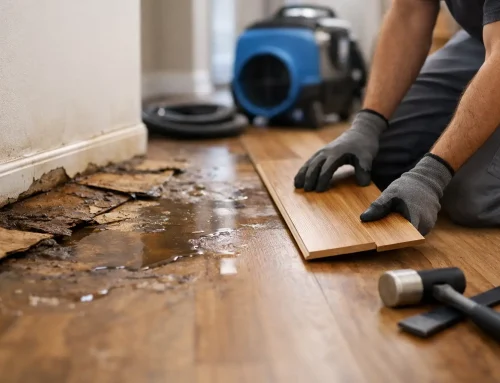
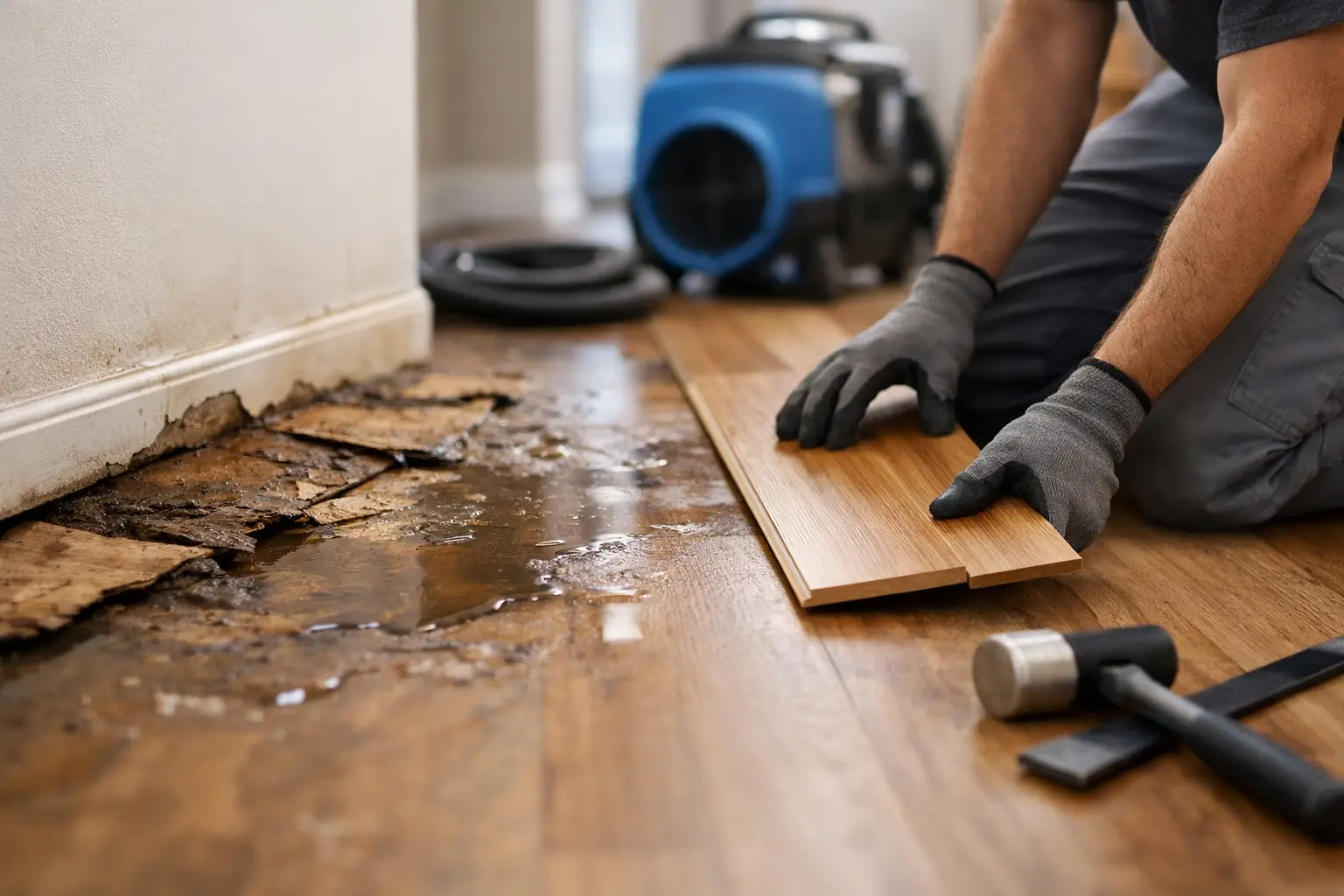
Oak floors need cleaning, but they do not need to be saturated. Water is useful only in controlled amounts. Excess moisture can work into seams, swell wood fibers, dull the finish, and contribute to cupping or edge damage over time.
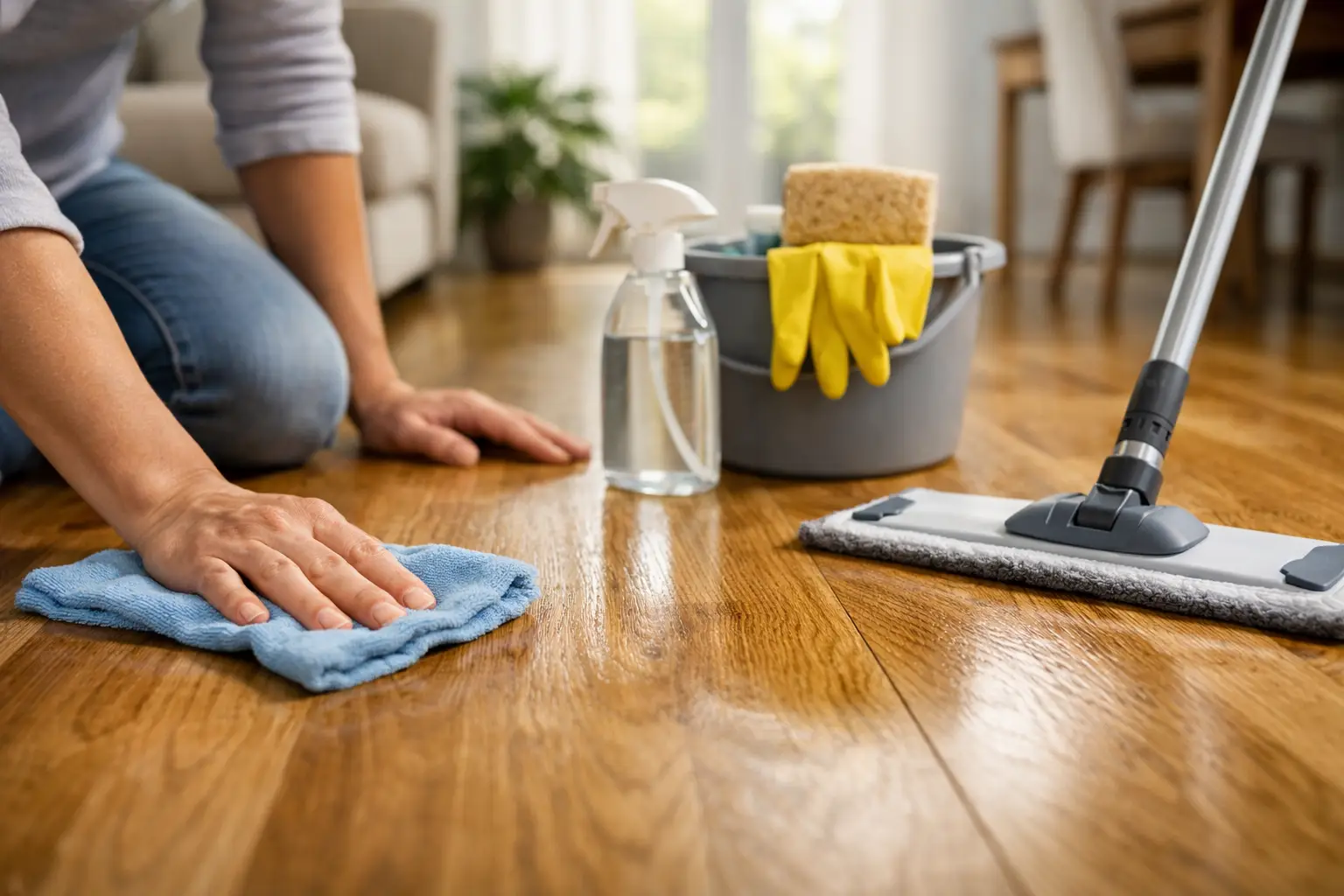
For routine cleaning, begin with dry removal of dust and grit. When the floor needs more than that, use a cleaner specifically approved for the floor’s finish and apply it lightly with a damp microfiber pad. The pad should feel barely moist, not wet enough to leave puddles or visible water behind. Work in manageable sections and allow the surface to dry promptly.
Avoid steam mops, wet mops, oil soaps, vinegar-and-water mixtures, ammonia, and all-purpose household cleaners. These solutions are often recommended as simple home remedies, but they can leave residue, weaken certain finishes, alter sheen, or introduce too much moisture. A floor can look clean after one use and still develop a hazy or streaked appearance through repeated application.
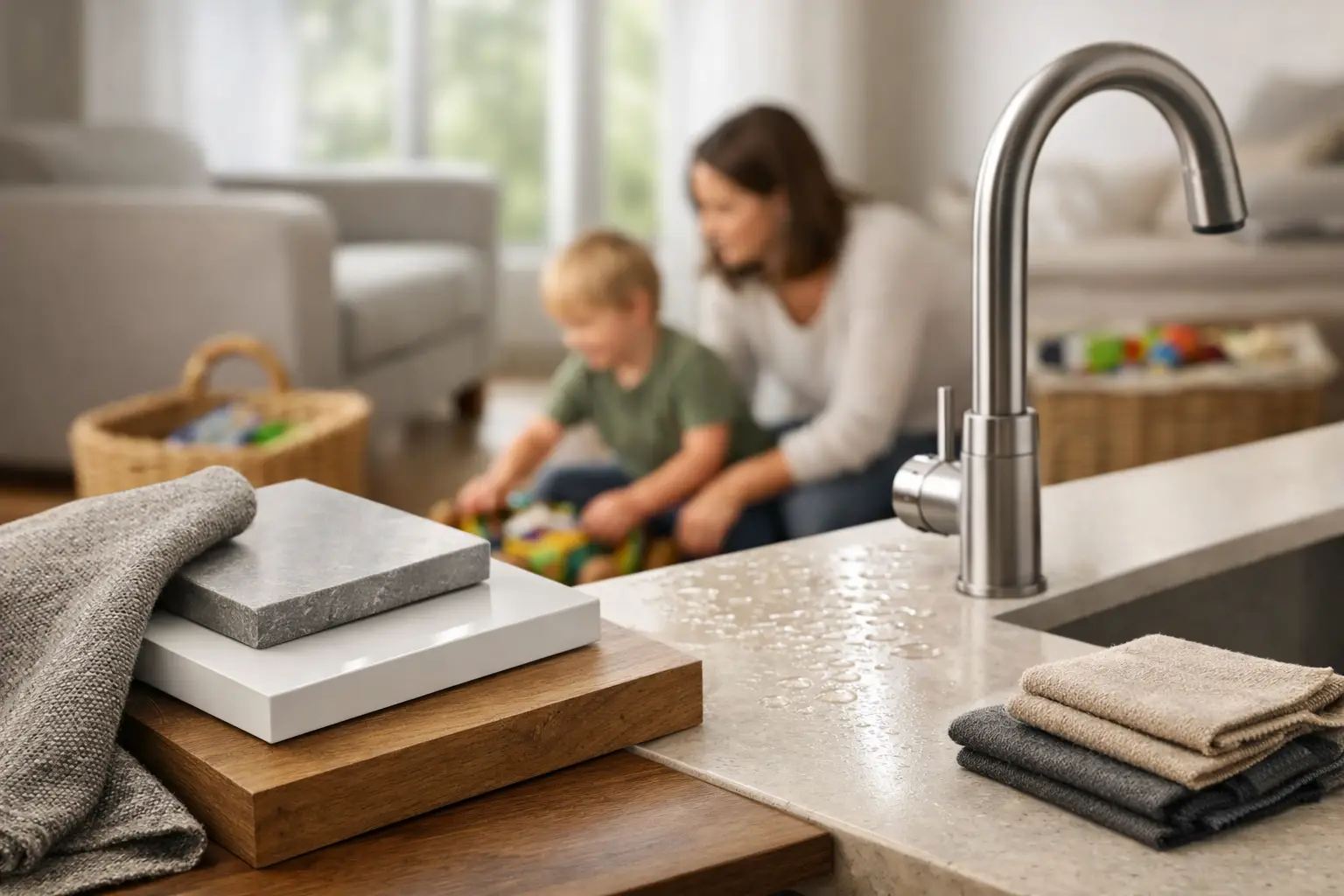
Spills deserve immediate attention. Blot them with a clean, absorbent cloth rather than wiping them outward across the boards. Then use a lightly damp cloth if needed and dry the area thoroughly. Water, pet accidents, cooking oils, wine, and anything acidic should never be left to sit.
How to Maintain Oak Floors Through Every Season
Wood responds to its environment. Oak naturally expands when humidity rises and contracts when the air becomes dry. A properly installed floor is designed with this movement in mind, but extreme or prolonged changes can still create gaps, cupping, crowning, or finish stress.
Aim to keep indoor relative humidity in a moderate, stable range, generally around 35 to 55 percent. During a dry heating season, a humidifier may help prevent excessive shrinkage and visible seasonal gaps. In humid summer weather, air conditioning or a dehumidifier can help protect against swelling. The right approach depends on the home, its ventilation, the width of the planks, and whether the flooring sits above a crawl space or over concrete.
Sunlight deserves attention as well. Oak can deepen or shift in color as it ages, especially near large windows and glass doors. This gradual change is part of wood’s natural character, but uneven exposure can create noticeable outlines beneath rugs or furniture. Rotate area rugs and rearrange furnishings periodically so the floor ages more evenly. Use window treatments when direct, intense sunlight reaches the floor for long periods.
Protect High-Traffic Areas Before Damage Appears
A few practical protections make a meaningful difference over decades. Felt pads beneath chair legs, tables, sofas, and movable furniture prevent scratches caused by ordinary movement. Check those pads regularly, since grit can become embedded in them and turn a protective pad into an abrasive one.
Use breathable rugs in places where people stand frequently, such as in front of a sink or beside a bed. Rugs can reduce wear, but they should not become permanent hiding places for moisture or dirt. Lift and clean beneath them occasionally, particularly in homes with pets, children, or active entertaining areas.
Shoes are not automatically harmful to oak, but high heels, damaged heel caps, athletic cleats, and shoes carrying gravel are another matter. Establishing a shoes-off habit near the entry can be sensible, especially with wide-plank flooring or a satin finish that shows surface abrasion more readily. It is a practical trade-off: a lived-in floor will gain minor marks, while a protected floor holds its even sheen much longer.
When moving heavy furniture, never drag it directly across the boards. Use appropriate furniture sliders, lifting assistance, or protective sheets that distribute the load. This is especially important for pianos, large dining tables, and built-ins being adjusted during a renovation.
Know the Difference Between Cleaning, Recoating, and Refinishing
Many homeowners wait until oak floors look severely worn before calling for professional help. By then, bare wood may be exposed in traffic paths, and a full sanding and refinishing process may be necessary. With attentive planning, many floors can avoid that level of restoration for years.
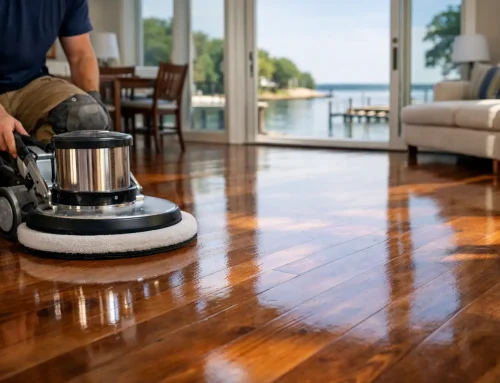
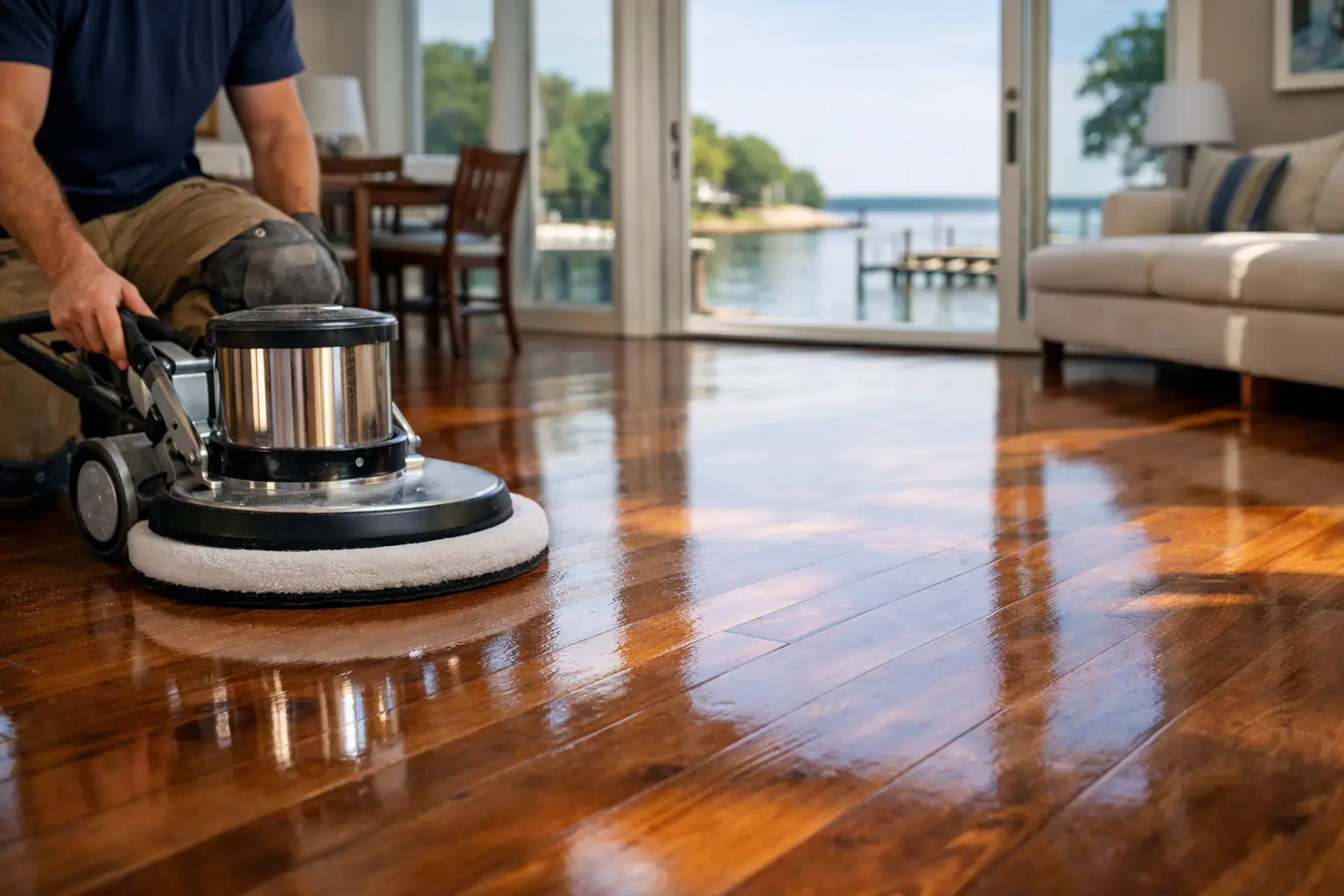
A professional deep clean can remove residue that everyday care leaves behind and restore a clearer, more even appearance. If the finish is intact but lightly scratched or dulled, a maintenance coat or screen-and-recoat service may renew protection without sanding down to raw wood. This process is generally less disruptive than full refinishing, but it only works when the existing finish is compatible and free of wax, silicone, or problematic buildup.
Full refinishing is appropriate when the finish has worn through, scratches are deep, stains have penetrated, boards are damaged, or the floor needs a significant color or sheen change. It is also an opportunity to address repairs, flatten uneven areas, and select a modern low-VOC finish suited to the household’s needs. The right timing depends on traffic, pets, sun exposure, cleaning habits, and the floor’s original construction.
At Royal Oaks Flooring, maintenance is approached as a way to protect the craftsmanship already in place, not as a one-size-fits-all service. A carefully evaluated recoat at the right time can preserve the depth, warmth, and long-term value of an oak floor without unnecessary intervention.
A Simple Routine That Respects the Material
For most households, the most effective plan is also the most consistent: remove grit often, clean lightly when needed, wipe spills immediately, and keep indoor moisture reasonably stable. Add furniture protection and thoughtful rug placement, then inspect the finish once or twice a year in bright natural light.
Look for dull paths near entries, fine scratching around chairs, darkened seams, peeling finish, or areas where water no longer beads on the surface. These signs do not always mean the floor needs sanding, but they do indicate it is time to assess its protective layer.
Oak rewards patience. Treat it with the same care you would give a finely made table or a cherished architectural detail, and it will continue to bring warmth, texture, and quiet distinction to the home long after other finishes have come and gone.