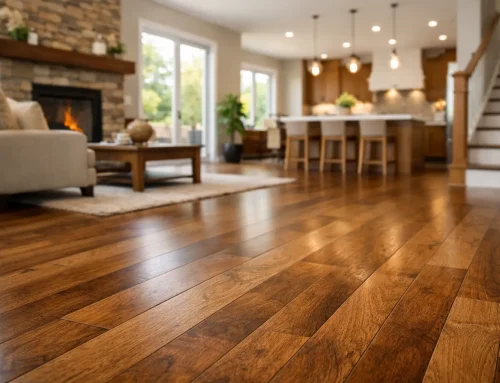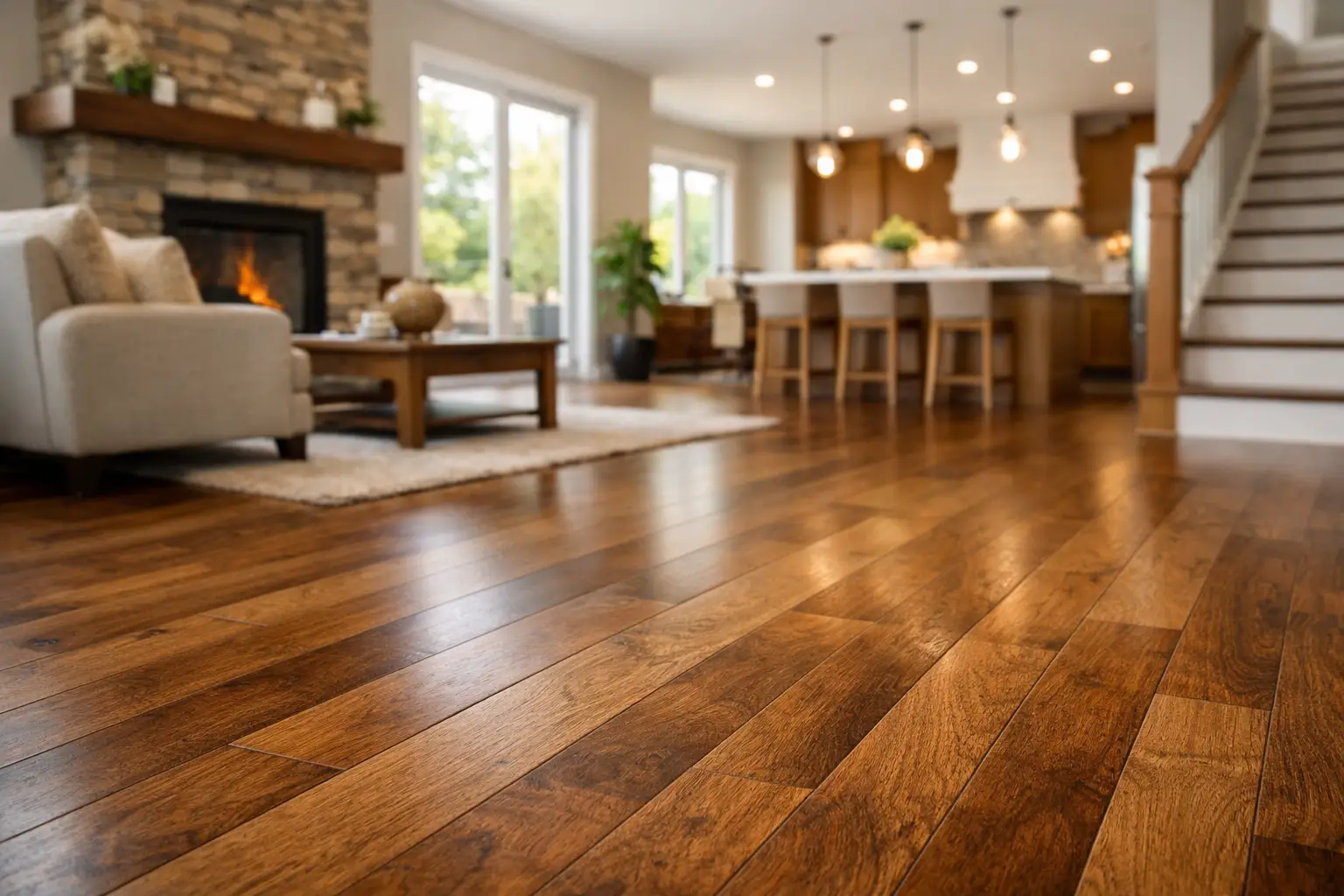
A walnut floor changes the character of a room before the furniture ever arrives. Its deep brown tones, flowing grain, and occasional pale sapwood create a sense of warmth that many homeowners try to achieve with stain but rarely match. For a dining room, library, formal living space, or carefully renovated historic home, few domestic hardwoods make as immediate an impression.
Still, the beauty comes with practical decisions. Understanding walnut flooring pros and cons is essential before choosing it for a busy household, a sun-filled great room, or a whole-home renovation. Walnut is a premium material with a distinct personality, not a one-size-fits-all substitute for oak.
Why Walnut Has Such a Distinctive Look
American black walnut is prized for its naturally rich color, which ranges from medium chocolate brown to deep espresso, often with subtle purple or gray undertones. Its grain can be straight and restrained or display graceful curls, waves, and cathedral patterns. No two boards are identical, and that variation is part of the appeal.
Where oak often provides a brighter, more traditional grain pattern, walnut feels more tailored and composed. It works beautifully with warm metals, creamy painted cabinetry, antique furnishings, and contemporary architecture alike. A carefully selected wide-plank walnut floor can become the visual center of a room without feeling overly decorative.
Walnut also accepts a clear finish exceptionally well. Rather than covering the wood with a heavy stain, many homeowners prefer a finish that lets the species speak for itself. This preserves the depth and natural movement that make walnut worth selecting in the first place.
Walnut Flooring Pros and Cons at a Glance
The central trade-off is straightforward: walnut offers exceptional visual depth and long-term design value, but it is softer and generally more expensive than common oak flooring. Whether that trade-off makes sense depends on how the room is used and what you expect from a finished floor.
The advantages of walnut flooring
Walnut’s greatest strength is its appearance. Its naturally dark palette gives a room an established, refined quality without relying on a dark stain that can obscure wood grain. Because the color comes from the wood itself, a clear or lightly toned finish tends to look more dimensional and authentic.
It is also a stable domestic hardwood when it is properly milled, acclimated, and installed. Stability does not mean immunity from seasonal movement – every solid wood floor responds to humidity – but walnut performs very well in homes with sensible indoor climate control. A professional installation accounts for moisture conditions, subfloor preparation, board layout, and expansion space before the first board is fastened.
Walnut is pleasant underfoot and relatively easy to work with during refinishing. Its fine, even texture allows skilled craftsmen to achieve a smooth, elegant surface. When the time eventually comes for restoration, a solid walnut floor can be sanded and refinished, renewing its protective layer and restoring its luster.
Another advantage is the way walnut ages. With exposure to light, walnut often becomes lighter and warmer over time. This surprises homeowners who expect all dark wood to deepen with age. The change is gradual, and it can be beautiful, but it should be understood before selecting the species.
The limitations to consider
Walnut is softer than oak. On the Janka hardness scale, black walnut rates around 1,010, while red oak is approximately 1,290 and white oak is about 1,360. This does not make walnut fragile, but it does mean chair legs, dropped cookware, dog claws, high heels, and active children can leave dents more readily.
For many homeowners, those marks become part of a naturally lived-in surface. For others, especially those seeking an immaculate floor in a high-traffic kitchen or entry, they may become a source of frustration. A strong modern finish provides valuable surface protection, but no finish can prevent the wood beneath it from compressing under a sharp impact.
Cost is another consideration. Walnut is typically priced above red oak and many standard white oak options, particularly in select grades, wide planks, and longer board lengths. The material cost is only part of the investment. The floor deserves careful installation, appropriate transitions, and a finish system chosen for the household’s actual use.
Color variation can also require a thoughtful eye. Walnut may contain lighter sapwood along with dark heartwood, and boards can vary significantly from one bundle to the next. Some homeowners love this natural contrast; others prefer a more uniform floor. Grade selection, board sorting, and a planned layout make a meaningful difference in the final appearance.
Where Walnut Flooring Works Best
Walnut is especially compelling in rooms where beauty carries as much weight as heavy daily wear. Dining rooms, studies, primary bedrooms, formal living rooms, upstairs hallways, and low-traffic gathering spaces are natural fits. In a Potomac residence or a restored Eastern Shore home, walnut can complement detailed millwork, plaster walls, traditional built-ins, and period architecture with unusual ease.
That does not mean walnut is off-limits in kitchens or family rooms. It simply calls for realistic expectations. A household with a large dog, several young children, and frequent entertaining may still choose walnut, but should select a durable finish, use felt pads under furniture, and accept that small impressions are part of the floor’s story.
For spaces below grade or areas with greater moisture risk, engineered walnut may be the better solution. An engineered board has a real walnut wear layer over a layered core designed for greater dimensional stability. Quality varies widely, so the thickness of the wear layer, construction method, finish, and installation system all deserve careful review.
Choosing the Right Walnut Floor Construction
Solid walnut is the traditional choice for above-grade living areas. It offers the full substance of hardwood, can be refinished more than once over its lifetime, and provides a distinctly enduring feel. It is an excellent option when the subfloor and indoor conditions are appropriate.
Engineered walnut expands the range of rooms where the species can be considered. It can perform well over concrete and in locations where a solid plank may be more vulnerable to seasonal movement. It also makes wider plank looks more attainable in some installations. The key is not simply choosing engineered construction, but choosing a well-made product with enough real wood on its surface to support future maintenance or refinishing.
Plank width deserves equal attention. Wider boards showcase walnut’s flowing grain and create a calm, expansive look, particularly in larger rooms. They also make color variation more visible. Narrower boards offer a more traditional rhythm and can suit smaller rooms or homes where existing architectural details are already visually active.
Finish, Light, and Everyday Care
A walnut floor should be protected without making it look plastic or overly glossy. Matte and satin finishes are often excellent choices because they emphasize the wood’s natural depth while making minor scratches and dust less obvious than a high-gloss surface. Advanced low-VOC finishes can deliver strong wear resistance with reduced off-gassing and a faster return to normal household use.
Sunlight needs to be part of the conversation. Since walnut lightens with exposure, furniture and area rugs can leave darker outlines when moved after several years. Window treatments, UV-filtering glass, and periodically shifting rugs help the floor age more evenly. This is not a defect. It is a natural response of a real wood floor to its environment.
Routine care is uncomplicated but consistent. Sweep or vacuum with a hardwood-safe attachment to remove abrasive grit, clean spills promptly, and use only products approved for the finish. Avoid steam mops and soaking wet mops, which introduce unnecessary moisture. Felt pads beneath chairs and tables are modest details that prevent a remarkable amount of avoidable damage.
The Value of Skilled Installation
A premium species reveals every shortcut. Uneven subfloors, rushed acclimation, poorly planned board placement, and careless transitions can compromise both performance and appearance. With walnut, the layout matters as much as the fastening. An experienced installer will sort boards to distribute tonal variation naturally, decide where feature boards belong, and maintain clean lines around hearths, stairs, cabinetry, and doorways.
At Royal Oaks Flooring, that level of preparation is treated as part of the craft, not an optional extra. A finished walnut floor should look intentional from the threshold to the farthest corner of the room, with details that support decades of use.
Walnut is not the hardest wood, the least expensive wood, or the most uniform wood. It is the right wood when a homeowner values natural depth, graceful aging, and the quiet authority of a material that becomes more personal over time. If that sounds like the floor you want to live with, the best next step is to view full boards in your home’s actual light and let the material make its case.