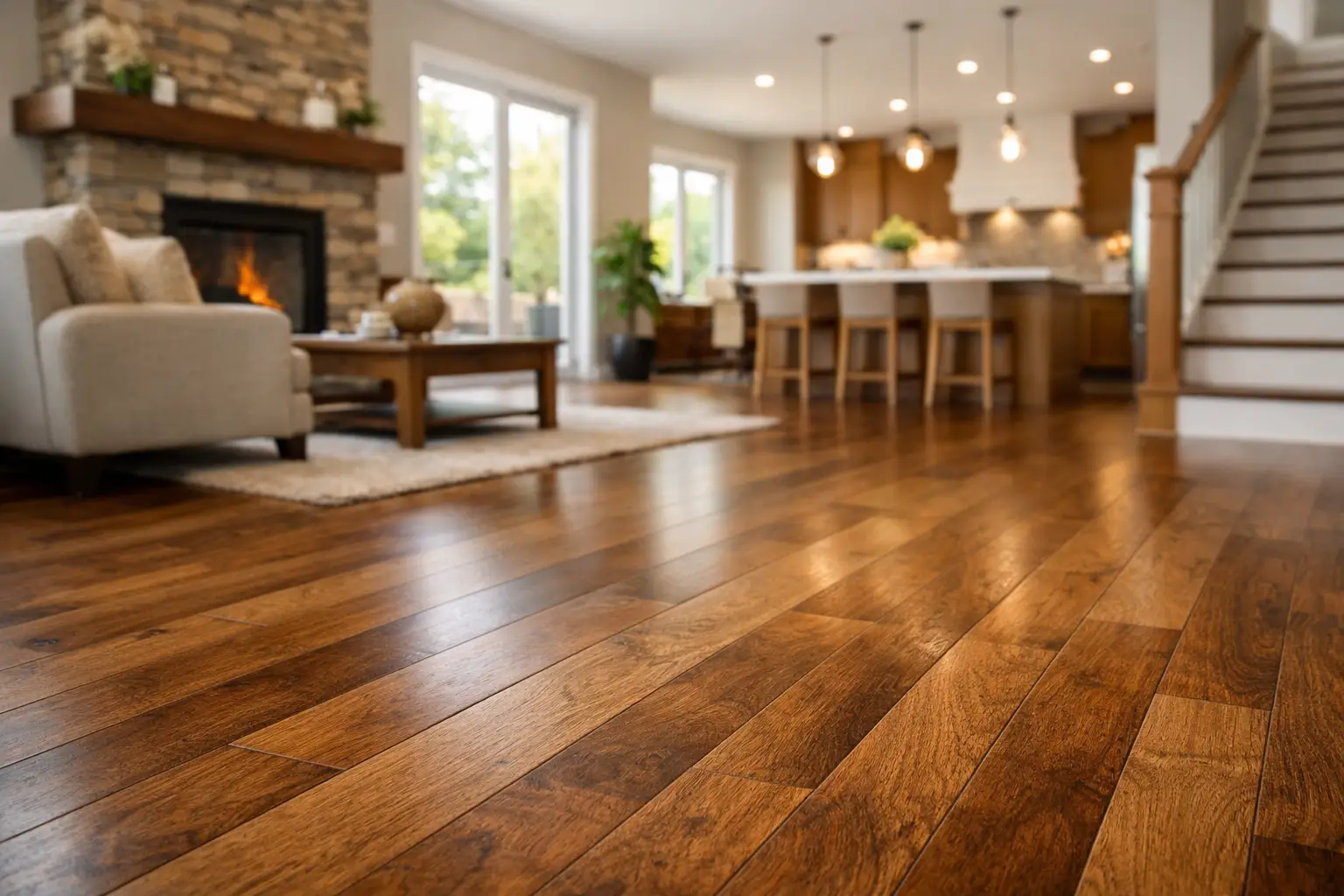
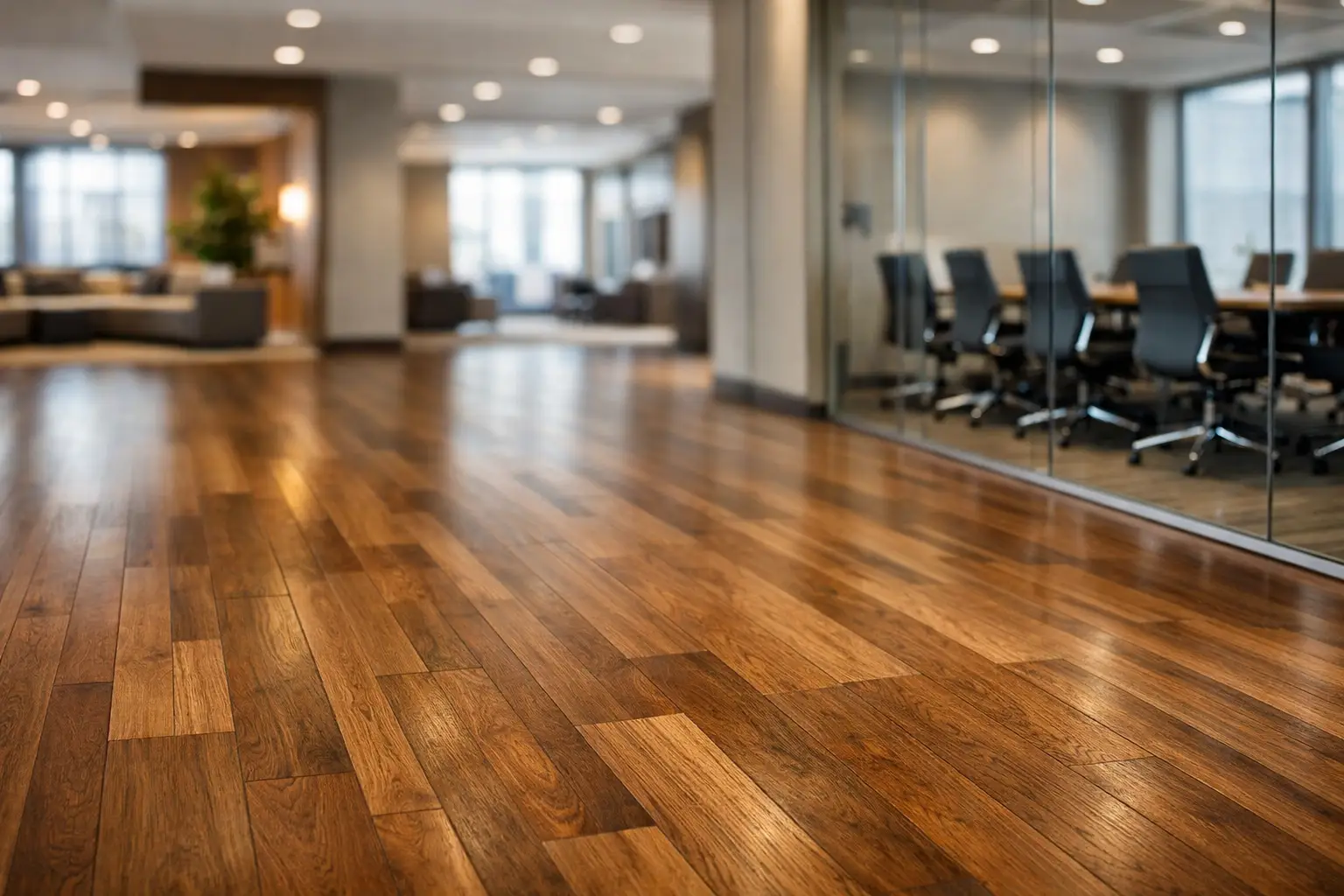
A busy entryway tells the truth about a floor quickly. Grit gathers at the threshold, chairs slide back from conference tables, deliveries cross the room, and sunlight tracks across the same boards every afternoon. Commercial hardwood flooring must meet that daily pressure without losing the warmth, depth, and quiet authority that only real wood can bring to a space.
For restaurants, offices, boutiques, clubs, professional suites, and high-end multifamily common areas, hardwood is not simply a design choice. It is a long-term surface decision. The right floor can make a reception area feel established, make a dining room more inviting, and give a retail environment a level of character that manufactured materials often struggle to achieve. The wrong specification, however, can lead to premature wear, movement, difficult repairs, and a finish that looks tired far too soon.
What Commercial Hardwood Flooring Must Handle
Commercial settings are not all alike. A quiet law office places different demands on a floor than a waterfront restaurant or a bustling retail shop. Before selecting a species, plank width, or color, the first question should be practical: how will the room actually be used?
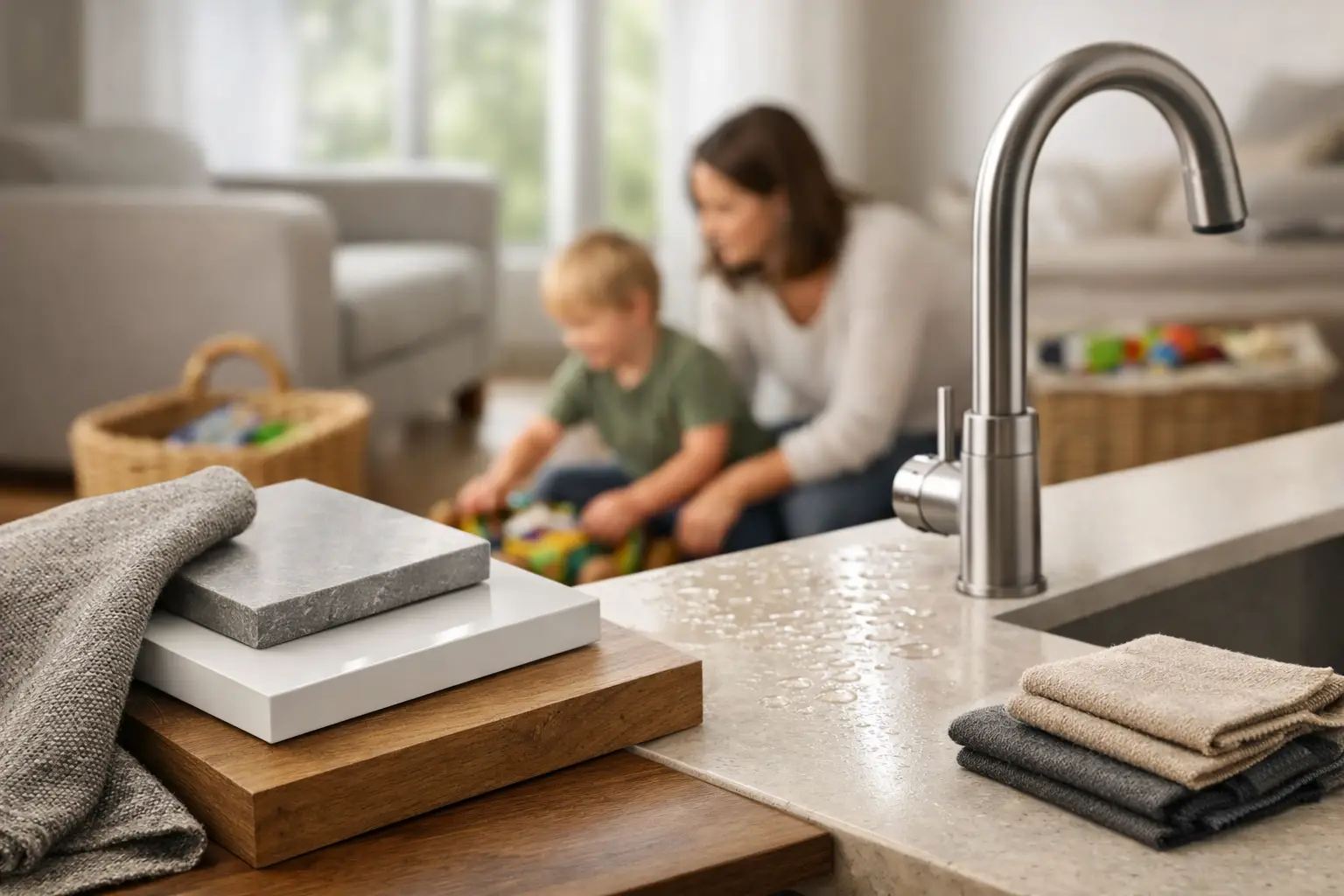
Foot traffic matters, but it is only part of the equation. Moisture from exterior doors, rolling equipment, movable furniture, pet traffic in mixed-use spaces, food and beverage service, and direct sun exposure all affect performance. So do maintenance habits. A beautiful floor in a space with no entry mats, inconsistent cleaning, and frequent wet mopping will face an uphill battle regardless of its species or finish.
The most successful projects begin with an honest assessment of traffic patterns. This allows the flooring plan to account for high-wear zones, transitions, expansion needs, subfloor conditions, and the maintenance routine the property can reasonably support.
Choose Construction for the Building, Not Just the Look
Solid hardwood remains a remarkable material. It offers a substantial feel underfoot and can be sanded and refinished multiple times over its life. In the right interior environment, it is a lasting investment with extraordinary visual depth. It is especially well suited to spaces with stable humidity and a properly prepared wood subfloor.
Engineered hardwood is often the more practical choice for commercial interiors, particularly where concrete slabs, wider planks, or changing seasonal conditions are involved. Its layered construction gives it greater dimensional stability than solid wood, helping it perform more predictably in areas where moisture and movement require careful management.
That does not mean every engineered floor is equal. Wear-layer thickness, core quality, milling precision, and finish quality vary widely. A thin veneer may limit future refinishing options, while a well-made engineered plank with a substantial hardwood wear layer can offer many years of service and, in some cases, professional restoration.
For commercial hardwood flooring, the installation method is just as consequential as the material itself. Glue-down systems can provide excellent stability over concrete. Nail-down installation may be ideal over a prepared wood subfloor. Floating floors have their place, but they are not automatically the best answer for every active commercial environment. The building, subfloor, and intended use should determine the system.
Subfloor preparation is where longevity begins
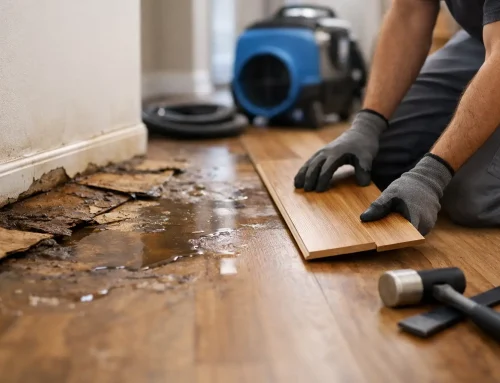
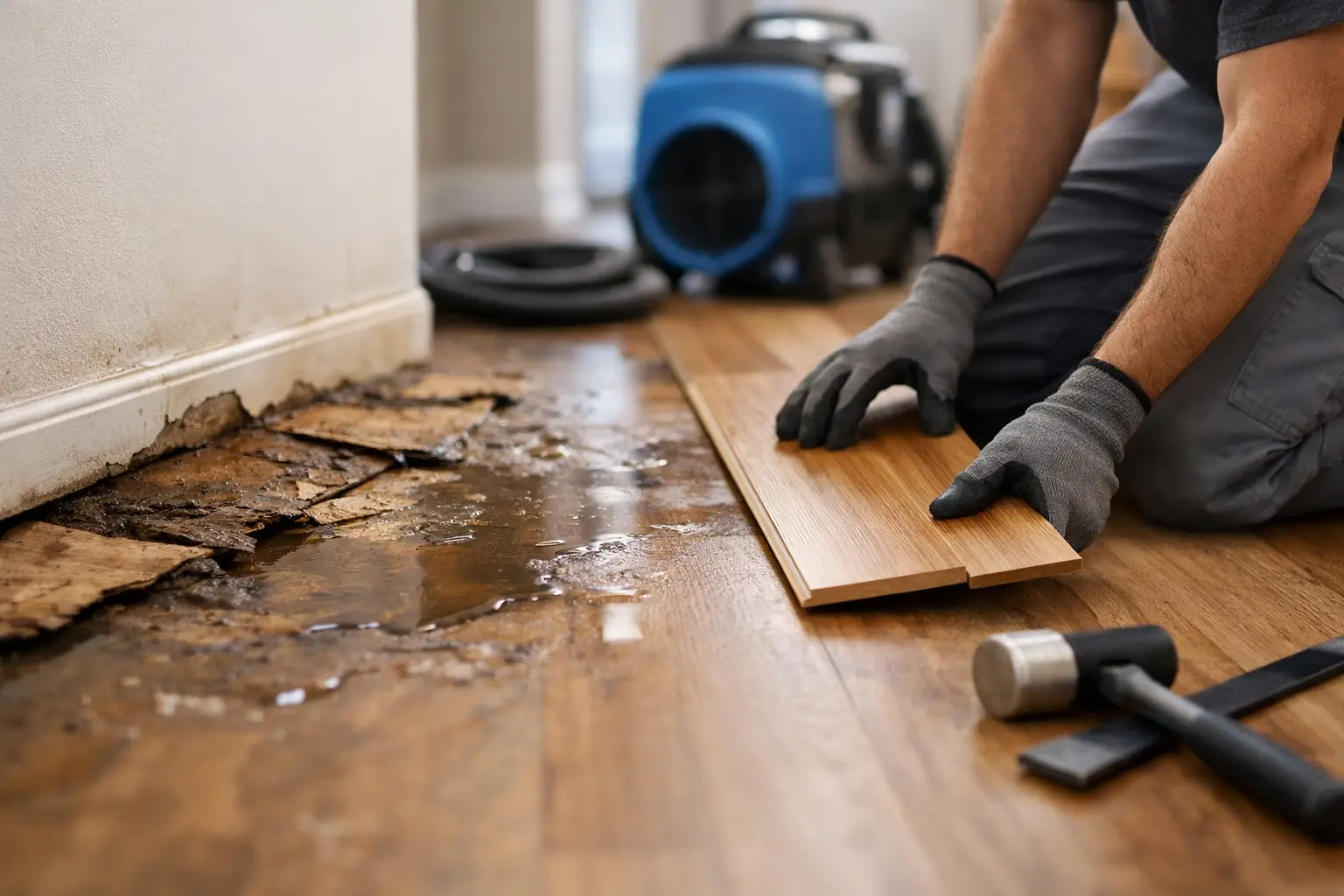
Wood flooring cannot correct a failing substrate. Moisture testing, flatness checks, adhesive selection, and proper acclimation are not optional details. They are the groundwork that protects the floor from excessive movement, hollow areas, gaps, and adhesion failures.
This is particularly important in older buildings and renovations, where existing conditions can be unpredictable. A careful installer investigates what is beneath the visible surface before a single board is laid. That discipline may add time at the beginning, but it prevents much more disruptive work later.
Species, Grain, and Color Affect Wear
White oak is a frequent choice for commercial spaces because it combines durability, broad design flexibility, and a grain pattern that works beautifully in both traditional and contemporary settings. Its closed grain accepts many stain colors well, from pale natural tones to deeper custom finishes.
Maple is harder than oak and has a clean, refined appearance, though its tighter grain can make stain absorption less uniform. Walnut delivers dramatic richness and a luxurious presentation, but it is softer and may show dents more readily in heavily used areas. Hickory offers pronounced character and excellent hardness, making it worth considering where a more expressive floor suits the design.
No species is immune to wear. Hardness provides useful guidance, but the relationship between grain, color, sheen, and traffic often matters just as much. Floors with visible grain and natural variation tend to disguise small marks more gracefully than smooth, dark, high-sheen surfaces. A medium-tone matte finish is often more forgiving in a reception area or retail environment than a deep espresso color polished to a high gloss.
Wide planks can create an exceptional sense of scale in a hospitality or executive setting. They also demand precise site conditions and skilled installation. Wider boards have more visual presence, but they respond more noticeably to changes in humidity. Proper moisture control and expansion planning are essential.
The Finish Should Match the Pace of the Space
A finish is the working surface of a hardwood floor. It influences scratch resistance, stain resistance, appearance, cure time, cleanability, and future maintenance. In a commercial setting, it deserves more consideration than a final color sample.
Modern waterborne finishes offer excellent clarity and durability while keeping odor and VOC levels low. They are often a strong choice for occupied offices, professional environments, and projects where indoor air quality and a quicker return to service matter. Low-VOC, Green Guard certified finish systems can help minimize disruption without compromising the quality of the protective layer.
Oil-based systems can create a warmer amber tone, particularly on certain woods, but they typically have longer drying and curing times. Hardwax oils create a natural, hand-finished appearance and can allow targeted repairs, but they require a property owner who understands the associated maintenance program. They are not a maintenance-free option, even though they can be exceptionally beautiful.
Sheen is another practical decision. Matte and satin finishes soften reflected light and make everyday dust, fine scratches, and footprints less apparent. Gloss finishes can be striking in controlled, lower-traffic settings, yet they reveal wear more readily. For many commercial projects, a low-sheen finish offers the best balance of elegance and realism.
Design for Repair, Not Just Opening Day
The best commercial floors are planned with their future in mind. Furniture layouts, protective glides, entry mat systems, area rugs in strategic zones, and clear cleaning procedures all extend the life of the surface. These choices protect the finish without hiding the beauty of the wood.
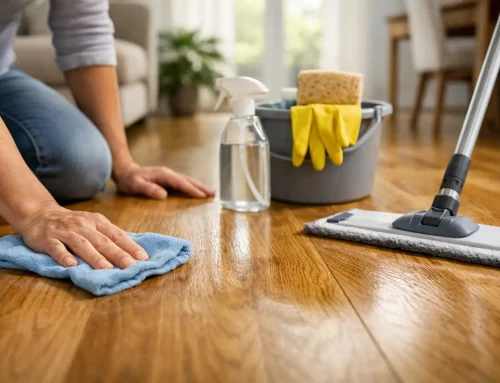
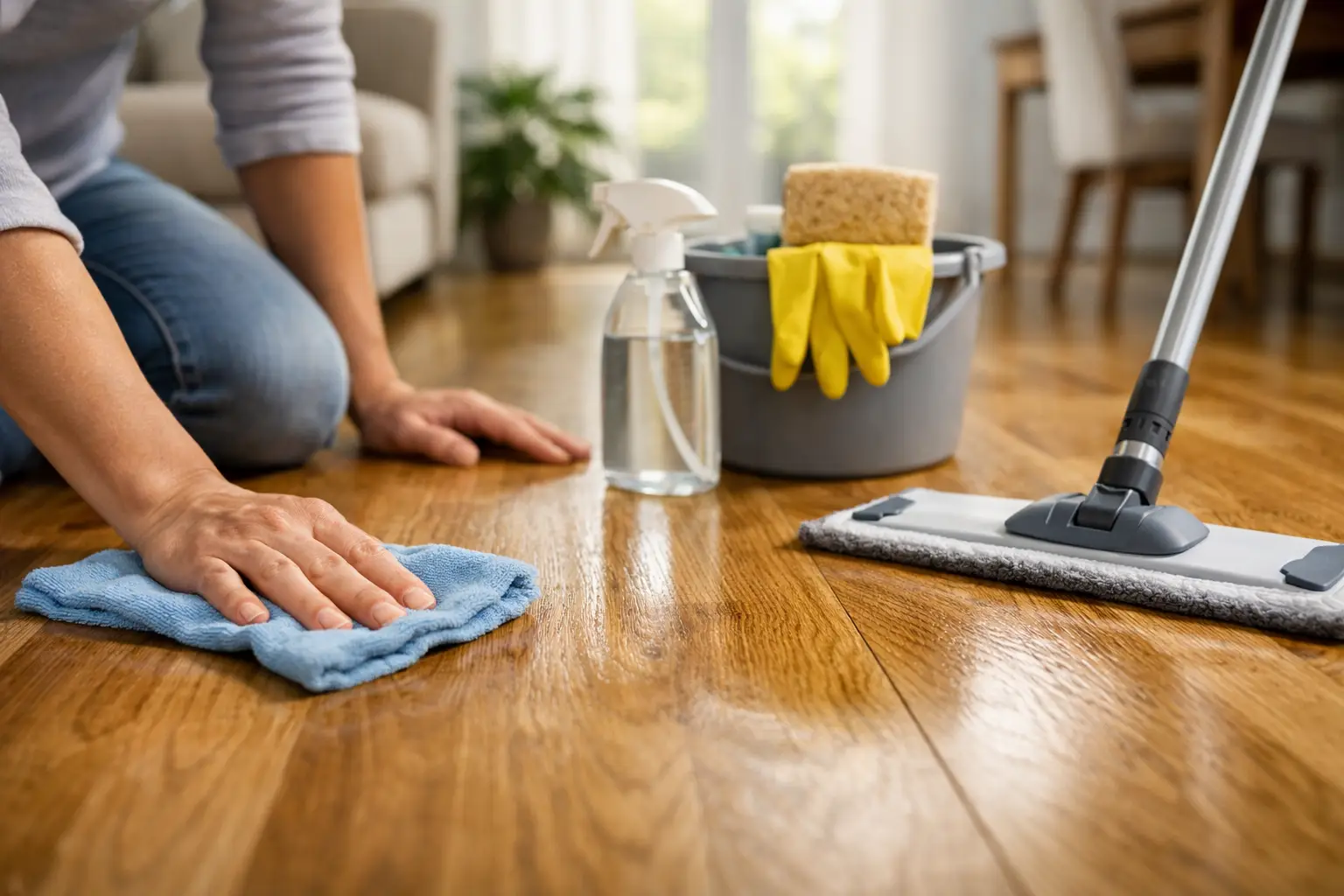
A maintenance plan should be established before the space opens. Daily dry cleaning removes abrasive grit. Prompt attention to spills prevents moisture from sitting on the floor. Manufacturer-approved wood floor cleaners help preserve the finish, while steam mops, harsh detergents, and excessive water can cause real damage.
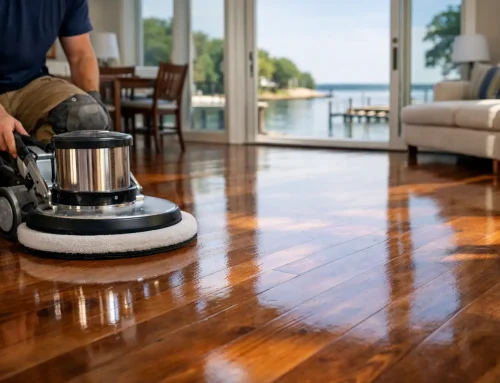
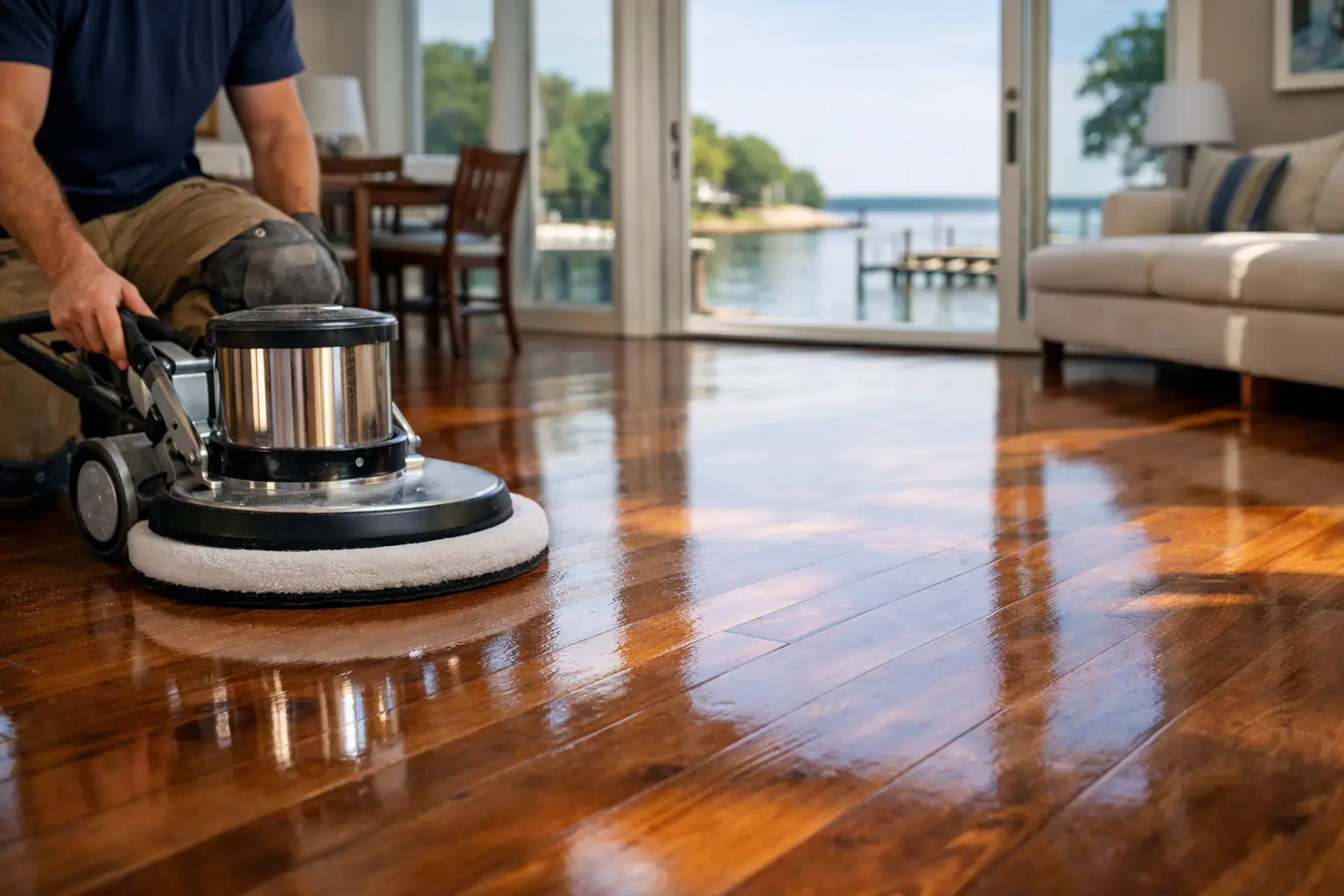
Over time, even a well-cared-for floor may benefit from a professional screen and recoat. This process renews the protective finish before wear reaches bare wood. It is far less invasive than a full sanding and can significantly extend the interval between major restoration work. When deeper scratches, color changes, or structural wear eventually call for refinishing, a quality wood floor offers something few surfaces can match: the ability to be renewed rather than replaced.
Where Craftsmanship Changes the Result
Commercial projects often involve details that are easy to overlook in a showroom. Stair treads, flush transitions, radiator cuts, custom borders, curved walls, existing trim, and coordination with other trades all require careful field judgment. The floor should feel considered from every angle, not simply installed across an open room.
At Royal Oaks Flooring, that standard begins with careful measurement and a clear understanding of the material before installation starts. It continues through precise layout, responsible moisture management, thoughtful finish selection, and a clean, well-executed final presentation. For clients in Annapolis, the Eastern Shore, Montgomery County, and surrounding areas, this level of planning is especially valuable in historic properties, refined retail settings, and spaces where the floor is expected to become part of the architecture.
Commercial hardwood flooring rewards a disciplined approach. Select a material that suits the building, a finish that suits the traffic, and an installation team that treats preparation as seriously as appearance. When those decisions are made well, the floor does more than withstand the work of the room – it gives the room a lasting sense of place.